November 19, 2019/
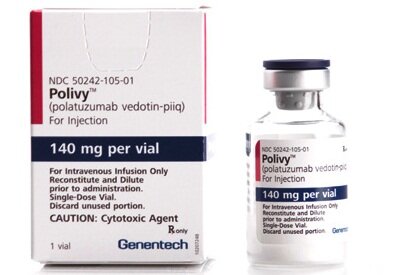
BioValleyBIOON/--Swiss pharmaceutical giant Roche recently announced that the Committee for Medicinal Products for Human Use (CHMP) of the European Medicines Agency (EMA) has issued a positive opinion, recommending the approval of the antibody-drug conjugate (ADC) Polivy (polatuzumab vedotin-piiq) in combination with bendamustine and MabThera (generic name: rituximab) (BR regimen), for use in patients who are ineligible for hematopoietic
Stem CellsTreatment of patients with relapsed or refractory (R/R) diffuse large B-cell lymphoma (DLBCL) post-transplant. The CHMP opinion will now be reviewed by the European Commission (EC), which is expected to make a final decision on the conditional marketing authorization for Polivy within the next two months.
In the United States,
FDAAccelerated approval was granted in June this year for Polivy in combination with the BR regimen for the treatment of patients with relapsed or refractory diffuse large B-cell lymphoma (R/R DLBCL) who have previously received at least two prior therapies. This accelerated approval is based on the complete response rate observed in a randomized controlled clinical trial; further approval will be contingent upon confirmatory
Clinical TrialValidation and description of its efficacy. It is worth noting that in the United States, Polivy is the first chemoimmunotherapy approved for the treatment of relapsed/refractory diffuse large B-cell lymphoma (R/R DLBCL), significantly improving clinical outcomes compared to commonly used treatment regimens. DLBCL is an aggressive hematologic malignancy in which each recurrence typically renders the disease more difficult to treat.
Levi Garraway, M.D., Ph.D., Chief Medical Officer and Global Head of Product Development at Roche, stated: “Treatment options for patients with relapsed or refractory diffuse large B-cell lymphoma are limited, particularly for those who are not eligible for hematopoietic
Stem Cellstransplant patients. We are pleased that the CHMP has recognized the potential of Polivy to provide a much-needed new treatment option for patients with this aggressive disease.”
Polivy is a first-in-class antibody-drug conjugate (ADC) that specifically targets CD79b, composed of a humanized anti-CD79b antibody conjugated to the anti-mitotic agent MMAE (monomethyl auristatin E). It is currently under development for the treatment of several types of non-Hodgkin lymphoma (NHL). CD79b is highly and specifically expressed in most types of B-cell NHL, making it a promising target for the development of novel therapies. Polatuzumab vedotin binds to CD79b and disrupts these B cells, maximizing cancer cell destruction while minimizing impact on normal cells.
Polivy was developed by Genentech, a subsidiary of Roche, using Seattle
HeredityLearn the company's ADC technology development. In the United States and the European Union, polatuzumab vedotin has been granted orphan drug designation for the treatment of DLBCL, and has been granted Breakthrough Therapy Designation (BTD) and Priority Medicines (PRIME) status, respectively.
FDAThe accelerated approval of Polivy and the CHMP’s positive opinion recommending its approval were both based on data from the global Phase Ib/II clinical study GO29365. In the Phase II portion of this study, 80 patients with heavily pretreated relapsed or refractory diffuse large B-cell lymphoma (R/R DLBCL) were randomized into two treatment arms: (1) polatuzumab vedotin plus bendamustine and rituximab (PBR); and (2) bendamustine plus rituximab (BR). The median number of prior therapies received by these patients was 2 (range: 1–7 in the PBR arm; range: 1–5 in the BR arm).
It is worth noting that this is the first and only randomized pivotal clinical study demonstrating that in patients ineligible for hematopoietic
Stem CellsIn transplant-eligible patients with relapsed/refractory diffuse large B-cell lymphoma (R/R DLBCL), the response rate was higher than that observed with BR (a commonly used treatment regimen). The results showed that the complete response rate in the PBR group reached 40% (n=16/40, 95% CI: 25–57%), compared to only 18% in the BR group (n=7/40, 95% CI: 7–33%).
Furthermore, the study indicated that the objective response rate (ORR) at the end of treatment was 45% in the PBR regimen group (n=18/40; 95% CI: 29–62), compared to only 18% in the BR regimen group (n=7/40; 95% CI: 7–33). Regarding duration of response (DOR), among patients who achieved complete response in the PBR regimen group, 64% (n=16/25) had a DOR ≥6 months and 48% (n=12/25) had a DOR ≥1 year; whereas in the BR regimen group, the corresponding proportions among patients who achieved complete response were only 30% (n=3/10) and 20% (n=2/10), respectively.
In terms of safety, adverse reactions occurred in at least 20% of patients, with the frequency in the PBR regimen group being at least 5% higher than that in the BR regimen group.
Adverse ReactionsIncluding: low white blood cell count, low platelet level, low red blood cell count, numbness, tingling or pain in hands and feet, diarrhea, fever, decreased appetite, and pneumonia. (Bioon.com)