

Samsung Bioepis and Merck’s Bevacizumab Biosimilar SB8 Files for Approval in the US and EU to Challenge Roche’s Avastin
Nov 19, 2019 14:55
CST Updated
Nov 20, 14:55

Samsung Bioepis
Biosimilar Developer
FDA
U.S. Food and Drug Administration
November 20, 2019/BioValleyBIOON/--South Korean biopharmaceutical company Samsung Bioepis recently announced that the U.S. Food and Drug Administration (FDA) has accepted and reviewed the Biologics License Application (BLA) for SB8 (bevacizumab, bevacizumab) submitted via the 351(k) pathway. This drug is aBiosimilars, with the reference drug being Roche’s branded biologic Avastin (Avastin, generic name: bevacizumab).
In terms of U.S. regulatory affairs, Samsung Bioepis submitted to theFDAThe BLA for SB8 has been submitted. In terms of EU regulatory affairs, the European Medicines Agency (EMA) accepted the Marketing Authorization Application (MAA) for SB8 in mid-July this year. If approved, SB8 will be commercialized in the United States and the European Union by its partner, Merck & Co.
At the end of September this year, Samsung Bioepis in EuropeTumorThe results of the Phase III clinical study of SB8 were presented at the 2019 European Society for Medical Oncology (ESMO) Congress. The study was conducted in patients with metastatic or recurrent non-squamous non-small cell lung cancer (NSCLC) to compare the efficacy and safety of SB8 and Avastin. The data showed no clinically meaningful differences between SB8 and the reference drug Avastin in terms of efficacy, safety, pharmacokinetics, and immunogenicity.
The specific data are as follows: In the Full Analysis Set (FAS), the overall response rates (ORR) for SB8 and Avastin were 47.6% and 42.8%, respectively (risk ratio [RR] = 1.11; 95% CI: 0.975, 1.269). In the Per-Protocol Set (PPS), the ORRs for SB8 and Avastin were 50.1% and 44.8%, respectively (risk difference: 5.3%; 95% CI: -2.2%, 12.9%). The median progression-free survival (PFS: 8.5 months vs. 7.9 months) and median overall survival (OS: 14.9 months vs. 15.8 months) for SB8 and Avastin were comparable. The overall incidence of treatment-emergent adverse events (92.1% vs. 91.1%) and the overall incidence of anti-drug antibodies (16.1% vs. 11.1%) were also comparable.
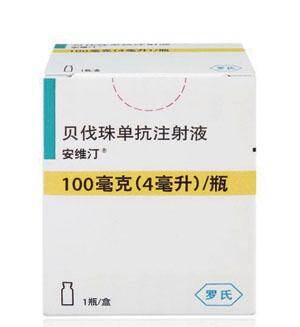
Avastin (bevacizumab) is one of Roche’s three flagship biologics, the other two being Herceptin (trastuzumab) and Rituxan (rituximab).
According to data released in April this year by the foreign biotechnology website GEN, the global sales of Avastin, Herceptin, and Rituxan in 2018 were CHF 6.849 billion, CHF 6.982 billion, and CHF 6.752 billion, respectively, with their combined sales in the U.S. market totaling USD 10.14 billion.
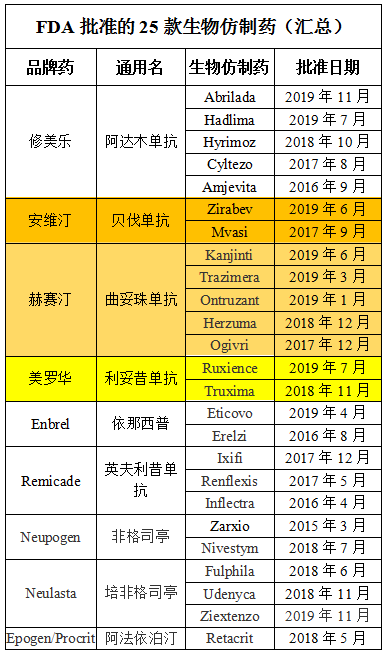
According toFDABiosimilar Database, with a total of 25 entries to dateBiosimilarsObtainedFDAApproved, including nine approvals targeting Roche’s three blockbuster biologics: Avastin (2), Herceptin (5), and MabThera (2).
In July this year, Amgen and Allergan announced the launch of Mvasi (bevacizumab) and Kanjinti (trastuzumab) in the US market. These two drugs are the first biosimilars of Avastin and Herceptin to enter the US market, respectively, with prices 15% lower than those of Roche's branded drugs. In November this year, Teva/Celltrion launched Rituxan in the US market.BiosimilarsTruxima (rituximab): Its market launch also marks the complete collapse of Roche’s three blockbuster biologics in the U.S. market. (Bioon.com)