

European Commission Approves Two KEYTRUDA® Regimens for First-Line Treatment of PD-L1-Positive Recurrent or Metastatic Head and Neck Squamous Cell Carcinoma
Nov 21, 2019 09:28
CST Updated
09:28

MSD
Pharmaceutical R&D and Manufacturer

European Commission
The European Commission, abbreviated as the EU Commission, is a supranational body under the European Union. Within the EU political system, the European Commission primarily undertakes executive tasks, thus being roughly equivalent to the government in a national system. However, the European Commission has other functions as well. In particular, except for the few circumstances specified in the treaties, the European Commission is the only institution with legislative power in the EU legislative process.
November 21, 2019 /Bio ValleyBIOON/ -- Merck & Co., a giant in tumor immunotherapy, recently announced that the European Commission (EC) has approved two regimens of Keytruda (brand name: Keytruda; generic name: pembrolizumab) for first-line treatment of patients with metastatic or unresectable recurrent head and neck squamous cell carcinoma (HNSCC). Specifically, it is indicated as monotherapy or in combination with a commonly used chemotherapy regimen (platinum + 5-fluorouracil [5-FU]) for patients whose tumors express PD-L1 (Combined Positive Score [CPS] ≥1). Notably, Keytruda is the first therapy approved in the EU for use either as monotherapy or in combination therapy for first-line treatment.TumorThe first anti-PD-1 therapy for head and neck cancer expressing PD-L1 (CPS ≥ 1).
In the United States, Keytruda was approved this JuneFDAApproval of two new indications for the first-line treatment of patients with metastatic or unresectable recurrent head and neck squamous cell carcinoma (HNSCC), specifically: (1) as monotherapy for patients whose tumors express PD-L1 (Combined Positive Score [CPS] ≥ 1); (2) in combination with a standard chemotherapy regimen (platinum + 5-fluorouracil [5-FU]), regardless of patientTumorPD-L1 Expression Status. This approval makes Keytruda the first anti-PD-1 therapy approved for the first-line treatment of patients with metastatic or unresectable recurrent head and neck squamous cell carcinoma (HNSCC), as well as the first anti-PD-1 therapy to demonstrate a statistically significant improvement in overall survival (OS) in this patient population.
This approval is based on data from the pivotal Phase 3 clinical study KEYNOTE-048 (NCT02358031). This was a randomized, open-label study designed to evaluate the efficacy and safety of Keytruda as monotherapy or in combination with platinum (cisplatin or carboplatin) and 5-fluorouracil chemotherapy, compared with the current standard of care for first-line treatment of HNSCC, the EXTREME regimen (Erbitux [cetuximab] + platinum [cisplatin or carboplatin] + 5-fluorouracil combination therapy).
The results showed that:TumorIn the population of patients with head and neck cancer expressing PD-L1 (CPS ≥ 1), Keytruda, both as monotherapy (HR = 0.74 [95% CI: 0.61–0.90], p = 0.00133) and in combination with chemotherapy (HR = 0.65 [95% CI: 0.53–0.80], p = 0.00002), significantly prolonged overall survival (OS) compared with the first-line standard EXTREME regimen.
Dr. Jonathan Cheng, Vice President of Clinical Research at MSD Research Laboratories, stated: “Head and neck cancer remains a devastating disease with poor long-term prognosis, and survival rates have been difficult to improve for over a decade. As the first anti-PD-1 therapy approved for first-line treatment of metastatic or recurrent head and neck cancer, Keytruda will help patients and address the significant unmet medical need in this aggressive cancer. This EU approval underscores our commitment to transforming the way cancer is treated worldwide.”
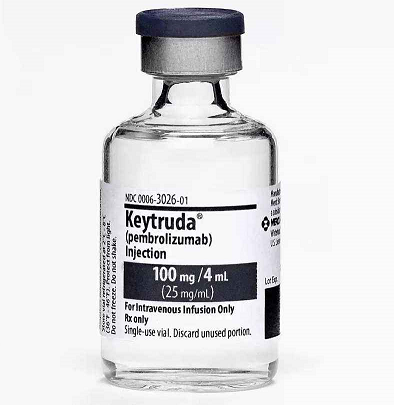
Keytruda is a PD-(L)1 tumor immunotherapy that helps detect and combat tumor cells by enhancing the capacity of the human immune system. Keytruda is a humanized monoclonal antibody that blocks the interaction between PD-1 and its ligands, PD-L1 and PD-L2, thereby activatingTumorT lymphocytes of cells and healthy cells.
As of now, multiple PD-(L)1 inhibitors have been approved globally.TumorImmunotherapy Approved: Keytruda Leads the Field with Over 20 Approved Indications
Merck Sharp & Dohme has the largest immuno-oncology clinical development program in the industry, with more than 1,000Clinical TrialsInvestigating Keytruda in Multiple TypesTumorand its role in the treatment context. The Keytruda clinical program aims to understand the drug’s role in cancer and identify factors that may predict patient benefit from Keytruda therapy, including exploring several differentBiomarker. (Bioon.com)