

Hong Kong's C-MER Eye Care Expands to Shanghai; Asia-Pacific Ophthalmology Leader Dr. Dennis Lam Declares: 'If Not Shanghai, Then Where?'

C-MER Medical
Ophthalmology Medical Chain Institution
Today, Shanghai has welcomed another high-end private healthcare institution: C-MER Medical Group has established the first ophthalmic hospital in East China—Shanghai C-MER Ruishi Eye Hospital—under the Closer Economic Partnership Arrangement (CEPA) between Mainland China and Hong Kong and Macao. This move marks a concrete step by C-MER Medical Group to extend its premium medical services into the Yangtze River Delta region, bringing internationally aligned ophthalmic technologies and management expertise from Hong Kong to Shanghai, thereby injecting fresh vitality into the city’s healthcare development.
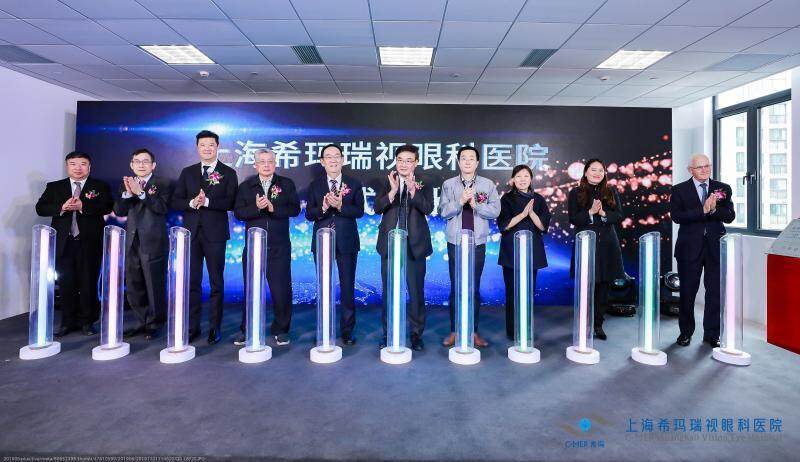
Over 20 Years of Commitment to Charity: Bringing Light to Patients with Eye Diseases in Mainland China
The eyes are often referred to as the windows to the soul, yet in China, there is currently a significant shortage of skilled “craftsmen” capable of repairing these “windows.” In Shanghai, a city with a population of 24 million, the incidence of ophthalmic diseases has been rising year by year, but the city has only several thousand ophthalmologists, making highly qualified eye specialists a critical resource. In 2018, Shanghai officially released the “50 Measures for the Health Service Industry,” encouraging the introduction of high-quality private medical institutions to alleviate the pressure on public hospital ophthalmology departments. At this opportune moment, Lin Shunchao set his sights on Shanghai.
Dr. Shun-Chiu Lin is a leading figure in ophthalmology in the Asia-Pacific region. He has been listed among the World’s 100 Most Influential People in Ophthalmology for three consecutive terms, ranking 18th in 2018 as the only nominee from China. He also served as the first president of the Asia-Pacific Academy of Ophthalmology (APAO) from China. With significant achievements in cataract surgery, laser vision correction, glaucoma, and macular and retinal diseases, Dr. Lin has not only introduced advanced research and technology to mainland China but also steadfastly pursued philanthropic initiatives. “As a Chinese national born and raised in Hong Kong, and as a deputy to the National People’s Congress, my original intention in founding C-MER Medical was to extend international-standard, high-quality medical services to mainland China.”
In 1997, Hong Kong returned to China. Since that year, Professor Shun-Chiu Lam has participated in the "Health Express" initiative, leading medical teams to nearly all the old revolutionary base areas, ethnic minority regions, border areas, and impoverished areas across China. In 2004, he launched the "Bright Eyes Project," establishing 30 poverty-alleviation ophthalmic centers and hospitals as well as 100 cataract surgical stations in impoverished areas across more than ten provinces and municipalities. The project has trained over 140 cataract surgeons and completed more than 160,000 cataract surgeries.
Wang Wanlin, a 71-year-old Hangzhou native, never married or had children of his own, yet he became the shared “father” to 526 homeless children. Hailed as the “Most Beautiful Dad in Hangzhou,” this kind-hearted man was diagnosed with macular edema in late 2014. Despite visiting numerous hospitals, large and small, his condition remained untreated, leaving him on the verge of blindness. Several of his “sons,” who maintained regular contact with Mr. Wang, decided to help fulfill their father’s dream: finding a renowned specialist to restore his vision. In March 2015, they appeared together on the stage of China Dream Show. Dr. Lam Shun-chiu saw the episode and, having already established C-MER Lam Shun-chiu Eye Hospital in Shenzhen, proactively extended a helping hand to Mr. Wang, providing free treatment. Today, Mr. Wang, having regained his sight, has come to Shanghai. “People say we are all devoted to public welfare, but Dr. Lam is even greater. I also hope that more patients from the Yangtze River Delta region will be able to enjoy brighter and healthier eyes at Shanghai C-MER Ruishi Eye Hospital in the future.”

Targeting the Yangtze River Delta, C-MER Medical Establishes Its Presence in Shanghai to Deliver Localized Experiences for Residents
The “Yangtze River Delta” region mentioned by Wang Wanlin was also on Lin Shunchao’s mind. Prior to the official opening of Shanghai C-MER Ruishi Eye Hospital today, multiple eye hospitals and clinics had already been established in Shenzhen, Beijing, Kunming, and other cities. Nevertheless, his heart remained set on Shanghai. “Shanghai is the central hub of the Yangtze River Delta region, where new technologies such as 5G, artificial intelligence, and big data platforms are developing rapidly, providing a robust foundational support for various sectors, including healthcare. If we don’t come here, where else should we go?” he remarked with a smile. The fundamental reason that solidified his decision to develop his career in Shanghai was the implementation of Shanghai’s “50 Measures for the Health Service Industry.” “Nowadays, healthcare reform advocates a ‘two-pronged approach,’ with public hospitals and privately run medical institutions progressing side by side. This requires comprehensive policy support; otherwise, sustainable and stable development would be difficult to achieve.”
In today’s Shanghai, the continuously optimized policy support system for the health services industry, an increasingly open investment environment, and sustained technological, business-format, operational model, and industrial innovations are attracting globally renowned healthcare brands to this vibrant market, making establishment in Shanghai a prudent choice. Following comprehensive research and exploration, Dr. Lin Shun-chao selected the bustling South Xizang Road in Huangpu District as the location for the first Shanghai C-MER Ruishi Eye Hospital, while additionally opening three eye clinics in Putuo, Pudong, and Yangpu Districts. Addressing public interest in localization measures, Dr. Lin stated that the hospital’s mission is “international standards, Hong Kong-style management, high-quality service, and reasonable pricing.” Patients may choose from a diverse range of payment options, including basic medical insurance, commercial insurance, or self-pay services, with medical insurance charges aligned with the standards for secondary-level medical institutions in Shanghai.
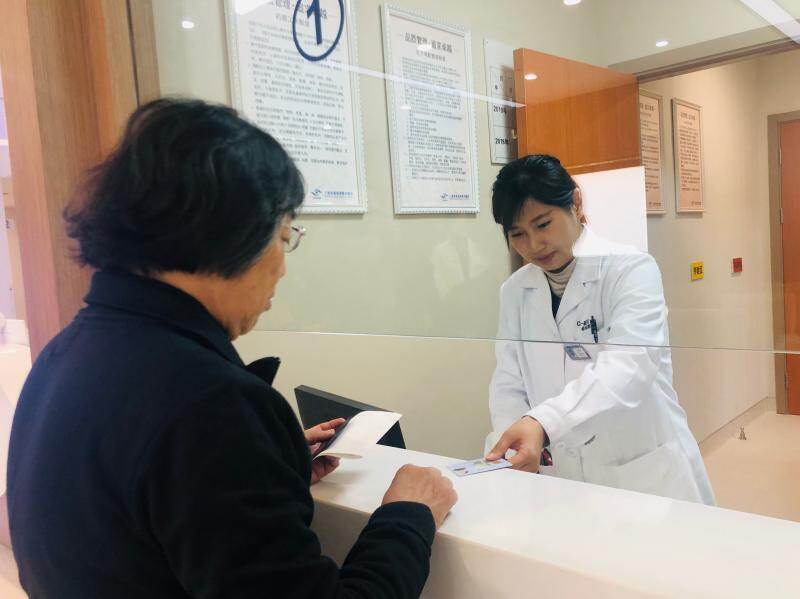
Ms. Liu, a 76-year-old patient, was among the first to seek care at Shanghai C-MER Ruishi Eye Hospital. At the pharmacy cashier’s desk, she handed her medical insurance card to the staff member. “I have glaucoma and have always been managed with conservative medication. However, the latanoprost eye drops I currently use are not included in the essential drug list of community health service centers, so I chose to come here for treatment and prescription dispensing.” Ms. Liu is a devoted follower of Dr. Guo Qing, former Director of the Department of Ophthalmology at Huangpu District Central Hospital. Now that Dr. Guo has joined the core medical team at Shanghai C-MER Ruishi Eye Hospital, Ms. Liu has become accustomed to the hospital’s fully appointment-based consultation system under his guidance. “There are fewer people here, the environment is pleasant, and the costs are covered by medical insurance. I find it quite convenient,” she said.
It is reported that the hospital currently has departments specializing in fundus diseases, cataracts, ocular surface and lacrimal duct disorders, refractive surgery, and pediatric optometry. Special clinics have been established for complex eye conditions such as glaucoma, uveitis, pediatric albinism, pediatric cataracts, and Marfan syndrome. From ultra-high-magnification microscopic surgical tables down to surgical cotton swabs, all equipment and supplies are high-quality, premium products from renowned global manufacturers. Lin Shunchao also stated, “The rapid advancements in ophthalmology rely on internationally leading consumables and pharmaceutical support. We hope that, within the bounds of regulatory approval, Shanghai will introduce preferential policies similar to Hainan’s ‘National Nine Measures,’ allowing for further exploration in areas such as the import approval of overseas medical devices and drugs, research into cutting-edge medical technologies, and the practice duration of foreign physicians.”
Macular Degeneration Is No Longer Incurable: 20 Patients Can Receive Free Surgery
Lin Shunchao stated that the name “C-MER” is a homophone for “Himalaya.” As the Himalayas are the highest mountain range in the world, the organization aspires to continuously pursue excellence and scale new heights, bringing the light of hope to the eyes of more people. Today, the International Consultation Center for Complex Eye Diseases, established concurrently, has also been launched in Shanghai. Shanghai C-MER Ruishi Eye Hospital has assembled a star-studded team by introducing more than 20 ophthalmology experts from Hong Kong and overseas. This team will provide personalized diagnosis and treatment plans for patients with complex eye diseases in the Yangtze River Delta region and offer charitable medical assistance.
In recent years, the prevalence of ocular diseases has been on the rise, with conditions such as macular and retinal disorders gradually becoming significant causes of irreversible blindness worldwide. Vision loss resulting from complex and refractory eye diseases is not an overnight occurrence but rather a protracted process. Many patients exhibit no obvious symptoms in the early stages and lack sufficient awareness of ocular complications. In particular, some elderly patients mistakenly attribute declining vision to presbyopia; by the time they experience blurred vision, the disease progression has often become difficult to control. Due to the irreversible nature of the pathological damage, once vision significantly deteriorates, the difficulty of treatment increases substantially.
“There are many factors contributing to complex and refractory eye diseases. For instance, diabetes can trigger various fundus complications, which are often overlooked by patients,” said Dr. Lin Shunchao. Diabetes can cause clouding of the lens, known as cataracts, and also affect the retina. Prolonged hyperglycemia leads to retinal ischemia and hypoxia, ultimately resulting in the formation of neovascularization. Once these new blood vessels form, they can give rise to macular edema, macular degeneration, and hemorrhage, particularly when involving the macula. “Wang Wanlin is a typical case of this nature. Therefore, we performed bilateral phacoemulsification with intraocular lens implantation for him, supplemented by comprehensive treatments including laser therapy, intravitreal injections, and nerve growth factor administration.”
It is reported that to help more impoverished patients with eye diseases regain their sight, Shanghai C-MER Ruishi Eye Hospital has launched a public welfare campaign titled “Targeted Poverty Alleviation · Commitment to Light” upon its opening. The initiative will provide opportunities for vision restoration to 100 indigent patients with complex and refractory eye conditions. Following free professional examinations, 20 of these patients will be eligible to receive free sight-restoring surgeries. Impoverished patients with complex eye conditions from Jiangsu, Zhejiang, Shanghai, and Anhui provinces are required to present proof of financial hardship stamped by their local community residents’ committee (or village committee), sub-district office (or township/town government), and county-level civil affairs department.
(Original Title: [Video] C-MER Eye Care Expands to Shanghai; Lin Shunchao, a Leading Figure in Asia-Pacific Ophthalmology, States Bluntly: “If We Don’t Come to Shanghai, Where Should We Go?”)