


On November 23, Nanjing Silexon AI Technology Co., Ltd. (hereinafter referred to as “Silexon AI”) announced that it had secured tens of millions of yuan in financing, led by MSA Capital, with participation from Turing Capital, Prosperico Ventures, and Shengding Capital. Zeng Hainian, CEO of Silexon AI, stated that the funds from this round will be used to further optimize and enhance the application of its artificial intelligence and machine learning algorithm technology platform in new drug development, expand strategic collaborations, accelerate the progress of ongoing projects, and continuously strengthen its technical team. Founded in September 2018, Silexon AI is an AI-driven biotechnology company that leverages artificial intelligence algorithms to identify disease targets, discover new indications for existing drugs, improve the efficiency of new drug screening, and increase the yield of macromolecules.
Regarding Silexon’s current funding round, Professor Andrew Chi-Chih Yao—the only Chinese recipient of the Turing Award, the highest honor in computer science, an academician of the Chinese Academy of Sciences, and Dean of the Institute for Interdisciplinary Information Sciences at Tsinghua University—stated: “Professor Jianyang Zeng, founder of Silexon, is one of the most outstanding young scientists integrating artificial intelligence with new drug development. It is expected that Silexon will become a significant benchmark enterprise in the biopharmaceutical industry.” This marks the second financing event in China’s “AI + New Drug R&D” sector this month. The previous instance occurred on November 3, when Shenzhen X-Biotic Therapeutics Co., Ltd. (hereinafter referred to as “X-Biotic”) announced the completion of its Series B financing, amounting to hundreds of millions of yuan. The round was led by Legend Capital, with existing shareholders including Gaorong Capital and Morningside Venture Capital participating as co-investors. This constituted the largest financing event in China’s microbiome pharmaceutical industry to date. Recently, applications of AI and big data in new drug R&D have become increasingly active. Both financing activities for AI firms and collaborations with pharmaceutical companies are on the rise, while the entities involved in these partnerships are subtly shifting.
“AI + New Drugs” Is No Longer the Exclusive Domain of Multinational Giants
In recent years, some large multinational pharmaceutical companies, such as Johnson & Johnson and Novartis, have actively collaborated with AI companies to conduct new drug research and development.
In 2016, Janssen Pharmaceutical, a subsidiary of Johnson & Johnson, entered into an exclusive licensing agreement with the artificial intelligence company BenevolentAI. Under this agreement, Johnson & Johnson transferred multiple clinical-stage drug candidates, including some small-molecule compounds still in experimental stages, to BenevolentAI, aiming to leverage “machine intelligence” to accelerate new drug development.
In 2017, GlaxoSmithKline (GSK) of the United Kingdom partnered with the UK-based artificial intelligence startup Exscientia. GSK invested $43 million to leverage big data and machine learning for the identification of small molecules for 10 selected targeted drugs in undisclosed therapeutic areas. Additionally, Exscientia entered into a strategic collaboration agreement valued at $283 million with Sanofi to develop new therapies for diabetes and other metabolic diseases.
This October, Novartis and Microsoft signed a five-year agreement under which Microsoft will establish an “Artificial Intelligence Innovation Lab” at Novartis and create joint working hubs at Novartis’s offices in Switzerland and Dublin, as well as at the Microsoft Research laboratory in Cambridge, UK. The initiative aims to equip Novartis employees with the artificial intelligence and cloud computing capabilities needed to develop next-generation medicines. Novartis plans to apply Microsoft’s AI tools across the entire drug development process, including research, clinical trials, manufacturing, operations, and finance.
However, this collaborative landscape of “AI companies + multinational pharmaceutical giants” is gradually evolving. Today, the application of AI technology to innovative drug R&D is no longer the exclusive domain of multinational giants.
In August this year, Silexon and Junshengtai jointly announced the establishment of a long-term strategic partnership. The two parties will leverage Junshengtai’s extensive experience in new drug research and clinical development for chronic diseases (particularly chronic liver diseases and metabolic disorders), along with Silexon’s strengths in artificial intelligence and machine learning algorithm tools, to actively pursue strategic collaboration in the field of new drug development.
According to Zeng Hainian, CEO of Silexon AI, the company has successfully partnered with several pharmaceutical firms in the field of new drug development since its establishment over a year ago, and some large domestic pharmaceutical companies are also actively engaging with Silexon AI.
In addition, two AI collaborations in innovative drug R&D this year are worth noting: the partnership between biopharmaceutical company Hansoh Pharmaceutical Group Co., Ltd. and Atomwise, and the collaboration between Jiangsu Chia Tai Fenghai Pharmaceutical Co., Ltd. and Insilico Medicine.
On September 11, 2019, Jiangsu Hansoh and Atomwise announced that they would collaborate to design and discover potential drug candidates for up to 11 undisclosed target proteins across multiple therapeutic areas. Under the terms of the agreement, Atomwise will receive upfront technology access fees, option exercise fees, royalties, and revenue from the sublicensing or sale of assets arising from the collaboration; Hansoh Pharmaceutical will retain development and commercialization rights across all indications and territories. Based on the historical average sales of small-molecule drugs, if all projects succeed, the total potential value of this collaboration could surpass that of a potential blockbuster drug, generating $1.5 billion in revenue for Atomwise.
In terms of collaborative division of labor, Atomwise brings expertise in AI technology, medicinal chemistry, and protein structure, while Hansoh Pharmaceutical contributes capabilities in R&D, manufacturing, and commercialization. This partnership is expected to enhance the success rate of drug development and shorten the timelines for drug discovery and clinical development.
Notably, the collaboration with Hansoh Pharmaceutical marks Atomwise’s first foray into the Asian market. It also represents the first large-scale collaborative R&D partnership between a domestic Chinese pharmaceutical company and an AI firm.
In October 2019, Jiangsu Chia Tai Tianqing Pharmaceutical Co., Ltd. (CTFH) signed AI technology development service contracts with Insilico Medicine for two projects targeting complex and traditionally undruggable sites, particularly for the treatment of triple-negative breast cancer patients. This collaboration includes upfront payments, milestone payments, and commercial performance-based incentives, with the total project value expected to reach $200 million upon successful completion.
“Due to these two collaborations this year, there has been a significant shift in how Chinese pharmaceutical companies perceive AI. Many biotech firms are now proactively approaching us, expressing interest in testing AI on some particularly challenging targets,” Zeng Hainian revealed to PharmaCube. He stated, “Pharmaceutical companies are increasingly aware of the potential for AI to accelerate drug R&D, and a growing number are willing to explore this avenue.”
In this regard, Zeng Yu, Managing Partner at Magic Stone Alternative Investment, also stated: “The biological, chemical, and medical knowledge and data accumulated by humanity to date are vast, far exceeding the cognitive limits of any individual or group. Combining AI algorithms with expert knowledge to structurally organize and denoise massive amounts of biomedical data and knowledge is an inevitable path for the pharmaceutical industry. Furthermore, the traditional pharmaceutical model based on high-throughput black-box screening has largely exhausted the ‘low-hanging fruit,’ resulting in low efficiency and high failure rates. The next generation of drug development will undoubtedly be grounded in a fundamental biological understanding of omics and biological signaling networks. By leveraging accumulated data, AI, and expert knowledge to identify clear signal targets and networks, we can conduct purposeful drug screening or design. This allows AI to play a role at every node of the industrial chain, enhancing pharmaceutical efficiency and thereby enabling ‘AI + Drug Discovery’ to deliver greater commercial value and social benefits.”
Multidisciplinary Talent Is Key
“In the contemporary era, the research and development of innovative drugs epitomize the latest achievements and breakthroughs at the forefront of life sciences and biotechnology, reflecting the innovation and integration of high-tech, multidisciplinary approaches. It has become one of the focal points of international competition in science, technology, and economics in the new century.”—Academician Chen Kaixian wrote in the preface to the book The Story of New Drugs.
New drug development is characterized by high costs, long R&D cycles, and low success rates, making it a high-risk endeavor. Consequently, there is growing hope that applying AI to new drug development will enhance efficiency and success rates. In recent years, an increasing number of companies have been exploring the application of AI in this field, collaborations between AI firms and pharmaceutical companies have become more active, and demand for multidisciplinary talent has risen. Indeed, many companies are eagerly seeking professionals with multidisciplinary backgrounds. This trend has further led to heightened attention from investment institutions toward hubs where such multidisciplinary talent is concentrated.
It is reported that Silexon’s previous round of financing came from the Turing Institute for Artificial Intelligence, an incubator integrating industry, academia, and research in artificial intelligence. The institute was established under the leadership of Andrew Chi-Chih Yao, the only Chinese recipient of the Turing Award (the highest honor in computer science), an academician of the Chinese Academy of Sciences, and Dean of the Institute for Interdisciplinary Information Sciences at Tsinghua University. Silexon is one of the first batch of projects incubated by the institute. Its founder and CTO is Professor Jianyang Zeng, a professor at the Institute for Interdisciplinary Information Sciences, Tsinghua University. Professor Zeng earned his Ph.D. in Computer Science from Duke University in the United States and subsequently conducted postdoctoral research at Duke University School of Medicine. In 2012, he was recruited to the Institute for Interdisciplinary Information Sciences at Tsinghua University as an overseas talent. Currently, Professor Zeng holds a tenured associate professorship at the Institute and has been selected for the “National Young Thousand Talents Program.”
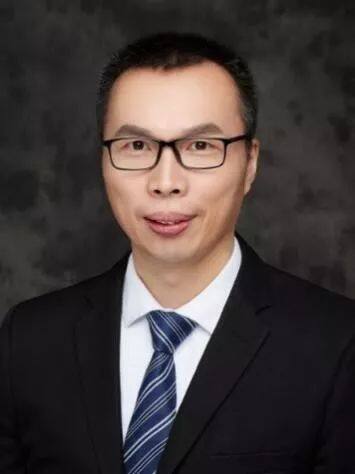
Professor Jianyang Zeng, Founder and CTO of Silexon
According to Zeng Hainian, Silexon currently has a team of nearly 20 people, with members possessing interdisciplinary backgrounds in biology, pharmaceuticals, and artificial intelligence. CEO Zeng Hainian, who is fully responsible for this round of financing and the company’s overall operations, also holds a multidisciplinary background. He has led multiple commercial projects at Sinopharm Group’s headquarters and its subsidiaries, and has served in a temporary capacity at drug regulatory authorities. Prior to joining Silexon, Zeng Hainian served as Investment Director at Ping An Ventures, where he participated in the investment and management of more than ten projects across various technological and therapeutic areas, including Tmunity, NextCure, Hua Medicine, KBP Biosciences, XGENE, Rani Therapeutics, and Prenetics.
“Our expertise lies in interdisciplinary fields. All of our algorithm engineers have backgrounds in biology and chemistry, or mechanical engineering, and possess knowledge reserves regarding targets, compounds, and diseases in specific domains. Our business team is deeply rooted in the pharmaceutical industry, hailing from renowned pharmaceutical companies and new drug R&D CROs, with a profound understanding of drug development and industry hotspots,” said Zeng Hainian.