Surgical Robotics Market Heats Up: Giants Invest $6.7B in 2019, Challenging Da Vinci's Dominance and Paving Way for Import Substitution

Cardan Robotics
Developer of Robotic and Navigation Technology Systems for Surgical and Interventional Radiology Procedures

HOZ Medical
Medical Robotics R&D Company

Remebot
Developer and Manufacturer of Telesurgical Robots

Stryker
Orthopedic Product Developer

Shunwei Capital
Venture Capital Institution

Medtronic
Chronic Disease Medical Device and Therapy Developer

Intuitive Fosun
Medical Device Developer

TINAVI
Orthopedic Surgical Robot Developer
Mazor Robotics
Surgical Robot Developer

Sinovation
Neurosurgical Surgical Robot Developer

Johnson & Johnson
Healthcare Product Manufacturers, Health Service Providers
In 1999, the first da Vinci surgical robot was introduced; two decades have passed since then.
The da Vinci Surgical System is not a panacea; it is primarily applied in specialties such as cardiac, thoracic, urologic, gynecologic, colorectal, pediatric, and general surgery. Nevertheless, its tremendous success over the past two decades has made it synonymous with surgical robots.
Over 5,000 da Vinci Surgical Systems have been deployed in 66 countries and regions worldwide, with a surgeon performing a procedure using the da Vinci system every 30 seconds. To date, more than 6 million surgeries have been performed globally using the da Vinci robot, including 1 million procedures in 2018 alone.
Intuitive Surgical, the developer of the da Vinci Surgical System, boasts a market capitalization of $60 billion, appearing unshakable. Nevertheless, global medical device giants such as Medtronic, Johnson & Johnson, Siemens, and Stryker continued to enter this field in 2019. According to statistics from VCBeat, these four companies invested a total of $6.7 billion in surgical robots within one year.
So, just how hot is the surgical robot market? VCBeat (WeChat ID: vcbeat) has taken stock of the surgical robotics industry in 2019.
Da Vinci No Longer Stands Alone
In December 2018, a year ago, Medtronic, the global leader in medical devices, acquired Mazor Robotics and its robot-assisted surgical platform for $1.7 billion. This acquisition became the largest deal in the medical robotics sector at the time.
One month later, the company launched the Mazor X Stealth spinal surgery robot in the United States, seamlessly integrating Mazor Robotics’ robotic guidance system technology with Medtronic’s StealthStation surgical navigation technology.
Medtronic’s objective in this acquisition is clear: to further solidify its strong position in the global spine and musculoskeletal treatment sector. By integrating its spinal implants, navigation, and intraoperative imaging technologies with Mazor Robotics’ robotic-assisted surgery (RAS) system, Medtronic aims to provide an integrated spine surgery solution for surgical planning, execution, and verification.
Less than a year after acquiring Mazor Robotics, Medtronic launched its new Hugo RAS surgical robot in September 2019. This indicates that Medtronic has largely completed the integration of Mazor Robotics’ technology, further advancing the commercialization of its surgical robotics portfolio.
Although Medtronic entered the robotics field relatively late, it caught up and surpassed competitors through this acquisition. The time span from the announcement of the acquisition of Mazor Robotics to the launch of Hugo RAS was no more than one year. Medtronic’s decisive and swift execution has left a deep impression; this is likely a key reason why it has surpassed Johnson & Johnson, the long-standing dominant player in the medical device sector, in recent years to become the new industry leader.
One Stone Stirs Up a Thousand Waves: Medtronic’s Acquisition Triggers a Chain Reaction.
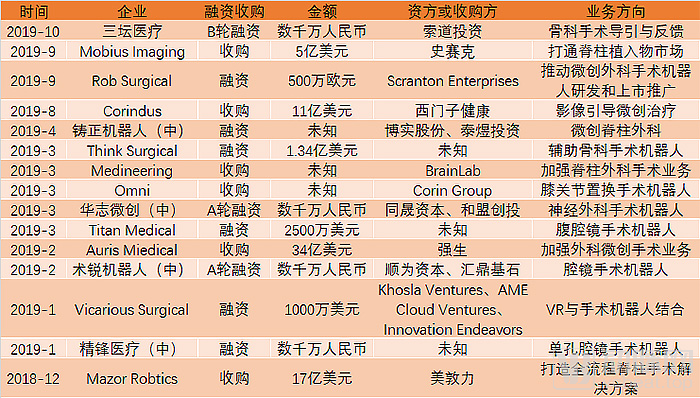
Johnson & Johnson was the first to enter the fray. In February 2019, its subsidiary Ethicon acquired Auris Health and its FDA-cleared Monarch surgical robot for $3.4 billion. This deal surpassed Medtronic’s recently completed acquisition, becoming the largest merger and acquisition transaction in the history of medical robotics.
In August 2019, Siemens Healthineers acquired the surgical robotics company Corindus Vascular Robotics for $1.1 billion. The company primarily develops the CorPath remote surgical robotic system for interventional procedures. This surgical robot is also the first medical device approved by the FDA to assist in percutaneous coronary intervention (PCI) procedures, helping physicians improve precision and accuracy during stent placement.
Just one month later, Stryker announced the acquisition of Mobius Imaging and its subsidiary Cardan Robotics for $500 million. This acquisition enabled Stryker to obtain Mobius’s Airo CT mobile diagnostic imaging system and Cardan Robotics’ Orian surgical robot, which works in conjunction with the imaging system to perform endoscopic spinal surgeries, thereby providing a one-stop solution spanning imaging, navigation, and surgical robotics.
According to statistics from VCBeat, the aforementioned four companies among the top ten medical device manufacturers splurged $6.7 billion on surgical robots within one year, breaking transaction records twice in a short period. This underscores the intense interest in surgical robots in 2019.
Meanwhile, several surgical robotics startups secured financing in 2019. Due to high technical barriers and lengthy R&D cycles, early-stage surgical robotics companies generally did not stand out in terms of funding amounts. Nevertheless, significant deals still emerged, such as Think Surgical’s $134 million financing round. At the same time, while major acquisitions by medical device giants in recent years have intensified competition, they have indeed provided substantial incentives for startups.
Compared with the financial might of industry giants, smaller-scale companies undoubtedly have to make up for their shortcomings in the field of surgical robotics through other means, with R&D being one of the key approaches. Among the Top 10 medical device companies worldwide that prioritized R&D most heavily in 2019 (as measured by R&D expenditure as a percentage of revenue), published on the Medical Design & Outsourcing website, TransEnterix—which had the highest ratio of R&D spending to revenue—is a company specializing in laparoscopic surgical robots.
In 2019, TransEnterix’s R&D expenses amounted to $21.82 million. Although the absolute figure was not high, R&D spending accounted for a striking 90.5% of its revenue—suggesting that nearly every dollar earned, beyond essential operational costs, was reinvested into research and development. Given that the company had only just made it onto the top 100 list (ranking 98th) and faced intensifying competition due to the entry of industry giants over the past year, significantly bolstering R&D efforts was clearly a rational strategic choice.
Given that the da Vinci Surgical System has already secured a first-mover advantage, why are so many players still flocking to invest in this field?
First, the surgical robot market holds vast potential. According to estimates by the market consulting and research firm MarketsandMarkets, the global medical robotics market is expected to exceed $22.1 billion by 2027, representing a more than threefold increase from the $6.46 billion recorded in 2018. Surgical robots account for approximately 60% of this share. As global population aging intensifies, the incidence of chronic diseases such as cardiovascular, neurovascular, and oncological conditions continues to rise, inevitably leading to a significant increase in the number of surgical procedures performed in the future, thereby expanding the market for surgical robots.
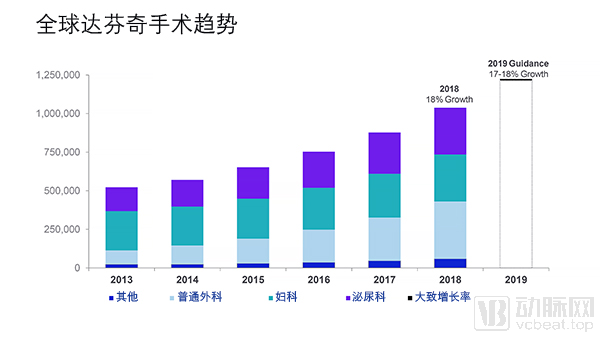
Data and images from Intuitive Surgical
Secondly, the limitations of existing surgical robots have resulted in their relatively low adoption rate in surgical procedures. Although the da Vinci system is widely renowned, it comes with a prohibitive price tag of approximately RMB 20 million per unit. Meanwhile, the maintenance costs for the da Vinci robot are extremely high, with annual maintenance fees reaching around RMB 2 million. Additionally, consumables such as cable-driven instruments are mandated to be replaced after every 10 uses. Consequently, the global installed base amounts to only about 5,000 units, and the surgical procedure cost of RMB 50,000–100,000 remains unaffordable for the average person.
Meanwhile, the da Vinci Surgical System is not a panacea. As a typical laparoscopic surgical robot, it holds an advantage in soft tissue surgeries but is ineffective for hard tissue procedures, such as orthopedic surgeries.
Precisely for this reason, statistics show that currently only 2% of surgeries worldwide are performed with the assistance of surgical robots. For these newly entered industry giants, the untapped 98% of the surgical market is clearly a gold mine awaiting exploitation.
Meanwhile, the substantial profits generated by the da Vinci Surgical System for Intuitive Surgical have drawn the envy of major medical device manufacturers. Intuitive Surgical achieved a compound annual growth rate (CAGR) of 45% in revenue, reaching $3.1 billion in 2017, a 15% year-over-year increase. Furthermore, since 2005, the company has maintained a gross margin of approximately 70% and a net profit margin consistently above 20%, significantly higher than the industry average.
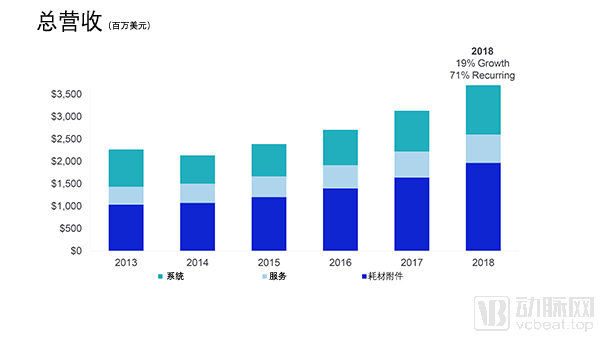
Intuitive Surgical's Revenue in Recent Years; Data and Images from Intuitive Surgical
Finally, the entry of medical device giants into the surgical robotics sector is also tied to their strategic positioning. Currently, the trend toward digitalization and intelligence in medical devices is unmistakable. By acquiring leading robotics companies to gain rapid market access, these giants integrate robotic technologies with their core strengths to offer integrated solutions. This approach not only reinforces their competitive advantages but also stimulates existing business lines and creates new growth drivers.
As numerous industry giants enter the fray, competition in the surgical robotics market is set to intensify, ushering in an era of “a hundred flowers blooming and a hundred schools of thought contending.” This is undoubtedly a positive development, as healthy competition will significantly stimulate industry growth.
Digitalization and Intelligence in Surgical Robots Become a Trend
Current surgical robots suffer from major drawbacks, including excessive bulk, high costs, and user-unfriendly human-machine interfaces. The industry is currently making concerted efforts to achieve further breakthroughs in these areas. Based on industry developments in 2019, surgical robot technology has exhibited the following trends.
Single-Port Robots Will Replace Multi-Port Robots
As the leading enterprise in surgical robotics, Intuitive Surgical has consistently kept pace with technological trends to improve its da Vinci Surgical System. In 2018, the new single-port da Vinci SP surgical robot received FDA clearance, and quickly obtained a second FDA clearance in 2019, demonstrating Intuitive Surgical’s strong commitment to this platform.
Unlike multi-port surgical robots, single-port surgical robots such as the da Vinci SP require only a single incision in the patient to complete the procedure. Consequently, the robotic arms of single-port surgical systems offer 6–7 degrees of freedom. This enhanced flexibility enables more dexterous and precise surgical maneuvers.
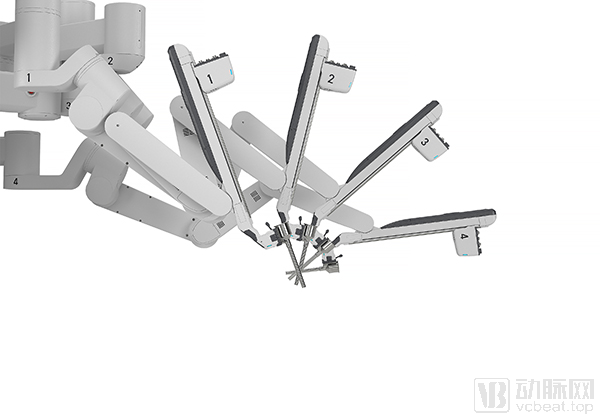
Multi-port surgical robot, image from Intuitive Surgical
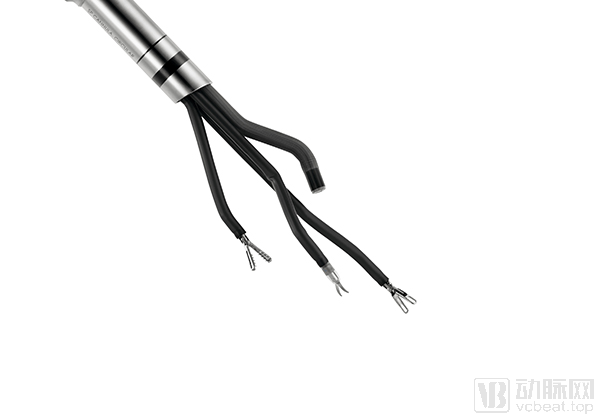
Single-port surgical robot, image from Intuitive Surgical
The reduced number of robotic arms makes the single-port surgical robot more compact, requiring less operating room space. In terms of safety, single-port surgical robots eliminate intraoperative collisions and interference between multiple arms, thereby enhancing surgical safety.
Single-port robotic systems can avoid the complex preoperative positioning required for multiple manipulator arms, thereby simplifying surgical workflows and reducing anesthesia time. Meanwhile, they cause less trauma, leading to faster postoperative recovery for patients. In terms of cost, single-port surgical robots consume fewer disposable supplies, resulting in lower costs and greater suitability for market adoption.
5G+VR Enables Remote Control of Surgical Robots for More Realistic Operation
In February 2019, at the Mobile World Congress (MWC) held in Barcelona, Spain, Spanish doctor Antonio de Lacy provided remote surgical guidance via a 5G video link from the Barcelona Convention Center to a hospital, assisting in the treatment of a patient with an intestinal tumor. This marked the world’s first remotely assisted surgery conducted using 5G technology.
Subsequently, on August 27, 2019, 5G remote applications advanced further. With the assistance of China Telecom Tianjin Branch and Huawei Technologies Co., Ltd., the Orthopedic Remote Surgery Center at Tianjin First Central Hospital connected with Beijing Jishuitan Hospital via a remote system control platform to complete China’s first 5G-enabled remote orthopedic robotic surgery.
These facts demonstrate that the integration of 5G with surgical robots had already become a reality by 2019. Remote surgery requires ultra-high-definition video (with a resolution of at least 4K) to enable surgeons to clearly visualize the operative field and perform procedures with precision. Meanwhile, remote surgery necessitates simultaneous connectivity to multiple devices, including vital signs monitors, electrocardiographs, defibrillator monitors, and high-definition video equipment. The large number of connected devices requires real-time synchronization to ensure operational safety. This demands network bandwidth ranging from 15 Mbps to 1 Gbps and latency of approximately 1 ms to meet the requirements of such procedures. The high bandwidth and low latency of 5G perfectly satisfy these conditions.
Given China’s dominant position in 5G, this undoubtedly presents an excellent opportunity for domestically produced surgical robots to overtake competitors on the bend.
Meanwhile, VR-integrated surgical robots also began to emerge in 2019. On July 8, 2019, Professor Zheng Minhua, a renowned international expert in minimally invasive surgery and Director of the Shanghai Clinical Center for Minimally Invasive Surgery, performed a laparoscopic radical right hemicolectomy on a 63-year-old female patient at the Department of Gastrointestinal Surgery, Ruijin Hospital Affiliated to Shanghai Jiao Tong University School of Medicine/Shanghai Clinical Center for Minimally Invasive Surgery.
What makes this surgery unique is that it not only utilized 5G technology but also incorporated VR. While Director Zheng Minhua performed the procedure, nearly 20 trainees donned VR headsets or watched directly on a 4K ultra-high-definition large screen, with every detail within the abdominal cavity clearly displayed. This marks the first live broadcast of a laparoscopic surgery in China to integrate 5G, 4K/8K, and VR technologies.
Although this particular surgery did not utilize a surgical robot, the integration of the two undoubtedly holds immense potential.
Among the startup surgical robotics companies that completed financing in 2019, Vicarious Surgical indeed specializes in this field. Founded in 2014, the company is attempting to apply VR technology to minimally invasive surgery by developing virtual reality software specifically designed for such procedures.
With the aid of VR devices, physicians can control nanosurgical robots inside patients’ bodies to perform precise minimally invasive surgeries. By using VR headsets to visualize the interior of a patient’s body, doctors can observe lesions more clearly, thereby enhancing surgical outcomes. In the event of emergencies, virtual reality technology enables physicians to more conveniently identify the underlying causes of complications. In conjunction with microsurgical robots, this approach reduces surgical risks and improves cure rates.
Furthermore, VR technology can enhance the efficiency of surgeons’ procedural training. It not only allows physicians to observe surgical steps more effectively and intuitively but also enables them to engage in hands-on practice. By adjusting the pace and scope of their learning based on individual needs, this model—integrating theory with practice—has the potential to significantly accelerate the training progress of healthcare professionals.
In the past, network latency posed a significant challenge for VR. With the maturation of 5G technology, the integration of VR with surgical robots has overcome a major obstacle.
AI Makes Surgical Robots Smarter
Leveraging AI technology to achieve automated surgical navigation will be the future direction for robots. Automated surgical navigation refers to the use of AI to identify human organs and surgical instruments, providing intraoperative guidance to surgeons based on preoperative planning; it can plan surgical paths and offer real-time intraoperative prompts.
Currently, the integration of surgical navigation with surgical robots is primarily applied in orthopedics, where registration is the core requirement. As bones are rigid organs with relatively fixed spatial positions, surgical navigation can be conveniently implemented at this stage.
By leveraging AI for real-time analysis of surgical videos, surgical robots can make informed decisions during procedures, such as planning the next surgical step or issuing warnings about hazardous areas like the aorta through various methods. Meanwhile, when surgeons encounter difficulties during an operation, AI can provide recommendations based on big data, such as retrieving expert surgical recordings. In extreme scenarios, AI will offer significant positive assistance.
Surgical navigation serves as a technological foundation for future automated surgery and is an essential feature of true robotic surgery. It can reduce surgical complexity, improve surgical quality, and facilitate the training of novice surgeons.
With further technological advancements, automated surgical robots will become the next target for surgical robotics. In 2016, the STAR research team in the United States demonstrated the concept of the STAR autonomous suturing robot. This conceptual product autonomously planned suturing tasks using panoramic 3D cameras and infrared fluorescence imaging, continuously adjusting its plan in response to tissue movement during surgery, thereby achieving automated suturing of animal small intestines under surgeon supervision.
In addition, Verb Surgical, a joint venture established in 2015 by Verily, the life sciences division of Alphabet (Google’s parent company), and Ethicon, the surgical medical device division of Johnson & Johnson, has been dedicated to developing intelligent surgical platforms, aiming to bring disruptive innovation to the field of surgery.
Unlike other surgical robots that focus only on one or a few aspects—such as preoperative planning, intraoperative navigation, innovations in intraoperative diagnosis, or enhancing surgeons’ technical skills—Verb Surgical aims to provide an end-to-end AI-powered surgical solution. It leverages a high-level underlying AI operating system (AI algorithms and data) to support diverse hardware and software application scenarios across the preoperative, intraoperative, and postoperative phases. Additionally, it offers a wide range of vertical therapeutic solutions (smart instruments, medical robots, and enhanced imaging) to meet the application needs of different departments and surgical procedures.
If this vision can be realized, it will mark a day of disruptive change in surgery.
Breakthroughs in Domestically Produced Surgical Robots in 2019
Despite its relatively small share of the global market, China actually has strong demand for surgical robots. According to data from Intuitive Surgical’s public announcements, China has only one da Vinci surgical robot per 20 million people, compared with 147 per 20 million in the United States and 34 per 20 million in Japan. In 2017, the average annual number of procedures performed per da Vinci system in China reached 388, whereas the global average was only 198 during the same period. From 2008 to 2016, the total volume of surgeries in China grew at a compound annual growth rate (CAGR) of 10.55% over eight years, while the number of da Vinci procedures increased at an annual rate of 84.48%. These figures indicate that China’s surgical robot market holds substantial growth potential.
The exorbitant cost of the da Vinci Surgical System is the primary driver of this phenomenon. According to public data, the domestic price for a complete da Vinci Surgical System is approximately RMB 20 million. The wire-driven robotic arms, classified as consumables, are limited to 10 uses each, with the replacement of a single arm costing tens of thousands of yuan. Consequently, the out-of-pocket expense for a single da Vinci-assisted surgery in China is at least RMB 50,000 to RMB 100,000.
Despite the high costs, the advantages of surgical robots—such as 10x magnified visualization, precise and stable manipulation beyond human hand limitations, significantly reduced blood loss and complications, and markedly shortened postoperative recovery time—make the widespread adoption of robotic surgery imperative.
The emergence of surgical robots enables top-tier surgeons to perform procedures more quickly and effectively, thereby extending their professional careers; it also allows less experienced surgeons to significantly improve the quality of their surgeries.
The localization of surgical robots is the optimal solution to resolve these contradictions. As part of import substitution, China has been striving to catch up in the field of surgical robotics. At the policy level, the state has successively issued multiple strategic plans and support policies to promote the healthy and rapid development of the robotics industry, including "Made in China 2025" and the "Robotics Industry Development Plan (2016–2020)."
In November 2018, the National Medical Products Administration revised the “Special Review Procedures for Innovative Medical Devices,” approving the market launch of 21 innovative medical devices, including orthopedic surgical robots, thereby reducing clinical treatment costs.
Driven by these supportive policies, domestic robot manufacturers have achieved substantial growth.
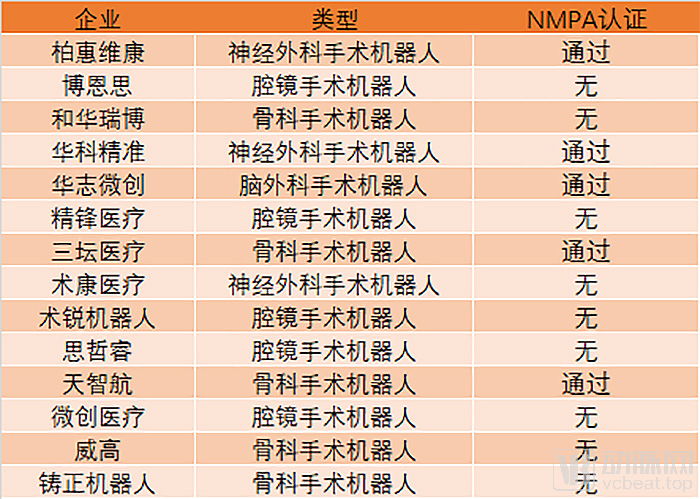
Due to the long research and development cycles and high production costs of robots, the domestic medical robotics industry differs significantly from other technology-driven healthcare sectors in terms of corporate characteristics. It is predominantly composed of large enterprises, with far fewer startups compared to other fields. Meanwhile, companies operating in this sector typically require substantial capital investment, resulting in relatively lower demand for external financing.
Nevertheless, in 2019, four domestic surgical robot companies still secured financing, covering three categories of surgical robots: laparoscopic, neurosurgical, and spinal.
Among the various categories of surgical robots, domestically produced orthopedic robots were the first to achieve a breakthrough. On August 7, 2019, the Shanghai Stock Exchange disclosed that the application for listing on the STAR Market by TINAVI Medical Technologies Co., Ltd. (hereinafter referred to as “TINAVI”) had been accepted. TINAVI’s orthopedic surgical robot had already received certification from the National Medical Products Administration (NMPA). It was selected as the only “internationally original” product in the category of therapeutic equipment and instruments for inclusion in the Ministry of Science and Technology’s “Catalog of Innovative Medical Device Products (2018)” and has been clinically applied in multiple hospitals.
According to the information disclosed in TINAVI’s prospectus for its listing on the STAR Market, TINAVI’s orthopedic surgical robots were first deployed at Beijing Jishuitan Hospital in November 2017. To date, these robots have been installed in more than 50 Grade A tertiary hospitals across over 20 provinces, municipalities directly under the central government, and autonomous regions, with a cumulative total of more than 3,800 surgeries performed.
Domestic Neurosurgical Robots Also Achieved Breakthroughs This Year. On December 25, 2018, the neurosurgical surgical robot developed by Sinovation officially received production approval from the National Medical Products Administration (NMPA). This is the first domestically produced neurosurgical surgical robot to pass the national innovative review, and it is suitable for both children and adults.
According to information disclosed by the Department of Planning, Development and Information of the National Health Commission at the Launch Ceremony of the National Demonstration Project for the Application of Neurosurgical Robots and Academic Exchange Seminar held on September 8, 2019, ten large tertiary Grade A hospitals across China have already performed DBS neurosurgical procedures assisted by domestically produced neurosurgical robots.
In the field of laparoscopic surgical robots, where the da Vinci Surgical System holds a dominant position, domestic enterprises have not yet obtained certification. The da Vinci system maintains a monopoly.
According to information released by Fosun Intuitive, the exclusive distributor of the da Vinci Surgical System in China, during the 2019 China International Import Expo (CIIE), 102 da Vinci surgical robots had been installed in 84 hospitals across mainland China, with an additional eight units installed in the Hong Kong Special Administrative Region, bringing the cumulative number of procedures performed to 120,000. During the 2018 CIIE, Fosun Intuitive had disclosed that more than 70 units were installed in mainland China and 10 in Hong Kong, with nearly 100,000 procedures completed.
In other words, within just one year, the installed base of da Vinci surgical systems increased by approximately 30 units, with over 20,000 procedures performed. This aligns with the statement in Fosun Pharma’s 2018 annual report that “the volume of surgeries performed using da Vinci surgical robots in mainland China and Hong Kong increased by more than 20% year-on-year.” Among these procedures, urological surgeries accounted for over 40%.
The fact that hospitals in China have repeatedly broken the record for the highest number of procedures performed by a single da Vinci surgical robot demonstrates the extremely strong demand for laparoscopic surgical robots, represented by the da Vinci system in China. The First Affiliated Hospital, Zhejiang University School of Medicine, successively broke the global record for the highest number of procedures performed by a single da Vinci surgical robot in 2015 and 2016. In 2018, the First Affiliated Hospital of Zhengzhou University set a new record with 1,198 procedures performed by a single unit over the course of the year.
Although domestically produced laparoscopic surgical robots have not yet received certification, Chinese-made laparoscopic robots from companies including MicroPort, Sizhe Rui, and Jingfeng Medical have currently entered the clinical validation phase. It is expected that domestically produced laparoscopic surgical robots will be launched on the market as early as 2020, thereby breaking the monopoly held by the da Vinci system.
References:
Suzhou Intelligent Manufacturing: Smart Healthcare | Current Status of Medical Robot Development and Predictions for the Five Major Future Trends
Beike Society: In-Depth Report | Surgical Robotics Industry Research
IYIOU: Trends in Surgical Robotics: Single-Port Surgical Robots to Dominate the Future
Silicon Rabbit Race: VR + Surgical Robots = The Reincarnation of Hua Tuo!
Leiphone: Liu Rong from the Institute of Hepatobiliary Surgery of the PLA: In the Era of Intelligent Surgery, Surgical Robots Will Be AI-Driven | CCF-GAIR 2019
MedTech Home: The Mysterious Verb Surgical 4.0: “If Anyone Calls Us a Robotics Company Again, We’ll Be Furious!”
Qianzhan Industry Research Institute: Foresight 2019: “Panoramic Map of China’s Medical Robotics Industry”
“New Growth in Life”: 2019 Future Healthcare Top 100 Conference
From December 20 to 22, the 2019 Future Healthcare Top 100 Conference, hosted by VCBeat and Eggshell Research Institute, will be grandly held at Jiuhua Resort in Beijing.
The theme of this conference is “New Growth in Life,” which will comprehensively showcase the innovation ecosystem in China’s healthcare sector by focusing on factors such as the policy environment, technological landscape, and demand potential.
The conference includes: the Future Healthcare Main Forum, the Future Healthcare Top 100 Summit, the Future Healthcare Leaders Summit, the Future Healthcare Cross-Industry Summit, the Health & Medical Fund Partners Summit, the China-Japan Health Industry Development Forum, the Healthy City Development Forum, the Innovative Health Insurance Forum, the Digital Pathology and Precision Diagnosis Forum, the Health Management Forum, the Consumer Healthcare Forum, the Internet Hospital Forum, the Smart Hospital Construction Forum, the Pharmaceutical Digital Marketing Forum, the Biotechnology Forum, the Medical AI Forum, the Medical Devices Forum, and more. Additionally, over ten reports will be released, along with the announcement of the Future Healthcare Top 100 List.