

Sirnaomics Completes $48 Million Series C Financing to Advance RNAi Therapeutics and Proprietary Delivery Platforms
Sirnaomics
RNA Interference New Drug Developer
At a recent industry update and progress briefing, Dr. Lu Yang, founder of Sirnaomics, Inc., presented to attending peers on the current status and future prospects of RNA therapeutics.
In the specific field of small nucleic acid (oligonucleotide) therapeutics, the market has grown significantly beyond its size just a few years ago, with expectations reaching $3 billion. As more innovative drugs of this class are successively approved for clinical use, coupled with substantial investments by multinational pharmaceutical companies and the advancement of numerous clinical candidates, small nucleic acid innovators are poised to demonstrate robust growth in the coming years. Notably, the Phase III clinical trials of Inclisiran, an RNA interference (RNAi) therapeutic targeting PCSK9 developed through the collaboration between The Medicines Company and Alnylam Pharmaceuticals, have shown remarkable efficacy. With a high likelihood of receiving clinical approval, these results indicate that RNAi therapeutics are highly likely to become a major pillar of targeted therapies in the future. Dr. Lu Yang and Sirnaomics, the innovative enterprise he founded and leads, have been diligently dedicated to the development of novel RNAi therapeutics. The company has persistently advanced its pipeline and is currently conducting multiple clinical trials in both China and the United States.
Dr. Lu Yang was an undergraduate student in the Class of 1977 in the Department of Biology at Sun Yat-sen University. After obtaining his Ph.D. in 1987, he went to the United States to conduct postdoctoral research at the University of Maryland and Georgetown University. In 1993, Dr. Lu entered the U.S. biopharmaceutical industry, becoming a senior scientist and laboratory head at Genetic Therapy, the world’s first gene therapy company (later acquired by Novartis), thereby launching his career in the research, development, and creation of gene therapies and nucleic acid drugs. “In 2000, I discussed with a colleague at Novartis the entrepreneurial feasibility of using gene delivery systems for functional genomics identification, and this idea quickly gained approval from Novartis management,” recalled Dr. Lu. With support from Novartis Ventures, local government startup funds, institutional investors, and angel investors, Dr. Lu co-founded Intradigm as a co-founder—a biotechnology company focused on the research, development, and creation of nucleic acid therapeutics (RNA interference).
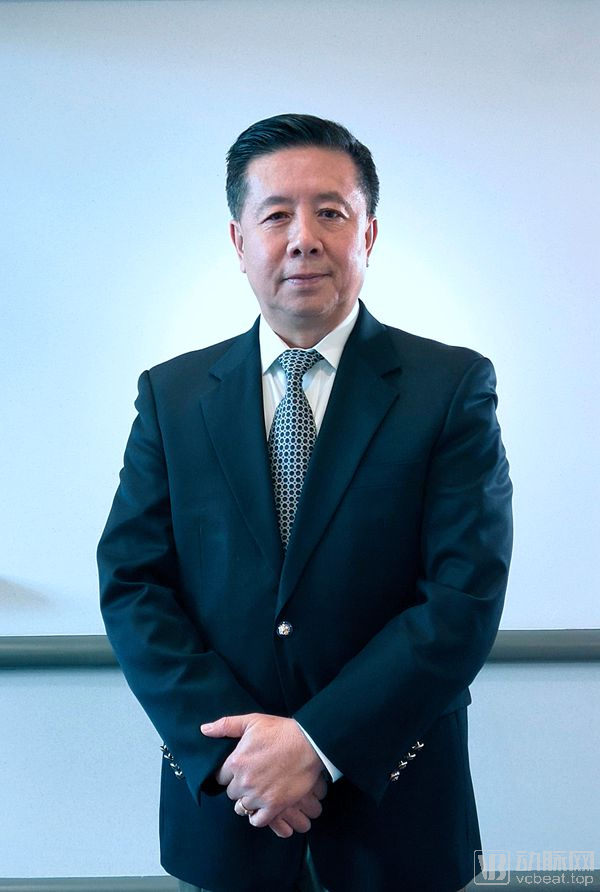
Dr. Lu Yang, Sirnaomics
Intradigm was Lu Yang’s first startup and one of the earliest companies globally to enter the development of novel RNA interference (RNAi) therapeutics. As the company’s head of R&D, Dr. Lu was also among the earliest researchers and entrepreneurs worldwide to engage in this field. In the following years, RNA interference technology was ranked as the top scientific achievement of the year by Science magazine (2002), Alnylam, the flagship company in the RNAi drug sector, was founded (2002), and scientists Andrew Z. Fire and Craig C. Mello were awarded the Nobel Prize in Physiology or Medicine for their discovery of RNA interference (2006).
Dr. Lu Yang’s Intradigm R&D team was the first in the world to apply nucleic acid interference therapy for diseases caused by ocular neovascularization (AJP, Dec. 2004) and successfully inhibited tumor growth in animal models using siRNA nano-delivery technology (NAR, Dec. 2004). In collaboration with Chinese scientists, the team also successfully applied nucleic acid interference technology to suppress the SARS virus in primate models (Nature Medicine, Sept. 2005). Due to its pioneering advantages and outstanding achievements in the field of nucleic acid interference technology, Intradigm was acquired by Genentech Foundation and other institutions in 2006 and later listed on the London Stock Exchange through a reverse merger in 2009.
Shortly after leaving Intradigm in 2007, Dr. Lu Yang embarked on his second entrepreneurial venture by founding Sirnaomics, Inc. in Maryland, USA, where he served as CEO, continuing to deepen his expertise in the development of novel RNAi therapeutics. The following year, Dr. Lu returned to China with a team of overseas-educated professionals and established Suzhou Sirnaomics in Suzhou Biobay, serving as Sirnaomics’ R&D center and clinical trial coordination hub in China. Upon its establishment, Suzhou Sirnaomics was awarded the 2008 Entrepreneurial Leading Talent Special Program by the Suzhou Industrial Park, laying a solid foundation for the company’s rapid growth in China.
Building on the discovery by Professors Fire and Mello that double-stranded RNA can effectively silence corresponding gene sequences via the Caenorhabditis elegans model (RNAi), Dr. Tuschl and colleagues at the Massachusetts Institute of Technology (MIT) elucidated the induction mechanism of RNA interference (RNAi) and the structural characteristics of small interfering RNA (siRNA). These joint discoveries provided a solid foundation in both application technology and mechanistic understanding for the subsequent research and development of RNAi-based therapeutics. In the process of advancing RNAi technology as a novel therapeutic modality, delivery technology has become the key determinant of success for such drugs. Since its inception, Sirnaomics has been dedicated to the advancement of delivery technologies. By leveraging peptide-based nanoparticle delivery systems, as well as tumor-targeting and hepatocyte-targeting delivery technologies, Sirnaomics has established a comprehensive platform for the innovation of novel RNAi therapeutics, with a pipeline of global first-in-class candidate drugs at various stages of preclinical and clinical development.
However, in the early days of Sirnaomics’ founding, the entire RNAi sector faced a downturn in new drug development involving nucleic acid interference, compounded by the impact of the global financial crisis. Major multinational pharmaceutical companies that had previously collaborated in the field, such as Merck & Co., Roche, and Pfizer, withdrew one after another. Sirnaomics, which had been established for only a few years, also came under immense pressure. “At that time, the company faced the challenge of crossing the ‘valley of death,’ with tight cash flow and a need to seek partners for its candidate drug projects,” Dr. Lu Yang told VCBeat. At just the right moment, Guangzhou Xiangxue Pharmaceutical was expanding into the innovative drug sector and extended an olive branch to Sirnaomics. In 2010, Sirnaomics and Xiangxue Pharmaceutical reached a cooperation agreement whereby Sirnaomics provided technology and patents, while Xiangxue provided funding, jointly developing the nucleic acid-based new drug STP705 (Cotara) in China for the treatment of hypertrophic scars. Leveraging this partnership with Xiangxue and seizing the opportunity presented by the national government’s vigorous promotion of the “12th Five-Year Plan Major Special Projects,” Sirnaomics established its second domestic subsidiary, Guangzhou Natai Biotechnology, on Guangzhou Bio Island in 2012, serving as the group’s production base for nucleic acid drug formulations in China.
The key to the successful development of nucleic acid interference drugs lies in the ability to effectively deliver siRNA therapeutics, which silence target gene expression, into targeted cells. In 2018, Onpattro, the world’s first RNAi drug, was approved for market launch in the United States, utilizing lipid nanoparticle (LNP) delivery technology. Recently, Givlaari became the second approved RNAi drug, employing N-acetylgalactosamine (GalNAc)-siRNA conjugate delivery technology. Although GalNAc technology is currently recognized within the industry as a safe and effective carrier system, its application is limited to hepatocyte-related diseases. Consequently, the entire field of nucleic acid interference drug research and development has begun exploring more broadly applicable siRNA delivery systems.
Sirnaomics employs its proprietary histidine-lysine copolymer peptide nanoparticle (PNP) delivery technology to protect and transport siRNA. Composed of branched histidine-lysine polymers (HKP), PNPs encapsulate siRNA within peptide nanoparticles, thereby preventing renal filtration and clearance while facilitating gradual uptake by target cells during circulation. Upon entering target cells, the histidine residues undergo protonation, enabling the release of the payload into the cytoplasm, where the siRNA can induce targeted gene silencing. As PNPs are composed of natural amino acids, their degradation products are inherently non-toxic; this simultaneously overcomes challenges related to drug targeting and stability. Sirnaomics’ research demonstrates that PNPs are suitable for both local and systemic administration. During systemic administration, peptide nanoparticles enhance the enhanced permeability and retention (EPR) effect, enabling siRNA to silence key targets within the tumor microenvironment, thereby influencing and inhibiting tumor growth. Since PNPs can carry multiple siRNAs simultaneously, the co-delivery of multiple siRNAs allows for synergistic gene silencing effects within the same target cells, enhancing the therapeutic efficacy of RNA interference (RNAi). This peptide nanoparticle delivery system offers significant advantages in the treatment of tumors and fibrotic diseases.
Since its inception, Sirnaomics has built a robust pipeline of innovative RNA interference (RNAi) therapeutics, covering multiple oncology and fibrotic disease indications. Notably, the Investigational New Drug (IND) applications for STP705, a leading candidate co-developed with Guangzhou Xiangxue Pharmaceutical, for the treatment of hypertrophic scars using a dual-target siRNA inhibitor and peptide-based nanoparticle delivery system, were approved by the U.S. FDA and China’s National Medical Products Administration (NMPA) in November 2016 and April 2017, respectively. Subsequently, STP705 received FDA clearance for clinical trials in cholangiocarcinoma (CCA) and non-melanoma skin cancer (NMSC). The Phase II clinical trial for NMSC was initiated in the United States in March this year, with results expected to be announced in early next year. STP705 has also been granted multiple Orphan Drug Designations by the U.S. FDA, enabling accelerated clinical development and regulatory approval in the United States through preferential policy pathways.
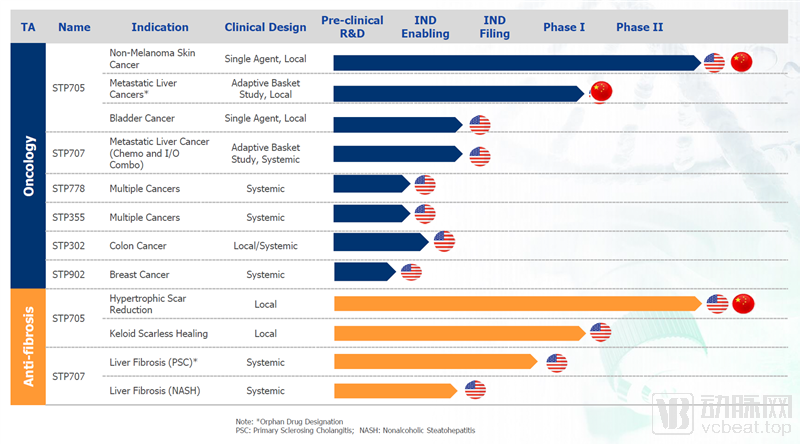
Sirnaomics R&D Pipeline
In April this year, Sirnaomics completed a Series C financing round totaling $48 million, co-led by Guangzhou’s Yuexiu Industrial Fund and Hong Kong’s China Resources Zhengda Life Science Fund. As a globally leading biopharmaceutical company focused on the research, development, and industrialization of RNA interference (RNAi) therapeutics, and as the only R&D platform worldwide capable of advancing RNAi clinical trials simultaneously in both China and the United States, Sirnaomics is now actively progressing with a new pre-IPO financing round, planning to list on international capital markets in the near future.“As a top-tier enterprise in Asia and globally dedicated to the innovation of novel RNAi therapeutics, Sirnaomics will vigorously advance the research and development of RNAi drugs based on peptide nanoparticle delivery technology and other delivery platforms such as GalNAc. We aim to remain at the forefront worldwide in tumor immunotherapy and the treatment of fibrotic diseases, providing more effective and safer therapeutic options to address urgent unmet clinical needs,” stated Dr. Lu Yang.。