

Pfizer’s Ibrance (Palbociclib) Approved in the UK for HR+/HER2- Metastatic Breast Cancer in Women Previously Treated with Endocrine Therapy
Nov 29, 2019 09:44
CST Updated
09:44

Pfizer
Pharmaceutical R&D Developer

NICE
NICE is a non-departmental public body of the UK Department of Health, primarily responsible for: National Health Service, clinical practice of health technologies, guidelines for health promotion and disease prevention, and social care services. It serves the UK NHS.

November 29, 2019 /BioonBIOON/ --Pfizer(Pfizer) recently announced that the UK’s National Institute for Health and Care Excellence (NICE) has approved access to the targeted anticancer drug Ibrance (Chinese brand name: Ai Bo Xin®; generic name: palbociclib) through the Cancer Drugs Fund (CDF), in combination with fulvestrant, for the treatment of hormone receptor-positive (HR+), human epidermal growth factor receptor 2-negative (HER2-) locally advanced or metastatic breast cancer in patients who have previously received endocrine therapy.Breast CancerPatient.
This decision means that the Ibrance and fulvestrant regimen will be available through the Cancer Drugs Fund (CDF) within the National Health Service (NHS) with immediate effect. It is estimated that approximately 3,200 women with HR+/HER2- breast cancer in the UK are eligible for this treatment regimen.
From Phase IIIClinical TrialsThe results of PALOMA-3 demonstrated that in patients with HR+/HER2- breast cancer who experienced disease progression during or after endocrine therapy, Ibrance plus fulvestrant delayed disease progression by 6.6 months compared with placebo plus fulvestrant (11.2 months vs. 4.6 months; HR=0.497 [95% CI: 0.398–0.62]). By prolonging progression-free survival (PFS), the combination of Ibrance and fulvestrant deferred the need for subsequent therapies, including chemotherapy, thereby enabling patients to achieve better quality of life during periods of prolonged disease stability.
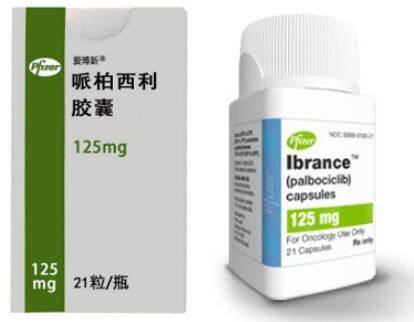
Ibrance is a first-in-class oral targeted CDK4/6 inhibitor that selectively inhibits cyclin-dependent kinases 4 and 6 (CDK4/6), restores cell cycle control, and blocksTumorCell Proliferation. Dysregulation of the cell cycle is a hallmark of cancer, with CDK4/6 being overactive in many cancers, leading to uncontrolled cell proliferation. CDK4/6 are key regulators of the cell cycle, capable of triggering the transition from the growth phase (G1 phase) to the DNA synthesis phase (S phase). In estrogen receptor-positive (ER+) breast cancer, CDK4/6 overactivity is highly prevalent, as CDK4/6 serves as a key downstream target of ER signaling. Preclinical data demonstrate that dual inhibition of CDK4/6 and ER signaling has a synergistic effect and can suppress the growth of G1-phase ER+ breast cancer cells.
Ibrance is the first CDK4/6 inhibitor launched globally, initially approved in February 2015. To date, it has been approved in more than 90 countries worldwide for first-line and second-line treatment of HR+/HER2- breast cancer. In April 2019, Ibrance received U.S.FDAApproved as the first and only CDK4/6 inhibitor for use in combination with an aromatase inhibitor as first-line treatment for male patients with HR+/HER2- metastatic breast cancer. In the United States, Ibrance is indicated for the treatment of adult patients with HR+/HER2- advanced or metastatic breast cancer: (1) in combination with an aromatase inhibitor as initial endocrine therapy for postmenopausal women or men; (2) in combination with fulvestrant for patients who have experienced disease progression following endocrine therapy.
In China, Ibrance (Ibrance) was approved in August 2018 for use in combination with aromatase inhibitors as initial endocrine therapy for the treatment of postmenopausal women with HR+/HER2- locally advanced or metastatic breast cancer.
In 2018, global sales of Ibrance reached $4.118 billion. Previously, the pharmaceutical market research firm EvaluatePharma released a report predicting that Ibrance’s global sales would reach $9.128 billion in 2024, making it the best-selling CDK4/6 inhibitor worldwide, with a compound annual growth rate (CAGR) of 14.2% during the forecast period. (Bioon.com)
Original Source: Ibrance (palbociclib)approved by NICE via the Cancer Drugs Fund for women with previously treated HR positive, HER2 negative metastatic breast cancer