

Wearable Biosensors for Non-Invasive Sampling of Sweat, Interstitial Fluid, Tears, and Saliva: Market Poised to Surpass $2.5 Billion

Novartis
Drug Development and Manufacturing

Internet-related services and product providers
Wearable devices have exerted a broad influence on our daily lives through their dynamic, continuous, and real-time monitoring of human physiological information, garnering significant attention within the broader health industry. However, currently commercialized wearable devices primarily measure heart rate using electrocardiography (ECG) and photoplethysmography (PPG), which fall under the categories of electrochemical and optical biosensors, respectively.
In addition to these two types of sensors, wearable devices also incorporate another category of more valuable biosensors. Biosensors reflect physiological states by non-invasively measuring biochemical markers in body fluids. These biomarkers primarily include those found in sweat, tears, saliva, and interstitial fluid, as well as metabolites, bacteria, and hormones present in these fluids.
Wearable Biosensors Hold Great Promise in Medical Applications, but Many Challenges Remain Before Large-Scale Commercialization. Nature magazine in the United States provided a detailed introduction to the latest advancements in this industry. VCBeat (WeChat ID: Vcbeat) has compiled and translated the report to help readers understand the current status and development of wearable biosensors.
Wearable Biosensors Have a Promising Future
According to a market report from Grand View Research, the global wearable device market size was approximately USD 150 million in 2016 and is projected to reach USD 2.86 billion by 2025. A significant portion of the newly added market size is expected to be comprised of wearable biosensors.
Although the slower-than-expected commercialization of wearable non-invasive biosensing platforms has somewhat dampened market expectations, many remain optimistic about the market prospects for wearable biosensors, driven by technological breakthroughs in the field.
Currently, wearable devices primarily rely on physical sensors to monitor mobility and vital signs, such as step count, calorie expenditure, and heart rate. As researchers expand their focus from tracking physical activity to addressing healthcare applications—such as diabetes management and remote monitoring of the elderly—wearable devices need to undergo self-innovation.
Researchers have devoted significant efforts to the development of wearable biosensors. By integrating biorecognition elements into sensors, wearable biosensors have rapidly transitioned from proof-of-concept in literature to tangible devices, demonstrating the immense potential for growth in this field.
Driven by the vast market potential in diabetes management, minimally invasive blood glucose monitoring devices represent one of the most prominent and commercially viable directions within the field of wearable biosensors.
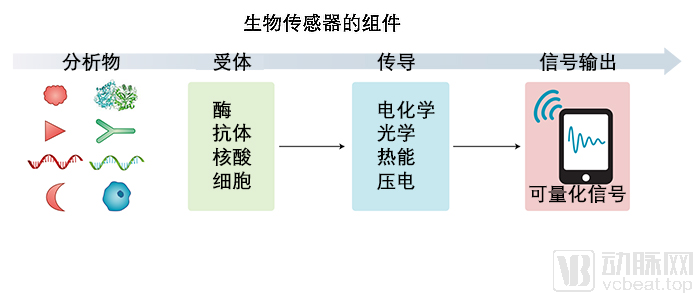
Let us first examine the composition of a typical biosensor, which comprises two basic functional units: a bioreceptor responsible for the selective recognition of biomarkers (such as enzymes, antibodies, or DNA), and a physical or chemical sensor responsible for converting the biological recognition process into a usable signal.
The earliest biosensors can be traced back to the 1950s and 1960s. With the gradual maturation of non-invasive sampling and monitoring technologies in recent years, replacing conventional blood tests with non-invasive wearable biosensing devices is becoming increasingly feasible. Such devices offer advantages including high specificity, rapid and portable operation, low cost, and low power consumption.
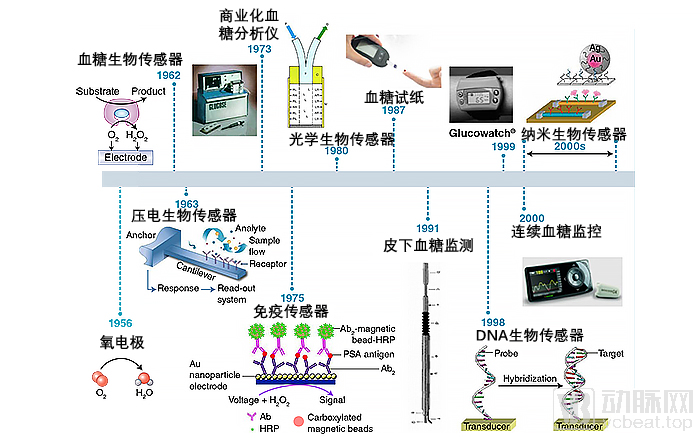
Biosensor platforms sample bodily fluids, including sweat, tears, saliva, or interstitial fluid (ISF), in a non-invasive manner and perform chemical analysis on the biomarkers they contain. The non-invasive approach allows for convenient sampling at any time, without concerns about injury or infection associated with invasive methods. This approach has been widely applied across various scenarios.
Wearable biosensors rely on highly specific bioreceptors. These bioreceptors are capable of recognizing target biomarkers and their corresponding concentrations in complex samples under physiological conditions. The widespread adoption of this technology also requires a deep understanding of the biochemical composition of body fluids, such as sweat or tears, and their relationship with blood chemistry. Furthermore, to achieve non-invasive sampling without causing discomfort to the wearer, biosensors must utilize advanced materials and designs that provide the necessary flexibility and stretchability.
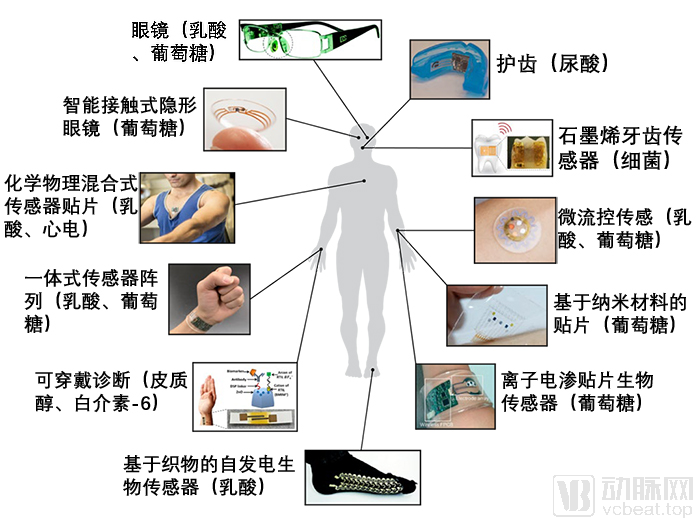
Currently, wearable biosensors are mainly categorized into three types: epidermal wearable biosensors, ocular wearable biosensors, and oral wearable biosensors.
Epidermal Wearable Biosensors
The vast majority of the human body is covered by skin. Therefore, among various wearable biosensors, epidermal wearable biosensors that interface through skin contact have garnered the most attention.
Epidermal wearable biosensors can sample sweat or interstitial fluid on the skin surface and perform real-time analysis or continuous monitoring of biomarkers within these fluids. Such sensors typically rely on bioreceptors for the biocatalytic and ion-selective recognition of biomarkers, integrated with various transduction mechanisms such as optical, electrochemical, or mechanical methods. Currently, electrochemical and colorimetric methods are the two primary transduction modes.
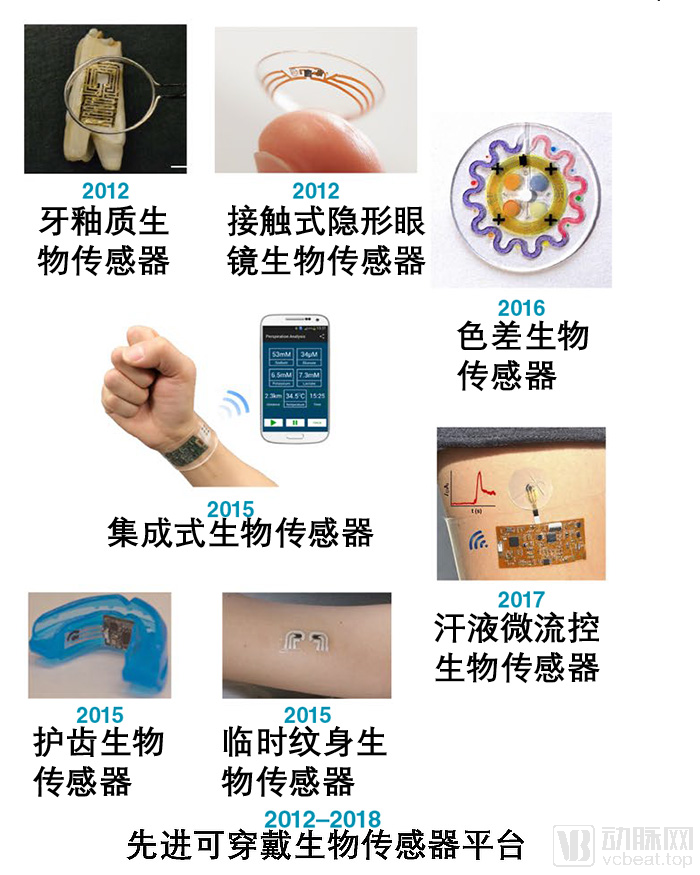
By directly conforming sensors to the skin, epidermal wearable devices have become a reality. Currently, common sensor integration methods include electronic skin, temporarily printed tattoos, wristbands, patches, or direct embedding into textiles. These integration approaches ensure close contact between the sensors and the skin, while withstanding mechanical stress during body movement.
Secretion and Composition of Epidermal Fluids (Sweat and Interstitial Fluid)
Sweat glands are widely distributed across the surface of human skin, with an average of more than 100 sweat glands per square centimeter. Consequently, sweat is the most accessible bodily fluid for chemical sensing applications. Naturally, sweat must be present on the skin surface to be sampled and analyzed. Sweat production can be induced through methods such as exercise, heating, pressure, or iontophoresis.
Generally, sweat contains metabolites (such as lactate and glucose), electrolytes, trace elements, and small amounts of macromolecular components (proteins, nucleic acids, neuropeptides, or cytokines). These biomarkers can be used for non-invasive, point-of-care monitoring of physiological health status, as well as for disease diagnosis and treatment.
Nevertheless, further research is currently needed to validate the clinical utility of sweat as a biofluid for diagnostic purposes. This is because biomarkers in sweat are transported from surrounding capillaries into the sweat and can also be generated within the sweat ducts, making it difficult to establish a reliable correlation with concurrent blood drug concentrations.
Changes in biomarker concentrations in sweat can be measured through various methods; nevertheless, these concentrations remain influenced by the relationship between sweat rate and biomarker partitioning. Therefore, a deeper understanding of sweat chemistry and transport mechanisms, coupled with advancements in sweat sampling and detection technologies, will accelerate the development of sweat-based monitoring systems.
In addition to sweat, epidermal biosensors can also perform targeted detection of biomarker concentrations in interstitial fluid. Human skin cells are surrounded by interstitial fluid and directly obtain nutrients from capillary endothelium. This establishes a reliable correlation between biomarker concentrations in interstitial fluid and those in blood, such as electrolytes, metabolites, and proteins.
To achieve non-invasive sampling of interstitial fluid, reverse iontophoresis or sonophoresis techniques must be introduced. However, similar to sweat analysis, sampling efficiency and contamination of the skin surface can affect accuracy. To address these issues, advanced sampling methods and purification of monitoring biomarkers are essential.
Epidermal Biosensors for Sweat Acquisition Based on Human Motion
Early advances in epidermal wearable biosensors focused on the analysis of single biomarkers. Temporary tattoo biosensors, equipped with screen-printed flexible circuits, enable prolonged direct contact with the skin and represent an attractive platform for biosensing.
In 2013, a team from the Department of Nanoengineering at the University of California, San Diego, conducted real-time dynamic monitoring of sweat lactate levels during human physical activity using epidermal sensors. To our knowledge, this was the first study to utilize epidermal sensors for this purpose.
During the experiment, participants were required to wear printed temporary tattoo biosensors while exercising. Lactate levels in sweat during exercise were measured using lactate oxidase. The study demonstrated that higher exercise intensity correlated with elevated lactate concentrations in sweat.
Although lactate levels are not directly correlated with blood pressure during the same period, they do reflect the intensity of prolonged physical exercise. Therefore, this approach can be used to monitor exercise efficiency without the need for further blood sampling.
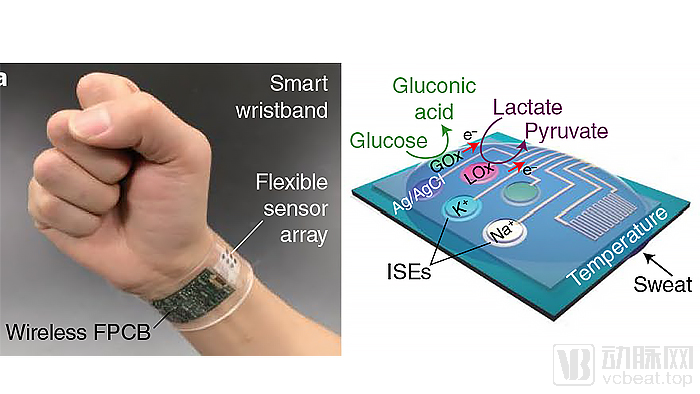
A research team at the University of California, Berkeley has made progress in developing fully integrated, non-invasive patch-style wearable sensor arrays. This multiplexed biosensor integrates a multi-sensor array capable of simultaneously detecting sweat metabolites (glucose and lactate), sweat electrolytes, and skin temperature.
By integrating flexible, modular sensors with conformal circuit boards, this system enables accurate assessment of physiological states during prolonged human movement. This groundbreaking work has achieved significant advancements in signal transmission, conditioning, data processing, wireless communication, system integration, on-site data processing, and communications, marking a major step toward the practical application of wearable biosensors.
China has also made significant strides in this field. The Department of Macromolecular Science at Fudan University, together with the State Key Laboratory of Polymer Molecular Engineering and the Advanced Materials Laboratory, jointly demonstrated a multi-biomarker electrochemical sensing technology. By coating carbon nanotube fibers with biorecognition materials to form a coaxial structure, the team developed fibers sensitive to glucose, sodium ions, potassium ions, calcium ions, and pH levels. These fibers maintained robust real-time detection performance even under repeated deformation.
Reliable multi-analyte sensing technology can also provide measurements of sweat rate, which are used to calibrate analyte signals and thereby enhance physiological relevance; this is critical for improving the personalized diagnostic and physiological monitoring capabilities of wearable devices. However, because this system relies on physical activity to induce sweating, its utility is limited in continuous monitoring applications.
Sweat Glucose Biosensors Are Well-Suited for Integration with Diabetes Management Applications. A research team from the Dell Medical School at the University of Texas at Austin demonstrated such a system, combining glucose monitoring devices with pH, humidity, and temperature sensors, and integrating the consolidated system into a transdermal drug delivery platform, thereby fully leveraging the advantages of multi-analyte wearable devices.
This system successfully integrates percutaneous glucose detection with a drug delivery platform, marking a significant advancement in the reliable "sense-and-act" pathway.
However, the operation of these devices relies on physical activity by the target users to generate sweat. Consequently, they are incompatible with continuous glucose monitoring for daily life, which does not depend on exercise. These sweat-based monitoring devices for diabetes management still require large-scale clinical validation.
Meanwhile, although studies have shown a correlation between sweat glucose concentration and concurrent blood pressure, the precise measurement of physiologically relevant sweat glucose concentrations using epidermal biosensors faces major challenges stemming from uncontrolled operational conditions, such as fluctuations in temperature and pH, diverse and complex sources of glucose contamination, low sampling rates, and limited sample volumes. These factors all compromise the accuracy of the collected data.
A research team from the Department of NanoEngineering at the University of California, San Diego, has discovered a novel multiplexed wearable sensing approach that integrates electrophysiological measurements with biochemical marker analysis. This method eliminates the need for separate physical and chemical sensors by employing screen-printed hybrid physicochemical patch sensors to simultaneously measure lactate levels and heart rate without mutual interference. This represents a significant first step in the development of multimodal wearable sensors.
In addition to electrochemical detection techniques, colorimetric analysis based on the reaction between sweat biochemical markers and various dye indicators has also been widely adopted. Due to its power-free operation, colorimetric analysis is particularly suitable for wearable devices; however, it requires additional reading equipment, such as cameras with color-analysis capabilities, to process the measurement data.
Closed-loop microfluidic systems enable direct and rapid collection of sweat while preventing evaporation and contamination. Consequently, such devices facilitate complex sweat sampling and measurement, addressing common challenges in the field of sweat analysis. Integrating microfluidic systems for real-time sweat sampling with colorimetric biosensing systems allows for real-time monitoring of multiple sweat biomarkers.
An international collaborative team has developed a skin-adhesive microfluidic system that monitors multiple sweat biomarkers through multiple sampling channels and corresponding reservoirs, coupled with quantitative analysis of sweat loss.
A research team from the Department of Nanoengineering at the University of California, San Diego, has recently developed a similar skin-worn flexible microfluidic system for sweat sampling, integrated with electrochemical biosensing capabilities for lactate and glucose.
This microfluidic sweat monitoring technology enables precise point-of-care measurement of chloride, sodium, and zinc by integrating fluorescent probes into a skin-contact system and evaluating the resulting fluorescence via a smartphone-based imaging module. This optical sensing approach for bodily fluids offers sensitivity comparable to that of traditional laboratory-based measurements of microliter-scale volumes. By combining this method with sweat sampling techniques that do not rely on physical exertion to induce sweating, it is crucial for expanding the range of target biomarkers.
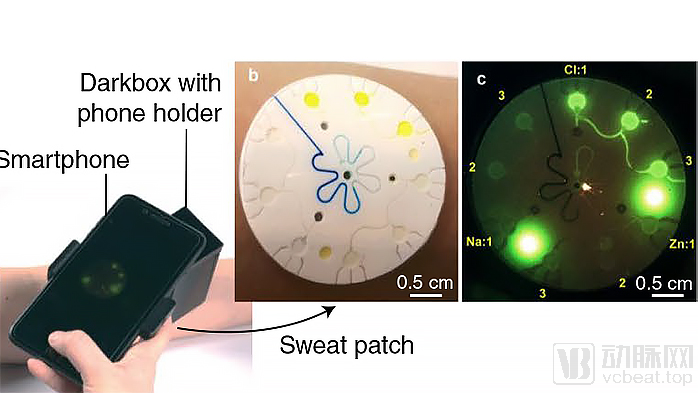
Wearable Biosensing Device Utilizing Smartphone-Based Colorimetric Detection
Biomarkers associated with hormonal and immune responses have also demonstrated the diagnostic potential of wearable immunosensors. The platform developed by the University of Texas at Dallas utilizes room-temperature ionic liquids to compensate for fluctuations in sweat pH and enhance the stability of antibody bioreceptors for up to 96 hours. As an alternative, the research team at the university has also developed a cortisol sensing system based on molybdenum disulfide nanosheets that interact with cortisol antibodies.
Once successful, this antibody-based bioassay will expand the application scope of epidermal wearable biosensors. However, there is still a long way to go. The biggest challenge lies in the fact that such immunosensors are depleted during the reaction and cannot be easily regenerated, rendering them unsuitable for continuous monitoring applications.
Currently, most wearable biosensors are primarily based on electrochemical or optical principles. Piezoelectric biosensing technology has also been introduced as an electronic skin platform for monitoring sweat metabolites. Driven by body motion, piezoelectric signals enable self-powered biosensors that operate without external power sources.
However, as self-powered devices, wearable piezoelectric biosensors require evaluation of their key performance metrics in practical applications, such as accuracy and operational lifespan.
In addition to the sweat or interstitial fluid mentioned earlier, epidermal biosensors can also directly analyze the skin surface. A research team from the Department of NanoEngineering at the University of California, San Diego, has developed a bandage-like biosensor capable of analyzing tyrosinase on the skin surface as a biomarker. To our knowledge, this is the first wearable device to use an enzyme as a biomarker.
This bandage-style tyrosinase biosensor exhibits promising performance, offering potential for rapid melanoma screening in the future. It holds considerable promise for low-cost, decentralized applications in home or point-of-care settings. Nevertheless, extensive experimental validation remains necessary.
Iontophoresis-Based Epidermal Biosensors
Sweat and interstitial fluid can also be obtained non-invasively via reverse iontophoresis. This technique applies a mild electrical current between two skin-worn electrodes to induce the migration of ions in sweat or interstitial fluid, causing no damage to the skin or involving blood draw, and can be performed while the subject is at rest.
Cygnus once debuted the GlucoWatch Biographer, a wrist-worn wearable device based on reverse iontophoresis sensors. This FDA-cleared device enables non-invasive monitoring of glucose in interstitial fluid six times within one hour and operates continuously for over 12 hours.
Since the components of interstitial fluid diffuse directly from the capillary endothelium, glucose levels in the interstitial fluid are closely correlated with blood glucose levels. Glucose extracted from ISF can be easily measured using glucose biosensors worn on the skin.
However, the device required a lengthy warm-up time of 2–3 hours; calibration still necessitated the use of an invasive blood glucose meter; and, more importantly, there were reports that reverse iontophoresis could cause skin irritation. As a result, this product was withdrawn from the market in the early 21st century.
Subsequently, the research team from the Department of Nanoengineering at the University of California, San Diego developed an iontophoresis platform, namely the flexible temporary tattoo sensor mentioned earlier. Both the electrodes for reverse iontophoresis and the glucose biosensing electrodes on the device were fabricated using screen printing.
This conceptual platform addresses several issues associated with the GlucoWatch Biographer. First, it reduces skin irritation caused by reverse iontophoresis by lowering the applied iontophoretic current and the glucose detection potential. Second, the use of disposable screen-printed tattoo electrodes lowers the device cost. Finally, the device is easily affixed to the skin surface without impeding the wearer’s mobility.
The device has been successfully validated, demonstrating the potential of applying an iontophoresis-based disposable glucose sensing platform to wearable devices. However, the device lacks electronic integration and requires validation for long-term continuous monitoring applications.
Tsinghua University, in collaboration with the General Hospital of the Air Force, has designed a new sensor for wearable devices that enables the delivery of positively charged sialic acid, thereby accelerating the transport of glucose to the skin surface and enhancing the efficiency of glucose sampling from interstitial fluid.
These iontophoresis-based glucose sensors fully leverage the close correlation between interstitial fluid glucose and blood glucose, as well as the capability of iontophoresis to sample interstitial fluid when the human body is at rest. However, the efficiency of glucose extraction via iontophoresis is difficult to control, which may lead to inconsistent volumes of sampled interstitial fluid and consequent variations in glucose concentration.
Recently, a physics research team at the University of Bath in the UK developed a graphene-pixel-based glucose monitoring patch that enhances the consistency of iontophoretic biomarker extraction. The platform employs an array of graphene “pixels,” each sized to match the volume required to collect interstitial fluid from a single hair follicle, thereby improving the reproducibility of the extraction process.
An array composed of multiple graphene pixels enables redundant measurements on a single platform, thereby achieving higher precision. This is crucial for the commercialization of epidermal wearable biosensors. The device developed by the University of Bath successfully performed non-invasive blood glucose monitoring in vitro for over six hours. Currently, its operational duration still needs to be extended to meet practical demands.
Iontophoresis has recently been applied to stimulate local sweat secretion. The method involves loading sweat stimulants (pilocarpine and carbachol) onto the iontophoresis electrodes. This approach enables on-demand sweat production, allowing for sample collection even at rest.
Sweat stimulants have a long history of use. As early as 1959, Gibson and Cooke employed pilocarpine in the development of iontophoresis. It facilitates transdermal penetration via the anode through charge repulsion, thereby promoting localized sweat production.
Commercialized chloride ion monitoring products have emerged, namely Wescor’s Macroduct—a device primarily used for the diagnosis of cystic fibrosis that is currently seeking FDA approval.
The research team from the Department of Nanoengineering at the University of California, San Diego, has also integrated an iontophoretic sweat induction system and electrochemical analysis-based biosensing technology into their developed wearable temporary tattoo. Its feasibility and performance have been validated; it can measure alcohol content in sweat within 10 minutes, serving as a useful indicator for revealing blood alcohol concentration without time delay, and avoiding the common errors associated with transdermal devices and breathalyzers used for drunk driving detection.
A cross-institutional collaborative team from several universities in California has also developed a patch-based iontophoretic sweat sensor, which can be used to measure sodium and chloride ions in the diagnosis of cystic fibrosis, as well as to measure glucose concentrations in healthy individuals. Notably, this platform features customizable configurations for sweat induction.
However, the current platform only sustains sweat production for 60 minutes, and the sweat rate changes over time. This may hinder continuous monitoring applications.
Epidermal wearable biosensors can also play a role in drug testing, enabling non-invasive pharmacokinetic studies. A research team at the University of California, Berkeley, has developed a wearable device that detects caffeine using either pilocarpine-stimulated iontophoretic sweat or exercise-induced sweat.
This proof of concept demonstrates the potential of biosensors in pharmacokinetics, thereby highlighting their significant promise for future applications in pharmaceutical technology.
However, it does not integrate a sweat induction device. Meanwhile, to conduct extensive pharmacokinetic studies under resting conditions, it is necessary to integrate custom iontophoresis devices with the sensing platform. Furthermore, a deeper understanding of the correlation between blood and sweat drug concentrations is required.
Most epidermal sensors are limited to analyzing a single type of biofluid. A research team at the University of California recently demonstrated a wearable platform capable of simultaneously sampling and analyzing two distinct biofluids. Leveraging iontophoresis, this wearable tattoo enables the collection of sweat stimulated by iontophoretic drug delivery and interstitial fluid via reverse iontophoresis, allowing for the simultaneous analysis of biomarkers contained in each fluid.
Challenges and Future Outlook
Overall, epidermal wearable platforms based on non-invasive sampling and monitoring of sweat and interstitial fluid have made significant progress in device integration, sensing accuracy, sweat/ISF generation and substitution, signal transduction, data transmission, and multiplexed sensing; meanwhile, advances have also been made in related flexible and self-healing materials.
However, this technology still requires extended operational duration, enhanced correlation between sensor response and concurrent blood concentration analysis, effective and controllable sampling of biofluids, as well as improved sweat sampling and transport, to increase the reliability and relevance of detection for dynamic monitoring of concentration changes.
Multiplexed sensing platforms can further enhance the reliability of monitoring sweat analytes by correcting for variations in complex factors. As current systems meet the requirement for sweat generation through physical exercise, they are particularly well-suited for fitness monitoring. However, to address needs such as diabetes or alcohol monitoring, alternative non-invasive sampling routes are required, along with an expanded range of target biomarkers.
Eye-Based Wearable Biosensors
Another biofluid that can be used to monitor physiological status is tear fluid. Biomarker molecules in tears diffuse directly from the blood, and the tear-blood barrier demonstrates a strong correlation with biomarker concentrations in the blood. Tears are part of the eye’s protective mechanism against contamination and have a less complex composition than blood. These characteristics make tears highly attractive for non-invasive monitoring and diagnosis.
Secretion and Composition of Tears
Tears, secreted by the lacrimal glands, coat the surface of the eye to form a protective film. Tear fluid contains various metabolites and electrolytes, and its glucose concentration correlates well with blood glucose levels—provided that samples are collected from naturally secreted tears. Reflex tearing induced by ocular irritation typically disrupts this correlation.
Despite the proven association, tear sampling for in vitro diagnostics faces challenges such as small sample volume, susceptibility to evaporation during collection, inter-individual variability in tear secretion, intra-individual temporal fluctuations in tear secretion, and significant technical difficulties in collection methods. These factors can substantially affect the concentration of biomarkers in the collected tear samples.
Therefore, the accuracy of in vitro tear diagnostic tests largely depends on the collection method, with the most common strategies being the use of glass capillaries or Schirmer’s strips. Reflex tears, produced in response to emotional or mechanical stimulation, differ in composition from naturally secreted tears. These variations and challenges underscore the necessity of developing wearable tear-sensing platforms that do not irritate the eyes.
Tear-Based Wearable Biosensors
Contact lens-based systems are attractive for addressing tear collection challenges, as they can be worn without causing ocular irritation and maintain continuous direct contact with naturally secreted tears.
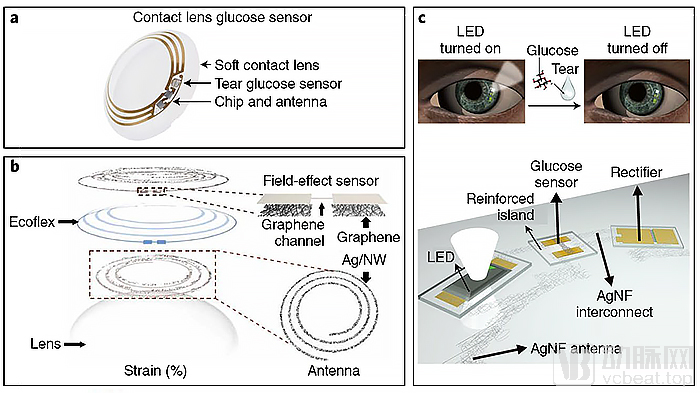
Wearable Biosensing Platform Based on Contact Lens Morphology
Integrating all necessary biosensing, data processing, and power supply components within a contact lens poses a significant design challenge. The rapid advancement of soft materials used in contact lens manufacturing has reduced ocular irritation, prevented wearer discomfort, and provided the necessary oxygen permeability, thereby enhancing the accuracy of continuous monitoring of tear glucose or metabolites.
A research team from the Department of Electrical Engineering at the University of Washington investigated various biosensing strategies and addressed interference issues by introducing a dual-sensor configuration. Further improvements are planned, including the integration of a 2.4 GHz wireless readout chip and powering the device using far-field electromagnetic radiation (delivering up to 3 μW at a distance of 15 cm).
Google and Novartis have collaborated to achieve significant advancements in their respective areas of expertise—electronic miniaturization and applied medical technology—by developing a contact lens platform for tear glucose monitoring. This conceptual soft contact lens platform integrates a wireless control chip, a micro-electrochemical transducer, and an antenna within a hydrogel matrix to enable non-invasive glucose detection in surrounding tears.
This product could have accelerated the commercialization of contact lens biosensors. Unfortunately, clinical trials for this product and the subsequent launch of the commercial version have been delayed, indicating that significant technical challenges remain in successfully realizing high-performance contact lens sensing platforms.
Recently, a research team at the Ulsan National Institute of Science and Technology in South Korea integrated glucose-sensing and intraocular pressure-sensing contact lenses using wireless technology, marking further advancements in wireless ophthalmic diagnostics based on smart contact lenses. In the demonstration, an in vivo glucose monitoring sensor worn on a rabbit eye was combined via wireless technology with an ex vivo intraocular pressure monitoring sensor placed on a bovine eye.
Although the device is theoretically capable of multiplexed sensing, simultaneous operation of the two sensors has not been validated. Prior to further human trials, mutual interference and biocompatibility between them must be rigorously evaluated.
Subsequently, the team further integrated wireless display and related power supply modules into the contact lens biosensor, enabling real-time in vivo monitoring of glucose responses in rabbit tears. This advanced device utilizes transparent and soft materials to ensure wearer comfort without impairing vision. Additionally, it incorporates a wireless power module, eliminating the need for an external power source.
However, further research is still needed to demonstrate the system's all-weather in vivo sensing performance and to show its feasibility for measuring dynamic glucose levels.
A research team at the University of Birmingham in the UK has integrated photonic microstructure sensors based on hydrogels into commercially available contact lenses. Variations in reflected power are recorded by a smartphone, thereby correlating with changes in tear glucose levels. Validation has demonstrated that this system offers rapid and sensitive glucose response.
Meanwhile, the device is simple to manufacture and can be rapidly produced. This capability makes it highly suitable for replacing electrochemical-based contact lens biosensors, thereby addressing the challenges of power supply and data transmission in miniature devices.
In addition to contact lens platforms, another noteworthy device is a small, spring-like electrochemical sensor. Designed by NovioSense, this sensor consists of multiple spiral electrodes coated with a protective polysaccharide-based hydrogel material. By placing the device in the conjunctival fornix, it enables continuous access to tear fluid.
Positioned at the base of the eye, behind the eyelid, it causes no discomfort to the wearer and enables continuous measurement of tear glucose via wireless data transmission. A clinical trial utilizing this device demonstrated a strong correlation between tear glucose and blood glucose levels, including in patients with type 1 diabetes.
Challenges and Future Prospects
Overall, tear-based sensors have primarily focused on glucose monitoring, but they also hold significant promise for the non-invasive detection of other physiological parameters.
The scope of novel biomarkers in tear fluid can be expanded to include other metabolites and key electrolytes, whose concentrations in tears show a high correlation with those in blood. For instance, non-invasive, tear-based direct assay of catecholamines can enhance the diagnosis of glaucoma.
Given that tears contain thousands of proteins, non-invasive tear monitoring can also be used to detect disease-related protein biomarkers. However, similar to sweat, these applications require extensive research and validation of the correlation between biomarker concentrations in tears and blood.
Wearable tear-sensing platforms in the form of contact lenses have proven attractive for health monitoring, as they do not irritate the eyes and generate relatively consistent tear fluid. In the future, by miniaturizing the interface and power supply and fully integrating them into the lens, this technology can be further expanded to therapeutic applications.
Microfluidic technology can also address the challenges of small sample volumes and rapid evaporation encountered in tear sampling, thereby facilitating real-time and accurate tear collection for monitoring. However, the application of this platform in biosensing has not yet been further validated; once successfully implemented, it will significantly enhance the accuracy of future tear-based biomonitoring.
Due to the sensitivity of the eyes to foreign bodies, tear-based biosensors are currently limited to animal studies. Human trials can be conducted subsequently after enhanced safety measures are implemented.
Compared with epidermal wearable biosensors, the Kechuangdai tear biosensor can continuously obtain target biofluids without the need for induction or extraction. However, sampling difficulties complicate the development of reliable tear-sensing platforms. Meanwhile, wearable devices in the form of contact lenses face design constraints due to their operating environment.
Oral Wearable Biosensors
Many biomarkers in saliva enter the oral cavity directly from systemic circulation via cellular transport or intercellular transfer, making saliva a “mirror of the human body” that reflects physiological status and an ideal non-invasive sampling alternative to blood analysis.
Meanwhile, saliva has a relatively high protein content and is well-suited for detecting disease- and stress-related biomarkers, holding significant application value in biomedicine and health monitoring. Because saliva can be easily collected, it has been used as a bodily fluid for in vitro diagnostic biosensing on strip-based or portable device platforms.
Saliva Secretion and Composition
Saliva, a complex oral fluid, is primarily produced by the parotid glands. It comprises numerous components, including metabolites, enzymes, hormones, proteins, microorganisms, and ions. Several of these salivary biomarkers (such as drugs, hormones, metabolites, or antibodies) have been adopted for clinical applications due to their ability to provide meaningful diagnostic information.
Research on wearable oral biosensors is relatively scarce. This is primarily because the abundant proteins and low concentrations of biomarkers in saliva pose a risk of potential biofouling. Despite these challenges, oral biosensing platforms remain highly attractive due to their ability to acquire dynamic chemical information from saliva in a painless manner.
Current oral wearable platforms require the integration of biosensors and electronic interfaces into intraoral devices, which exist in the form of mouthguards or denture-based systems.
Saliva-Based Wearable Biosensors
To the best of our knowledge, the first wearable oral sensor was demonstrated in the 1960s. Based on a partial denture platform, it was designed to monitor mastication, dental plaque pH, and fluoride concentration. However, its practical application was precluded by the need to replace several teeth with sensors and the potential risk of intraoral leakage from the internal sensors.
A Princeton University research team expanded on this concept by printing graphene-based nanosensors onto water-soluble silk threads and directly transferring them onto tooth enamel to enable passive, wireless monitoring of bacteria, thereby advancing the field of oral biosensing. This conceptual product is designed for remote monitoring of dental bacteria and can be extended to detect other salivary biomarkers.
In vitro studies have demonstrated a strong correlation between metabolite levels in blood and saliva, which has facilitated the development of modern oral salivary metabolite sensors, particularly those integrated into wearable mouthguards. A research team from the Department of NanoEngineering at the University of California, San Diego, developed an electrochemical biosensor for salivary metabolites (primarily lactate) in a mouthguard form factor by integrating screen-printed enzyme electrodes onto the device. Salivary lactate levels correlate well with blood lactate levels, making them useful for assessing physiological responses and performance.
The team further demonstrated a tooth-guard-shaped uric acid biosensor capable of monitoring uric acid levels in saliva, thereby enabling indirect, non-invasive monitoring of blood uric acid. Blood uric acid serves as a biomarker for various diseases, such as hyperuricemia, gout, and renal syndromes.
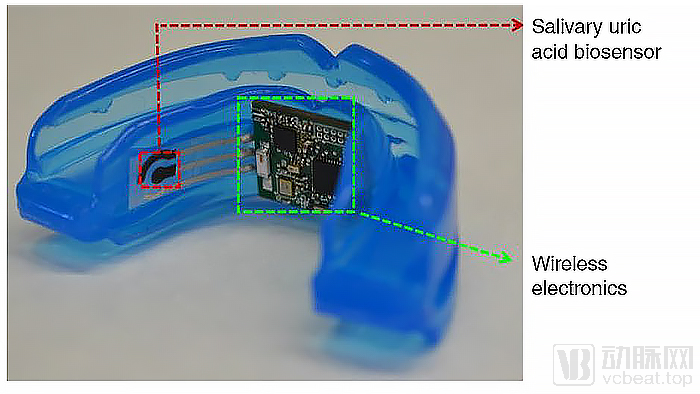
Mouthguard-Based Wearable Biosensing Devices
This platform demonstrates high sensitivity, strong specificity, and stable, rapid response characteristics, enabling the acquisition of dynamic chemical data on oral salivary biomarkers. Although these dental biosensing devices are well-suited for fitness or diagnostic applications, additional independent platforms are still needed to broaden their scope of use, such as for continuous glucose monitoring in daily life.
A multinational research team from Japan and the United Kingdom has developed a miniaturized, detachable “cavity sensor.” The sensor surface is fabricated from glucose oxidase (GOx)-modified polyethylene glycol and integrates a wireless transceiver. It is mounted on a customized monolithic mouthguard, shaped to fit the wearer’s teeth, to secure the device for measuring salivary glucose levels.
The close correlation between blood glucose and salivary glucose offers a highly advantageous and accessible approach for glucose sampling. However, further large-scale human studies are needed before considering the use of miniaturized wearable platforms for diabetes screening or monitoring via salivary glucose.
Wearable Sensors Based on an Oral Platform from Gachon University in South Korea Have Also Been Recently Demonstrated. By incorporating biocompatible materials and RF sensors into oral sensors mounted on teeth, the system enables wireless monitoring of food intake by measuring alcohol content, salt levels, sugar levels, pH, and temperature in saliva. However, rigorous evaluation of the targeted selectivity for biomarkers is still required to ensure accuracy.
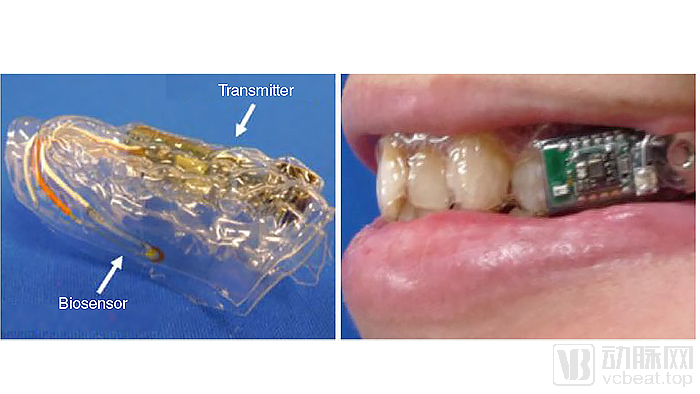
Another type of oral monitoring device achieves remote wireless telemetry of sodium intake by using ultra-thin, stretchable electronics and micro-sensors. Human trials have demonstrated the feasibility of real-time monitoring of sodium consumption, a capability essential for hypertension management.
Of course, the current assessment of device toxicity has been conducted solely in the absence of a chemical sensing layer. For actual oral applications, a rigorous evaluation of the biocompatibility of the recognition layer is required.
Overall, oral sensing platforms still require rigorous evaluation to ensure safety and reliability in practical applications. Particular attention must be paid to device safety, and surface contamination caused by other salivary components and food residues should be minimized.
Challenges and Future Outlook
Although saliva holds promise as a highly potential non-invasive diagnostic biofluid, challenges remain in achieving widespread and precise applications for oral monitoring. The concentrations of many important biomarkers in saliva are significantly lower than those in blood, posing stringent requirements for sensor sensitivity.
Compared with sweat and tears, saliva is indeed easier to sample. However, it has a rich composition and is easily contaminated by external factors (such as food and beverages). Potential gum bleeding can also lead to contamination or false signals. The high concentration of proteins in saliva can adsorb onto the surface of the sensor's conductive layer, causing rapid fouling—of course, this issue can be addressed by developing selective permeable protective coatings.
Wearable oral sensing devices also require detailed validation studies against blood samples, along with rigorous assessment of their safety and reliability. The ongoing discovery of novel salivary biomarkers will help further expand the diagnostic scope of saliva.
Challenges in Wearable Biosensing Technology
Numerous innovative wearable biosensing devices have been demonstrated across various applications, indicating the immense potential of wearable biosensors in practical use. Benefiting from advances in multiplexed sensing platforms, bodily fluid sampling, flexible materials, and wireless technologies, the reliability, monitoring capabilities, and wearability of wearable biosensors have been significantly enhanced.
However, current wearable biosensors remain at the conceptual stage and are still far from practical application. Significant challenges persist in terms of detection range, efficacy, stability, and accuracy, as well as in power supply, communication, security, and privacy.
Measurement of Broader Biomarkers
Currently, most wearable biosensors measure only a limited number of biomarkers. In the future, the industry should strive to introduce new biosensor formats and improved non-invasive sampling of biological fluids to monitor a broader range of biomarkers.
Understanding the composition of each type of biological fluid and its relationship with blood chemistry and certain medical diseases is crucial for expanding the recognition of wearable technology in the healthcare sector and achieving widespread clinical acceptance of these devices.
The real-time correlation between biomarker levels in non-invasive bodily fluid sampling and their concurrent concentrations in blood is a key metric for its acceptance. Rigorous and reproducible interpretation of biosensor readings in real-world settings remains an ongoing objective, particularly in applications that may necessitate clinical or operational responses.
In the future, to identify new biomarkers, we need to conduct systematic and in-depth analyses of the composition of each distinct type of biofluid—a domain that has historically fallen outside the scope of wearable sensor research.
Non-invasive testing can also be extended beyond the measurement of a limited number of metabolites and electrolytes, for example, by using non-invasive immunoassays to evaluate a range of protein disease markers, hormones, and stress markers.
Similarly, in addition to existing bodily fluids, efforts should be made to explore opportunities in new fluid types, such as urine, mucus, and semen. Real-time analysis of a broader range of biomarkers will ultimately benefit other areas of biomedicine, such as the clinical development of novel experimental therapies guided by biomarkers.
Wearable immunosensors require advanced microfluidic platforms with multiple steps and extended reaction times to detect biomarkers at extremely low concentrations. They can simplify label-free detection protocols and hold significant promise for healthcare, fitness applications, and various biosafety use cases.
Although most wearable devices primarily focus on single-parameter measurements, continued efforts should be made to achieve simultaneous, non-invasive monitoring of a broad range of biomarkers. This more comprehensive approach not only enables a broader analysis of physiological status but also provides dynamic calibration and correction of responses, thereby facilitating more accurate monitoring.
Employing multiple sensing methods for the same analyte can also enhance the reliability of biosensors. The combination of wearable sensors with different modalities enables more comprehensive monitoring of human physiological conditions and reveals a broad range of applications.
Finally, the successful implementation of wearable biosensors in healthcare requires extensive validation and large-scale correlation studies against blood-based clinical analyses, which serve as the gold standard. This correlation is a prerequisite for developing reliable and safe biosensing diagnostic platforms.
Accuracy and Stability
Ensuring that the response of wearable sensors is both accurate and reliable is crucial for their market acceptance. The accuracy of wearable biosensors is often affected by surface fouling effects, which are a major factor impacting the continuous operation of sensors.
To ensure reliability during prolonged wear on the body, robust anti-fouling surface protection is necessary, and dynamic calibration mechanisms—such as multimodal, multi-marker sensing and drift correction—are also essential.
Saliva-based oral biosensors are expected to suffer from significant biofouling. This is because saliva contains complex components, including much higher protein levels than non-invasive biological fluids such as sweat or tears.
Therefore, oral biosensors require particular emphasis on the development of surface protective coatings. The coating materials should be carefully selected to mitigate the impact of biofouling and eliminate concurrent electroactive interference. Meanwhile, enzymes should be immobilized on the sensor surface to prevent the leakage of potentially toxic components from the sensor.
Unlike traditional laboratory-based biosensors, wearable biosensors may compromise the stability of fragile biological sensing during prolonged outdoor activities in uncontrolled environments. Multiplexed sensing technologies, incorporating both biosensors and physical sensors, can provide active calibration for variations in temperature, pH, and humidity.
For accurate on-body measurements, it is also essential to account for potential contamination from the surrounding environment, mixing with residual bodily fluids, and continuous signal drift associated with sensor calibration. These issues can be partially addressed by employing appropriate microfluidic sampling systems and optimizing surface coating technologies.
System Integration and Hardware
Although not limited to wearable biosensors, attention to hardware, power supply, and communication issues is crucial for the practical application of these sensing devices.
Hardware components must be highly integrated with the biosensor platform and modified according to the specific requirements of different applications. Printed wireless circuit boards containing fully functional microcontrollers are widely used in wireless platforms due to their flexibility and cost-effectiveness. These printed circuit boards can be further integrated with batteries.
Another key requirement for wearable devices is maintaining low power consumption during continuous monitoring to provide useful and timely chemical information to the wearer or other end-users. This may necessitate a trade-off between energy consumption and data rate, particularly when high sampling frequencies are required. Efficient data processing of the acquired data and effective, secure communication are extremely important.
The most common methods for powering wearable biosensing platforms are lithium-ion or alkaline batteries. However, they are bulky and may pose toxicity concerns, particularly lithium-ion-based systems. Currently, batteries utilizing flexible materials are available to enhance wearability; nevertheless, sufficient energy density for long-term use has not yet been demonstrated.
Wearable supercapacitors feature rapid charging and discharging capabilities, but they also exhibit low gravimetric and volumetric energy densities. Depending on the charging mechanism of the wearable platform, some wearable power systems also harvest energy during the wearer’s physical activity for recharging.
Wearable batteries can be powered by solar energy, motion-based piezoelectric or electrostatic devices, thermoelectric materials harnessing body heat, or the chemical components of sampled biological fluids for wearable biofuel cells.
Wearable biofuel cells represent a promising approach to powering non-invasive wearable platforms. They can harvest energy from the same bodily fluids and function as self-powered biosensors; however, their stability remains unclear.
Advancements in power supply for wearable devices are a critical need, particularly as the demand for power increases with multiplexed sensing platforms. In addition to developing power sources and more energy-efficient devices, this gap can also be bridged through adaptive algorithms that reduce energy consumption.
Future Outlook
The successful translation and proof-of-concept of wearable biosensors face several obstacles in the commercial market related to their basic operational functions. First, wearable devices must overcome stability issues caused by long-term operation under uncontrolled conditions, including biofouling from sampling biological fluid components and the inherent instability of the biorecognition elements themselves.
Furthermore, the device must be capable of reliable operation without the need for frequent recalibration. Therefore, the fabrication of the sensor must ensure high stability of the bioreceptors to maintain the accuracy and reliability of the response.
Furthermore, an appropriate fluid sampling system, such as microfluidics, is required to enable efficient transport of biofluids to the sensor, ensuring reproducible and accurate signals with negligible sample contamination. Such advanced wearable fluidic systems can also facilitate multi-step bioaffinity assays, particularly immunoassays. For wearable devices intended for long-term use, the regeneration of immunosensors presents another major challenge that must be overcome.
Fully integrated wearable biosensing platforms require the integration of powered wireless electronics to enable data processing and secure signal transmission. Furthermore, the use of mobile terminals and smartphone-based microscopy, along with the introduction of algorithm-driven applications, is expected to facilitate the readout of responses from optical wearable biosensors. In light of all the aforementioned challenges, our understanding of how wearable biosensor technology can improve our health and performance is still in its infancy.
Future wearable biosensors will come in various forms, ranging from wristbands to textiles or fashion accessories, thereby seamlessly integrating into the wearer’s daily life.
Given the competitive research landscape and significant commercial opportunities surrounding wearable biosensors, we anticipate exciting new developments in this industry in the near future. Consequently, the wearable sensor market is expected to continue its rapid growth, maintaining its trajectory of transforming and improving people’s lives.
Reference: Nature: Wearable biosensors for healthcare monitoring