

Leukemia Moves Beyond Chemotherapy: Roche/AbbVie’s Venclexta + Rituxan Shows 85.3% Four-Year Survival in Relapsed/Refractory CLL
Dec 11, 2019 11:19
CST Updated
11:19

Roche
Oncology Drug Research, Development, and Manufacturing

AbbVie
Innovative Drug Developer
December 11, 2019 News /BioValleyBIOON/ -- The 61st Annual Meeting of the American Society of Hematology (ASH 2019) was recently held in Orlando, Florida, USA. ThisConferenceAt the conference, Roche and AbbVie announced the use of the targeted anticancer drug Venclexta/Venclyxto (venetoclax) in combination with MabThera/Rituxan (rituximab) for the treatment of relapsed or refractory chronic lymphocytic leukemia.Leukemia(Updated Data from the Pivotal Phase III MURANO Clinical Study in R/R CLL)
Four-year follow-up data demonstrate that the Venclexta/Venclyxto plus MabThera/Rituxan regimen (abbreviated as VenR) shows sustained benefits in overall survival (OS) and progression-free survival (PFS) compared with the bendamustine plus MabThera/Rituxan regimen (abbreviated as BR). No new safety events were reported in the study.
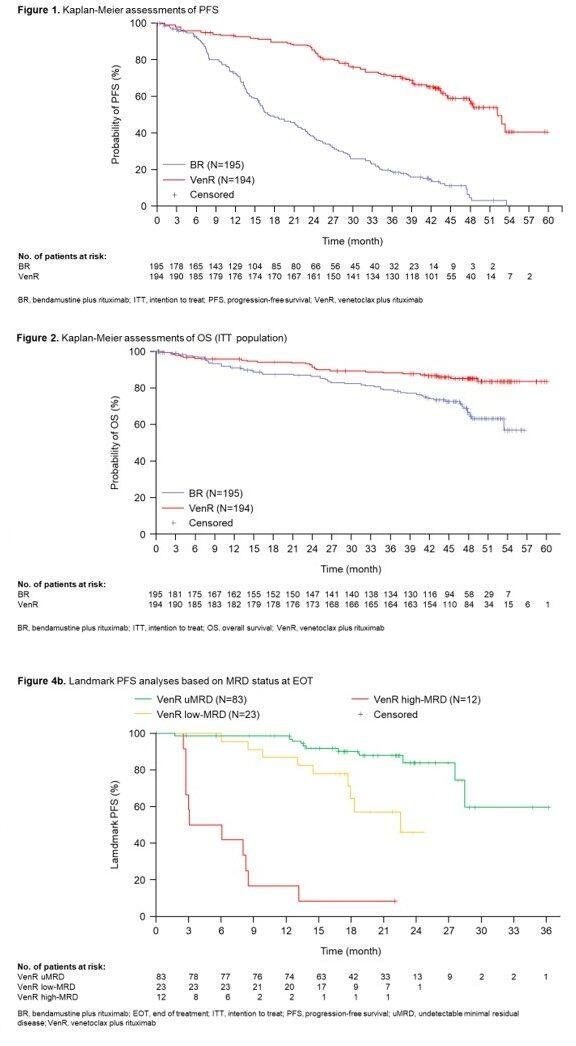
Specific data are as follows: (1) Compared with the BR regimen, the VenR regimen significantly reduced the risk of disease progression or death by 81% (HR=0.19; 95% CI: 0.14–0.25; p<0.0001). The estimated 4-year PFS rates were 57.3% (95% CI: 49.4–65.3) in the VenR group and 4.6% (95% CI: 0.1–9.2) in the BR group. (2) Compared with the BR regimen, the VenR regimen significantly reduced the risk of death by 57.3% (HR=0.41; 95% CI: 0.26–0.65; p<0.0001). The VenR group demonstrated consistently longer OS than the BR group, with 4-year OS rates of 85.3% and 66.8%, respectively. (3) Patients in the VenR group who achieved MRD negativity showed improved PFS at the end of treatment. (4) No new safety signals were identified during this extended follow-up period. Compared with the BR regimen, the most common grade 3–4 adverse events associated with the VenR regimen were neutropenia (58.8% vs. 39.9%),Anemia(11.3% vs 13.8%) and low platelet count (5.7% vs 10.1%).
Results from the MURANO study formed the basis for the approval of the Venclexta/Venclyxto + MabThera/Rituxan regimen (VenR) as a treatment option for patients with relapsed or refractory chronic lymphocytic leukemia (R/R CLL) worldwide.
Chronic Lymphocytic Leukemia (CLL) is the most common type of leukemia. CLL predominantly affects males, with a median age at diagnosis of 70 years. Globally, the incidence of all leukemias exceeds 400,000 cases per year, with CLL accounting for approximately one-third of all newly diagnosed leukemia cases.
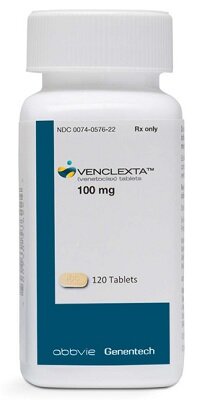
The active pharmaceutical ingredient of Venclexta is venetoclax, an oral B-cell lymphoma-2 (BCL-2) inhibitor. BCL-2 plays a role inApoptosisplays a crucial role in (programmed cell death), inhibiting the apoptosis of certain cells (including lymphocytes), and is overexpressed in certain types of cancer, which is associated with the development of drug resistance. Venetoclax is designed to selectively inhibit the function of BCL-2, restore cellular communication systems, and induce cancer cell self-destruction, thereby achieving therapeutic effects.Tumorthe purpose.
Venclexta was co-developed by AbbVie and Roche, with both parties jointly responsible for its commercialization in the U.S. market, while AbbVie handles commercialization in markets outside the U.S. (under the brand name Venclyxto). Currently, the two companies are conducting a large-scale clinical program to investigate venetoclax as monotherapy and in combination regimens for the treatment of various types of hematologic malignancies, including chronic lymphocytic leukemia (CLL), non-Hodgkin lymphoma (NHL), diffuse large B-cell lymphoma (DLBCL), acute myeloid leukemia (AML), and multiple myeloma (MM).
In the United States, Venclexta has beenFDAAwarded five Breakthrough Therapy Designations (BTD): one for previously untreated chronic lymphocytic leukemia (CLL), two for relapsed or refractory CLL, and two for previously untreated acute myeloid leukemia (AML). (Bioon.com)