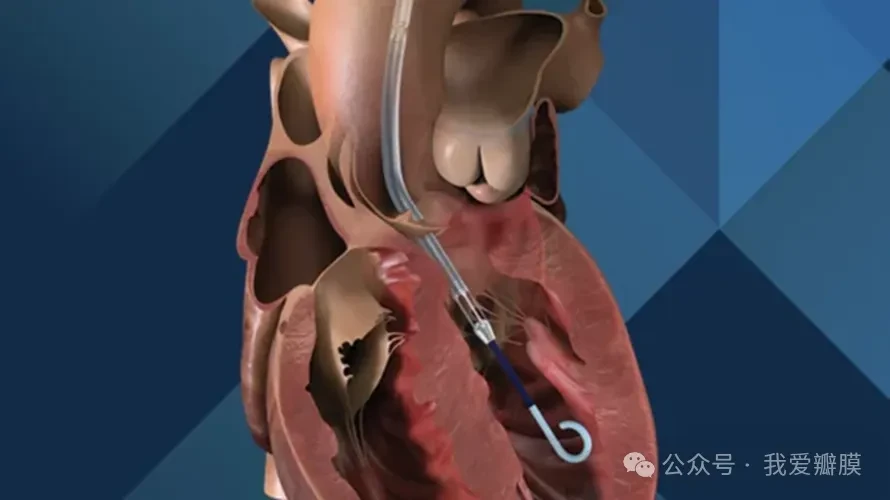
Home FDA Issues Emergency Warning Over Fatal Flaw in Johnson & Johnson's Impella CP SmartAssist Heart Pump

FDA Issues Emergency Warning Over Fatal Flaw in Johnson & Johnson's Impella CP SmartAssist Heart Pump

Jun 05, 2026 08:00 CST Updated 08:00

Johnson & Johnson

Medical Device R&D and Manufacturer
图片The management of critical cardiac conditions has always been a race against death. As the core life-saving device for high-risk cardiac surgeries and the treatment of cardiogenic shock, Johnson & Johnson’s Impella heart pump has long been the benchmark product in the field of acute circulatory support, trusted by countless medical institutions.

But now, this "life-saving device" has once again been exposed for having fatal safety hazards.
On May 29, 2026, the U.S. FDA issued another urgent safety alert regarding the Impella CP SmartAssist heart pump under Johnson & Johnson MedTech, warning of risks. This hazard was not a minor malfunction but a fatal functional abnormality caused by substandard device design, which has directly resulted in one patient death.
In just over a year, this top-tier heart pump has been subject to frequent recalls and multiple rounds of safety alerts, transforming what was once a life-saving device into a high-risk medical product.


01.Fatal Flaw Exposed: Abnormal Pressure Can Lead to Circulatory Arrest and Sudden Patient Death

Image
Image
Image
The core issue of this FDA warning directly points to seven specific batches of the Impella CP SmartAssist heart pump.
Following an internal review by Johnson & Johnson and FDA verification, the affected batch of devices failed to meet official design specifications, resulting in a malfunction characterized by insufficient purge pressure (low purge pressure). This malfunction is not merely a routine device error but constitutes a critical safety hazard capable of directly endangering patients’ lives.
According to the FDA’s official safety communication: Following the occurrence of low flush pressure in the device, low-pressure alarms will be continuously triggered; more critically, this can directly lead to interruption or even complete failure of mechanical circulatory support.
It is important to note that the Impella CP serves as a temporary core life support device for patients undergoing high-risk percutaneous coronary intervention (PCI) or those experiencing cardiogenic shock. Patients requiring this device are critically ill, with cardiac function on the verge of failure and their lives in imminent danger, relying entirely on the device to maintain systemic circulation.
Once device circulatory support is interrupted and not promptly corrected, it can rapidly trigger a series of fatal cascading reactions:
  • # Forced Change of Intraoperative Emergency Treatment Plan
  • Severe Hypotension Episode
  • Systemic Visceral Hypoperfusion and Ischemic Injury
  • Ultimately leading to the patient's death
Currently, this defect has directly resulted in one patient death, sounding an alarm for the clinical treatment of severe cases.
The serial numbers of the seven device units involved in this incident have been fully disclosed as follows: 613525, 644314, 645428, 644591, 672986, 673252, and 677223.
FDA Explicitly Requires: All healthcare institutions must immediately cease use of the aforementioned batches of devices, isolate and seal them on-site, strictly prohibit their use in the treatment of any cardiac patients, and uniformly return them to the manufacturer.


02.Johnson & Johnson’s Response: Probability Is Extremely Low, but Real Risks Exist

Image
Image

In response to a fatal safety incident, Johnson & Johnson MedTech swiftly responded by emphasizing patient safety as its core principle. It has proactively initiated a voluntary recall of seven problematic devices in the U.S. market and will provide refunds and compensation to affected healthcare institutions.
Meanwhile, Johnson & Johnson sought to downplay the risk impact by presenting a set of data: a review of all global adverse device reports from 2024 to April 2026 showed that the incidence rate of this design defect was only 0.01%.
Furthermore, Johnson & Johnson stated that it has conducted comprehensive retrospective quality audits and process reviews across its entire product portfolio. The multiple on-site corrective actions recently implemented further demonstrate the rigor of the company’s quality control system. Currently, all compliant products available on the market and in normal use have their safety fully assured.
However, the extremely low incidence rate cannot obscure the fatal consequences of the risk. For an individual patient, encountering this 0.01% probability entails a 100% cost to life, which is the core reason why the FDA insists on issuing urgent warnings.


03.Unrepentant! Six Recalls in One Year Leave Life-Saving Devices Mired in Safety Crisis

Image
Image

It is alarming that this is not the first time safety issues have been reported with the Impella heart pump. This star device, acquired by Johnson & Johnson at a high cost, has been mired in a “recall curse” over the past year, with frequent safety failures that are far from isolated incidents.
A review of publicly available information reveals that from July 2025 to May 2026 alone, Impella devices have triggered six official recalls and multiple rounds of FDA safety alerts:
  • In July, September, October, and December 2025, four consecutive rounds of recalls were triggered due to failures of the Automatic Implantable Cardioverter (AIC).
  • In April 2026, a device recall was initiated again due to the risk of leakage from the irrigation cassette;
  • On May 21, 2026, the FDA issued a special safety alert regarding defects in AIC controllers;
  • May 29, 2026: The warning regarding the risk of fatal design defects has once again materialized.
Frequent recalls and safety alerts have exposed long-standing systemic quality vulnerabilities in the Impella product platform. Device failures encompass multiple issues, including hardware design flaws, controller software anomalies, and accessory leakage, with recurrent instances of sudden failures and latent defects posing extremely high risks to critically ill patients.


04.$16.6 Billion Sky-High Acquisition: Flagship Product Falls from Grace

Image
Image

Many people are unaware that the Impella heart pump was originally part of the medical device company Abiomed. In 2022, Johnson & Johnson completed its acquisition of Abiomed for a staggering $16.6 billion, thereby acquiring this world-leading acute mechanical circulatory support device.
In 2024, Abiomed officially completed its brand integration and became fully part of Johnson & Johnson’s MedTech segment, emerging as a flagship product in J&J’s cardiovascular portfolio and playing a pivotal role in the company’s strategic market positioning for critical cardiac care.
Once, Impella became the preferred life-saving device for cardiogenic shock and high-risk PCI procedures, benefiting countless critically ill patients, thanks to its precise circulatory support capabilities and minimally invasive advantages.
However, after being acquired by an industry giant, the product’s quality control standards have continuously deteriorated, with frequent exposures of fatal defects, batch recalls, and fatal accidents. This has not only significantly damaged the reputation of this classic life-saving device but also triggered a crisis of confidence among numerous healthcare institutions worldwide.


05.Industry Alert: Critical Care Devices Allow No Room for Chance

Image
Image

This latest FDA warning marks another implementation of its new public health alert mechanism. To mitigate medical risks and ensure patient safety at the earliest possible stage, the FDA has activated an early warning policy: without waiting for the conclusions of a complete accident investigation, as long as a potential fatal risk associated with a medical device is identified, an immediate public notification will be issued to minimize patient harm.
Currently, the FDA continues to thoroughly investigate the scope of impact and severity of risks associated with this design defect; it may subsequently upgrade the recall classification and expand the scope of investigation.
For medical institutions at all levels and clinical healthcare professionals, this incident serves as a significant warning:
Critical care life-support equipment serves as the final line of defense for critically ill patients; a defect rate of 0.01% translates to 100% fatal harm for the affected patient. Medical institutions at all levels must immediately screen for the implicated batches of equipment within their facilities, strictly implement procedures for sealing, suspending use, and returning the devices, and resolutely prevent problematic equipment from being used in clinical practice.
For the entire medical device industry, the allure of industry giants, market sales volume, and industry reputation are never as important as product quality and patient safety. No matter how mature a product line is or how low its failure rate may be, the presence of any fatal safety vulnerability constitutes an unforgivable medical risk.
We will continue to monitor the progress of the FDA’s follow-up investigation and Johnson & Johnson’s official corrective actions, providing timely updates on the latest industry developments and medical risk alerts.
Feel free to share with clinical healthcare professionals and medical device industry peers to mitigate medical risks and safeguard patient safety!