

Roche's Xolair (Omalizumab) Receives FDA Review for New Indication in Nasal Polyps, Targeting IgE to Reduce Polyp Size and Improve Symptoms
Dec 12, 2019 09:29
CST Updated
09:29
Roche
Oncology Drug Research, Development, and Manufacturing

FDA
U.S. Food and Drug Administration
December 12, 2019 /BioonBIOON/ -- Roche recently announced that the U.S. Food and Drug Administration (FDA) has accepted a supplemental Biologics License Application (sBLA) for Xolair (omalizumab) for the treatment of nasal polyps in adult patients aged 18 years and older who have had an inadequate response to intranasal corticosteroid therapy.FDAA decision on the approval of this indication is expected in the third quarter of 2020.
Nasal polyps are a chronic condition that often co-occurs with other respiratory diseases and causes a range of symptoms affecting patients’ quality of life, including loss of smell and nasal congestion. If approved, Xolair will become the first antibody medication to help reduce the volume of nasal polyps and improve symptoms by targeting and blocking immunoglobulin E (IgE).
Levi Garraway, M.D., Chief Medical Officer and Global Head of Product Development at Roche, stated, “Nasal polyps can impair patients’ ability to breathe normally and smell, and lead to other symptoms that may negatively impact their quality of life. For the millions of people living with this condition, there is an urgent need for new treatment options. The results from our two Phase III studies in nasal polyps further deepen our understanding of Xolair as a potential therapeutic option for allergic respiratory diseases and related comorbidities.”
This sBLA is based on the results of two Phase III clinical studies (POLYP 1 and POLYP 2). These two studies were randomized, multicenter, double-blind, placebo-controlled, replicate Phase III trials evaluating the efficacy and safety of Xolair in adult patients with chronic rhinosinusitis with nasal polyps (CRSwNP) who had an inadequate response to standard of care therapy (intranasal corticosteroids). The POLYP 1 study enrolled 138 patients, and the POLYP 2 study enrolled 127 patients, including those with or without a history of surgery. In these studies, patients received subcutaneous injections of Xolair or placebo every 2–4 weeks. The co-primary endpoints were the change from baseline in Nasal Polyp Score (NPS) and the change from baseline in average daily Nasal Congestion Score (NCS) over 24 weeks of treatment.
The results showed that both studies met the co-primary endpoints: compared with the placebo group, patients in the Xolair treatment group demonstrated statistically significant and clinically meaningful improvements from baseline in Nasal Polyp Score (NPS) and Nasal Congestion Score (NCS) over 24 weeks of treatment. Furthermore, both studies also achieved key secondary endpoints, including improvement in olfaction, postnasal drip (posterior rhinorrhea score), rhinorrhea (anterior rhinorrhea score), and health-related quality of life as assessed by the Sino-Nasal Outcome Test-22 (SNOT-22). In both studies, Xolair was well tolerated, and its safety profile was consistent with that previously observed in the treatment of moderate-to-severe allergicAsthmaConsistent with the findings in patients with chronic idiopathic urticaria, no new unexpected safety signals were identified.
Nasal polyps are a common and potentially debilitating condition in adults, affecting 13 million people in the United States. Currently, treatment options are limited, and many patients opt for nasal surgery or systemic steroid therapy, which often fail to effectively control symptoms caused by nasal polyp recurrence over time. Nasal polyps present as non-cancerous lesions on the inner walls of the sinuses or nasal cavity, accompanied by irritation and inflammation, which can obstruct normal airflow. Nasal polyps frequently co-occur with other respiratory diseases, affecting approximately 45% of adults with episodicAsthmaApproximately 30% of patients with chronic rhinosinusitis develop chronic rhinosinusitis with nasal polyps (CRSwNP) if symptoms of nasal polyps and sinusitis persist for 12 weeks or longer. Following endoscopic sinus surgery, the recurrence rate of nasal polyps is as high as 80%, with approximately 40% of patients requiring at least one additional surgical intervention.
It is worth mentioning that in late June this year, Sanofi and Regeneron’s anti-inflammatory drug Dupixent (dupilumab) received U.S.FDAApproved for the treatment of adult patients with chronic rhinosinusitis with nasal polyps (CRSwNP) whose disease is inadequately controlled. This indication was approved under the Priority Review program. In the United States and the European Union, Dupixent is the first biologic therapy approved for the treatment of CRSwNP.
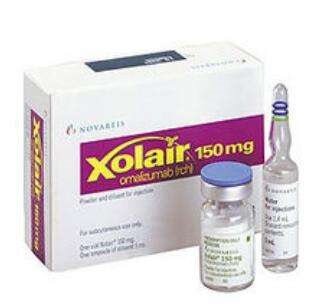
Xolair is the only approved antibody drug that targets, binds to, and blocks immunoglobulin E (IgE). By reducing free IgE levels, downregulating high-affinity IgE receptors, and limiting mast cell degranulation, it minimizes the release of mediators in the allergic inflammatory cascade. This prescription medication is administered via subcutaneous injection and has been approved in numerous countries worldwide for the treatment of moderate-to-severe persistent allergicAsthma(SAA), chronic spontaneous urticaria (CSU), and chronic idiopathic urticaria (CIU). In 2018, global sales of Xolair approached $3 billion. In the U.S. market, the drug was co-developed and promoted by Genentech, a Roche subsidiary, in partnership with Novartis; markets outside the United States were handled byNovartisResponsible for sales and record-keeping.
In China, Xolair (Chinese brand name: Zhuole; generic name: omalizumab) was approved in August 2017 for the treatment of patients aged 12 years and older with moderate-to-severe allergic asthma that is not adequately controlled with inhaled corticosteroids plus long-acting β2-adrenergic agonists. This approval makes Xolair (Zhuole) the first approved therapy in China forAsthma's first targeted drug. (Bioon.com)