

Roche’s Fixed-Dose Subcutaneous Perjeta + Herceptin Combination Offers Comparable Efficacy to IV Formulations with 5–8 Minute Administration in HER2-Positive Breast Cancer
Dec 13, 2019 08:02
CST Updated
08:02

Roche
Oncology Drug Research, Development, and Manufacturing
December 13, 2019 News /BioValleyBIOON/ -- San AntonioBreast CancerThe San Antonio Breast Cancer Symposium (SABCS) is the world’s largest and most influential breast cancerMeetingEach year, more than 7,000 researchers and physician representatives from over 90 countries worldwide participate. The 42nd SABCS meeting was recently held in San Antonio, USA, in 2019.
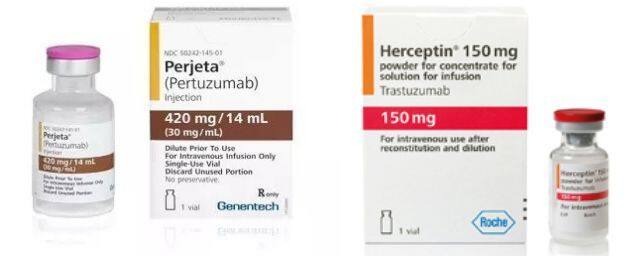
At this conference, Roche announced new data from the Phase III FeDeriCa clinical trial in breast cancer. The study demonstrated that, in eligible patients with HER2-positive early breast cancer (eBC), a new fixed-dose combination (FDC) subcutaneous (SC) formulation of Perjeta (pertuzumab) and Herceptin (trastuzumab) administered alongside intravenous (IV) chemotherapy showed non-inferiority in terms of Perjeta blood levels (pharmacokinetics), as well as comparable efficacy and safety, relative to the standard IV regimen of Perjeta plus Herceptin and chemotherapy. Data from this study will be submitted to regulatory authorities worldwide, including the U.S. Food and Drug Administration (FDA) and the European Medicines Agency (EMA).
Fixed-dose combination (FDC) Perjeta + Herceptin administered via subcutaneous (SC) injection requires approximately 8 minutes for the initial loading dose and approximately 5 minutes for subsequent maintenance doses. In contrast, administration of standard intravenous (IV) formulations of Perjeta and Herceptin via infusion requires approximately 150 minutes for the loading dose, with subsequent maintenance infusions for both drugs taking 60–150 minutes.
Levi Garraway, M.D., Chief Medical Officer and Global Head of Product Development at Roche, stated, “This fixed-dose subcutaneous combination has the potential to provide a rapid, minimally invasive administration option for patients with HER2-positive breast cancer who are being treated with Perjeta and Herceptin. This marks the first time we have combined two targeted antibodies into a single subcutaneous injection, allowing administration to be completed in just a few minutes.”
The FeDeriCa study met its primary endpoint: subcutaneous (SC) administration of the fixed-dose combination (FDC) demonstrated non-inferiority in Perjeta trough concentrations (Ctrough) during the dosing interval compared with intravenous infusion of Perjeta. The geometric mean ratio (GMR; a type of average used in pharmacokinetic assessments) for the primary endpoint was 1.22 (90% CI: 1.14–1.31), with the lower bound of the 90% CI for a GMR of 1.14 being ≥0.80 (the prespecified non-inferiority margin). The secondary endpoint of non-inferior Ctrough for Herceptin was also met, with Herceptin trough concentrations in patients receiving the FDC being non-inferior to those in patients receiving intravenous Herceptin (GMR=1.33 [90% CI: 1.24–1.43]; the lower bound of the 90% CI for a GMR of 1.24 was ≥0.80). A non-inferiority endpoint was selected for this study to ensure that patients received adequate doses of Perjeta and Herceptin within the same treatment interval compared with the established intravenous dosing regimen. Furthermore, the total pathological complete response (pCR) rate, as a secondary endpoint, was comparable between the two treatment groups. Total pCR was achieved in 59.7% of patients receiving the FDC and 59.5% of patients receiving intravenous Perjeta and Herceptin, with a difference of 0.15% (95% CI: -8.67 to 8.97).。
The safety profile of the FDC combination regimen with chemotherapy was comparable to that of intravenous Perjeta and Herceptin combined with chemotherapy, with no new safety signals identified, including no significant difference in cardiotoxicity. The most common in both groupsAdverse Reactionshair loss, nausea, diarrhea, andAnemia。
In previous studies, compared with intravenous administration of the same drug, most patients preferred subcutaneous (SC) injection, with the most common reason being the shorter time required for clinical administration. Roche is currently investigating patient preference for SC-administered fixed-dose combination (FDC) versus standard IV-administered Perjeta + Herceptin in patients with HER2-positive early breast cancer (eBC) in the Phase II PHranceSCa study. Interim results from this study will be presented at future medical conferences.
Perjeta + Herceptin + Chemotherapy Regimen: Approved in China, Marking a New Era in the Clinical Treatment of HER2-Positive Breast Cancer
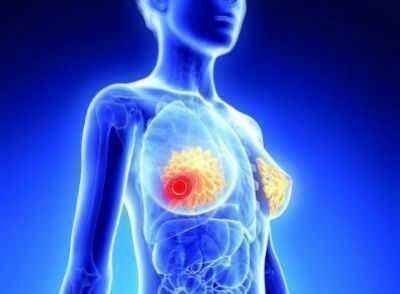
Breast cancer is the most common type of cancer in women, with over 2 million new cases diagnosed globally each year. HER2-positive breast cancer is a particularly aggressive subtype, accounting for approximately 15–20% of all breast cancer cases. Among patients with HER2-positive early-stage breast cancer (eBC) treated with Herceptin plus chemotherapy, approximately one-quarter still experience disease recurrence or death within 10–11 years, with even higher rates of recurrence or death observed in high-risk eBC patients.
Perjeta is a novel anti-HER2 agent that exerts its anti-HER2 effects by inhibiting both heterodimerization and homodimerization of HER2. Perjeta and Herceptin share the same mechanism of action, as both target and bind to the HER2 receptor; however, they bind to different epitopes. The combination of these two agents provides more comprehensive blockade of the HER2 signaling pathway, thereby inhibiting cancer cell growth and survival.
In the United States and the European Union, the Perjeta + Herceptin + chemotherapy regimen has been approved for: (1) neoadjuvant treatment of HER2-positive early breast cancer (eBC); (2) adjuvant treatment of HER2-positive eBC at high risk of recurrence; and (3) treatment of HER2-positive advanced breast cancer (aBC), where it significantly prolongs patient survival compared with Herceptin + chemotherapy.
In China, the Perjeta + Herceptin + chemotherapy regimen was approved in December 2018 for the adjuvant treatment of patients with HER2-positive early breast cancer (eBC) at high risk of recurrence. This approval marks the advent of a new era in breast cancer treatment in China! Data from the global pivotal Phase III adjuvant therapy study demonstrated that, compared with the current standard of care (Herceptin + chemotherapy), the adjuvant regimen of Perjeta + Herceptin + chemotherapy significantly prolonged invasive disease-free survival in patients with HER2-positive eBC at high risk of recurrence.Adverse ReactionsControllable, with a clear clinical benefit/risk advantage. (Bioon.com)