

NeoImmuneTech and Merck Collaborate to Evaluate Hyleukin-7™ (NT-I7) in Combination with KEYTRUDA® for Relapsed/Refractory Advanced Solid Tumors
Dec 13, 2019 08:00
CST Updated
08:00

NeoImmuneTech
Developer of Novel Immunotherapies

MSD
Pharmaceutical R&D and Manufacturer
December 13, 2019 /BioonBIOON/ -- NeoImmuneTech (NIT) is a clinical-stage biopharmaceutical company focused on the development of T-cell therapies. Recently, the company announced that it has entered into a clinical collaboration agreement with Merck & Co. to evaluate the T-cell amplifier Hyleukin-7 (rhIL-7-hyFc, NT-I7) in combination with a PD-1 inhibitor in a "basket" study involving patients with recurrent/refractory (R/R) advanced solid tumors.TumorCombination therapy with the immunotherapy Keytruda (Keytruda, generic name: pembrolizumab).
The objective of this Phase Ib/IIa study is to establish a recommended dosing regimen and to explore the preliminary antitumor activity of the combination therapy in patients with relapsed/refractory (R/R) tumors who are either checkpoint inhibitor (CPI)-pretreated (previously treated) or CPI-naïve (treatment-naïve). The results of this study will be used for the combination in selectedTumorFurther Clinical Development in the Indication.
In April this year, evaluating the combination of Hyleukin-7 and Keytruda for the treatment of refractory or recurrent triple-negativeBreast CancerThe first patient was treated in the clinical study of (TNBC) (NCT03752723).
In Phase I studies conducted in healthy subjects and in multiple ascending-dose studies conducted in cancer patients, Hyleukin-7 demonstrated a favorable safety and tolerability profile, with dose-dependent increases in CD4+ and CD8+ T lymphocyte counts. Currently, NeoImmuneTech, Inc. is also actively conducting and planning multiple proof-of-concept clinical studies to develop Hyleukin-7 as a primer for other immunotherapies.TumorImmunotherapy (IO) drugs.
Dr. NgocDiep Le, Executive Vice President and Chief Medical Officer of NIT, stated, “Although immunotherapy has become a new paradigm in cancer treatment, most patients do not respond. For tumors considered unresponsive to checkpoint inhibitors (CPIs), such as microsatellite stable (MSS) colorectal cancer and pancreatic cancer, the response rate to single-agent CPIs has remained low. Since immunotherapy largely relies on T cells’ anti-Tumoractivity, Hyleukin-7’s ability to increase multiple T-cell subsets may enhance the breadth and depth of responses to CPIs such as Keytruda.”
Dr. Se Hwan Yang, Co-President and Chief Executive Officer of NeoImmuneTech, stated, “We are pleased to collaborate with MSD to provide thoseTumor“This provides a new treatment option for patients who are unresponsive to CPIs or whose disease has progressed after CPI therapy. This combination regimen could open the door to expanding the use of immunotherapy in these patients and ultimately improve clinical outcomes.”
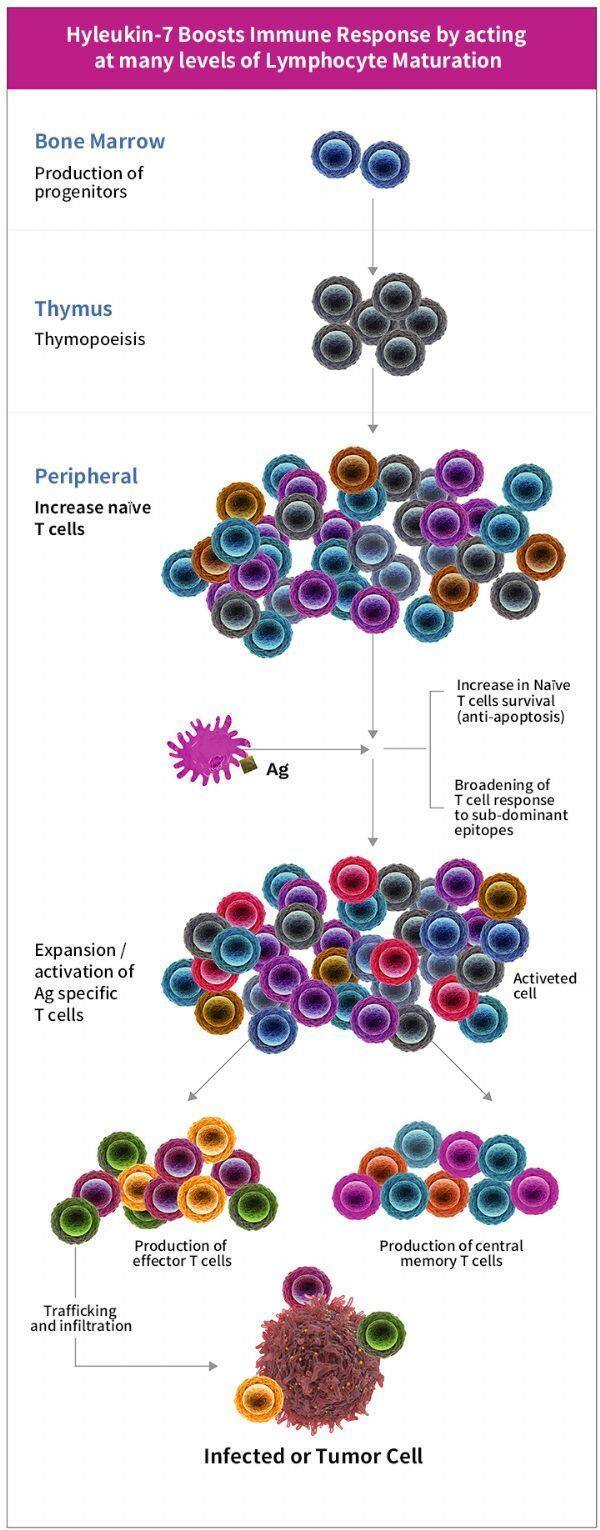
Mechanism of Action of Hyleukin-7 (Image source: NeoImmuneTech)
Hyleukin-7 is a novel immuno-oncology agent, a T-cell growth factor composed of an engineered interleukin-7 (IL-7) molecule covalently linked as a homodimer and fused to a proprietary long-acting hyFc platform. IL-7 is a critical factor in T-cell homeostasis, capable of increasing both the quantity and functionality of T cells. In the treatment of patients with cancer and lymphopenia, Hyleukin-7 enhances and restores sustained T-cell immunity, thereby supporting immuneTumorThe IO combination strategy offers unique opportunities.
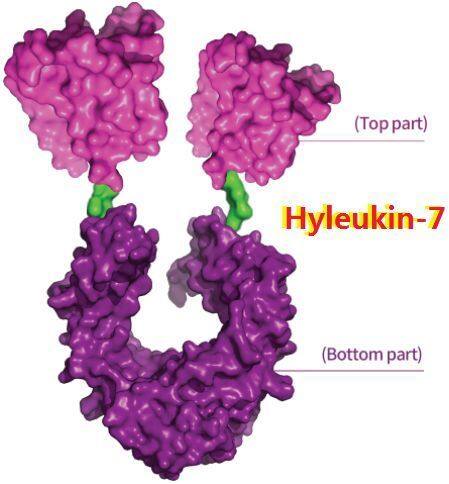
The apical region of Hyleukin-7 is its effector domain, consisting of IL-7 in a stabilized form. As a therapeutic protein, IL-7 suffers from poor structural stability and low production efficiency, which are inherent technical barriers hindering its commercialization. Leveraging advanced protein engineering technologies, NeoImmuneTech has developed a stabilized and more potent form of IL-7. The basal region of Hyleukin-7 is based on the hyFc platform technology, fusing engineered IL-7 with a non-cytolytic and non-immunogenicCarrierThe IgD and IgG4 Fc fragments were hybridized to construct a long-acting fusion protein. The hyFc technology can extend the half-life, minimize the loss of biological activity of candidate drugs, and prevent cell-killing effects caused by ADCC and CDC reactions.
Hyleukin-7 is an IL-7-based T-cell growth factor designed to serve as a stable and durable agent that promotes T-cell generation, maturation, expansion, trafficking, function, and survival at multiple levels, with the ultimate goal of inducing sustained anti-tumor T-cell responses. Hyleukin-7 is intended to increase the numbers of naive and memory T cells, enhance T-cell functionality, and broaden T-cell receptor (TCR) diversity, thereby enabling T cells to respond to subdominant epitopes. Furthermore, Hyleukin-7 enhances T-cell homing by increasing the activity of homing chemokines and counteracting various immunosuppressive networks.Tumorinfiltration.
Currently, Hyleukin-7 is being developed as an “IO-enabling” therapy, leveraging T-cell immunity in combination with existing cancer treatments such as PD-(L)1 immune checkpoint inhibitors, chemotherapy/radiotherapy, and next-generation IO therapies. (Bioon.com)