December 15, 2019 News /
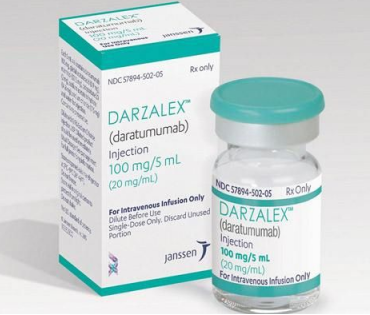
Bio ValleyBIOON/ -- Janssen Pharmaceuticals, a subsidiary of Johnson & Johnson (JNJ), recently announced that the Committee for Medicinal Products for Human Use (CHMP) of the European Medicines Agency (EMA) has issued a positive opinion, recommending approval for the inclusion of Darzalex (daratumumab) under its existing marketing authorization: in combination with the three-drug regimen of bortezomib, thalidomide, and dexamethasone (VTd) for first-line treatment of eligible autologous
Stem Cellsnewly diagnosed multiple myeloma (MM) patients eligible for autologous stem cell transplantation (ASCT). The CHMP opinion will now be reviewed by the European Commission (EC), which is expected to make a final approval decision in the coming months.
In the United States, the Darzalex-VTd regimen received FDA approval in late September this year for the first-line treatment of newly diagnosed multiple myeloma (MM) patients eligible for autologous stem cell transplantation (ASCT). Notably, Darzalex is the first and only
FDAApproved for use in compliance with
Stem CellsBiologics for newly diagnosed MM patients eligible for transplant. This indication was approved through the Priority Review program, marking the seventh indication for Darzalex in the United States within less than four years, and the third indication for the treatment of newly diagnosed MM patients.
The CHMP recommends approval of the Darzalex-VTd regimen, based on data from the Phase III clinical study CASSIOPEIA (MMY3006). This was a randomized, open-label, multicenter study that enrolled a total of 1,085 patients eligible for high-dose chemotherapy and
Stem CellsNewly diagnosed multiple myeloma (MM) patients eligible for transplantation. In Part 1 of the study, patients were randomized into two groups: one group received VTd induction therapy, high-dose chemotherapy and autologous stem cell transplantation (ASCT), followed by VTd consolidation therapy; the other group received Darzalex plus VTd induction therapy, high-dose chemotherapy and ASCT, followed by Darzalex plus VTd consolidation therapy. The primary endpoint of Part 1 was the proportion of patients achieving a stringent complete response (sCR) at the end of consolidation therapy. Patients who achieved a partial response (PR) or better in Part 1 entered Part 2 of the study and underwent a second randomization. Over a period of up to 2 years, they received either Darzalex maintenance therapy (16 mg/kg every 8 weeks) or observation only with no further treatment. The primary endpoint of Part 2 was progression-free survival (PFS).
The results showed that the first part of the study met its primary endpoint: at the end of consolidation therapy, a significantly higher proportion of patients in the Darzalex-VTd group achieved stringent complete response (sCR) compared with the VTd group (29% vs. 20%; OR=1.60, 95% CI: 1.21–2.12, p=0.0010). With a median follow-up of 18.8 months, the Darzalex-VTd group demonstrated a significant 53% reduction in the risk of disease progression or death compared with the VTd group (HR=0.47; 95% CI: 0.33–0.67, p<0.0001). After consolidation therapy, the Darzalex-VTd regimen also improved the rates of complete response or better (39% vs. 26%, OR=1.82, 95% CI: 1.40–2.36) and very good partial response or better (83% vs. 78%, OR=1.41, 95% CI: 1.04–1.92) compared with the VTd regimen. The most common adverse reactions (>20%, with an incidence ≥5% higher in the Darzalex-VTd group) included infusion reactions, nausea, fever, upper respiratory tract infections, and bronchitis. Severe
Adverse Reactions, the incidence of bronchitis (2% vs <1%) and pneumonia (6% vs 4%) was higher in the Darzalex-VTd treatment group than in the VTd treatment group.
Philippe Moreau, Chief Investigator of the study and Director of the Hematology Department at Nantes University Hospital in France, previously stated: “The pivotal CASSIOPEIA study is one of the largest transplant studies ever conducted in patients with multiple myeloma, as well as the largest study conducted with Darzalex. Achieving deep remission from first-line treatment is critically important, and the results of the CASSIOPEIA study confirm that for newly
Diagnosis“Adding Darzalex to the VTd regimen before and after transplantation can significantly improve the depth of response in patients with multiple myeloma.”
In late June this year, the three-drug regimen of Darzalex in combination with lenalidomide and dexamethasone (DRd) was approved in the United States
FDAApproved for use in patients ineligible for autologous
Stem Cellsnewly diagnosed multiple myeloma (MM) patients ineligible for autologous stem cell transplantation (ASCT). In the phase III MAIA (MMY3008) study, compared with the two-drug regimen of lenalidomide plus dexamethasone (Rd), the three-drug DRd regimen significantly reduced the risk of disease progression or death by 44% (HR=0.56, 95% CI: 0.43-0.73, p<0.0001). The median progression-free survival (PFS) was not reached in the DRd treatment group, whereas it was 31.9 months in the Rd treatment group. Furthermore, compared with Rd, DRd achieved deeper responses, including higher rates of complete response (CR) or better (48% vs 25%), very good partial response (VGPR) or better (79% vs 53%), and overall response rate (93% vs 81%). Compared with Rd, DRd more than tripled the minimal residual disease (MRD)-negative rate (24% vs 7%). A significantly higher proportion of patients achieved stringent complete response (sCR) after Darzalex induction and consolidation therapy.
Darzalex is the first globally approved CD38-mediated, cytolytic antibody drug with broad-spectrum killing activity. It targets and binds to the CD38 molecule, a transmembrane ectoenzyme highly expressed on the surface of multiple myeloma cells and various solid tumor cells, inducing rapid tumor cell death through multiple immune-mediated mechanisms of action, including complement-dependent cytotoxicity (CDC), antibody-dependent cell-mediated cytotoxicity (ADCC), antibody-dependent cellular phagocytosis (ADCP), and via
Apoptosis(apoptosis). Furthermore, Darzalex has also been shown to target
TumorImmunosuppressive cells in the microenvironment thus exhibit immunomodulatory activity.
Darzalex was licensed by Janssen Biotech from Genmab in 2012, granting it exclusive global rights. This drug is a key product heavily developed by Johnson & Johnson. In addition to multiple myeloma, Darzalex also holds potential for treating other types of cancers with high expression of the CD38 molecule.
Tumor, including diffuse large B-cell lymphoma (DLBCL), chronic lymphocytic
Leukemia(CLL), acute lymphoblastic leukemia (ALL), plasma cell leukemia (PCL), acute myeloid leukemia (AML), follicular lymphoma (FL), and mantle cell lymphoma (MCL).
In 2018, global sales of Darzalex reached $2.025 billion (up 63.0% from $1.242 billion in 2017). EvaluatePharma, a pharmaceutical market research firm, predicts that global sales of Darzalex will reach $6.033 billion in 2024, making it a key product driving Johnson & Johnson’s future growth. (Bioon.com)
Original Source: CHMP Grants Positive Opinion for Expanded Use of Darzalex (daratumumab) in Combination with Bortezomib, Thalidomide and Dexamethasone (VTd) for Patients with Newly Diagnosed Multiple Myeloma Who Are Transplant Eligible