

Novartis Receives Positive CHMP Opinion for Beovu® (brolucizumab) in Wet AMD with Once-Every-Three-Months Dosing
Dec 15, 2019 11:11
CST Updated
11:11

Novartis
Drug Development and Manufacturing

European Medicines Agency
The European Medicines Agency (EMA) is a decentralized agency of the European Union (EU), located in London. It began operations in 1995. The agency is responsible for the scientific evaluation, supervision, and safety monitoring of medicines developed by pharmaceutical companies for use in the EU. By ensuring that all medicines available on the EU market are safe, effective, and of high quality, the EMA protects public and animal health in the 28 EU Member States and countries of the European Economic Area.
December 15, 2019 /BioValleyBIOON/ -- Swiss pharmaceutical giantNovartisNovartis recently announced that the Committee for Medicinal Products for Human Use (CHMP) of the European Medicines Agency (EMA) has issued a positive opinion, recommending the approval of the next-generation ophthalmic drug Beovu (brolucizumab, also known as RTH258) for the treatment of wet age-related macular degeneration (wet-AMD, also known as neovascular AMD, nAMD). The CHMP’s opinion will now be reviewed by the European Commission (EC), which is expected to make a final approval decision within the next three months.
In the United States, Beovu was approved in early October this yearFDAApproved. It is worth noting that,NovartisA Priority Review Voucher (PRV) was used to accelerate the U.S. regulatory review of Beovu, shortening the review cycle from the standard 10 months to 6 months.
AMD is a leading cause of blindness, affecting more than 20 million people worldwide. Frequent injections are a common reason for AMD patients to discontinue treatment. In the United States, Beovu isFDAThe first and only approved anti-VEGF therapy that demonstrates greater reduction in retinal fluid compared to Regeneron’s blockbuster ophthalmic product Eylea (aflibercept), while maintaining efficacy with a dosing interval of once every three months following a 3-month loading phase in eligible patients with wet AMD, thereby improving patient adherence by reducing the frequency of injections and effectively preserving visual acuity.
Existing labels for ophthalmic therapeutic products indicate that a dosing regimen administered once every 12 weeks (3 months) yields suboptimal efficacy. Beovu is the first medication capable of maintaining therapeutic effectiveness while requiring fewer doses during the first year of treatment, thereby allowing patients with wet AMD more time to focus on what matters most in their lives. Nikos Tripodis, Global Franchise Head of Novartis Ophthalmology, stated, “Today’s CHMP opinion brings us closer to providing a new treatment option for patients with wet AMD in Europe. Wet AMD is a leading cause of blindness worldwide, andNovartisCompany, we remain committed to reimagining treatment options for this patient population.”
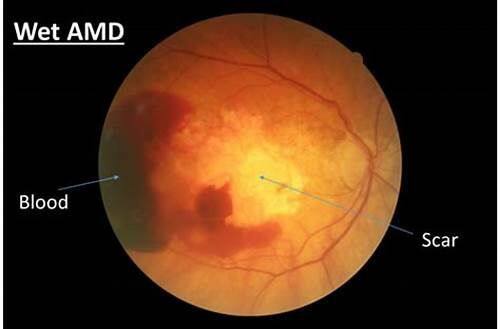
Wet AMD (wet-AMD, image source: retinaboston.com)
The CHMP recommended the approval of Beovu, primarily based on data from the Phase III HAWK study (NCT02307682) and HARRIER study (NCT02434328). These two studies were the first and only global head-to-head clinical trials to prospectively demonstrate the significant efficacy of initiating Beovu treatment with a dosing regimen of once every 12 weeks (once every 3 months) in patients with wet AMD.Both studies were prospective, randomized, double-blind, multicenter trials conducted in patients with wet AMD to evaluate the efficacy and safety of Beovu versus Eylea. In both studies, eligible patients could receive maintenance therapy with a 3-month dosing interval immediately following the loading phase.
The results showed that both studies met their primary endpoints. In the first year of treatment (Week 48), Beovu (6 mg) demonstrated non-inferior efficacy to Eylea in improving visual acuity. Specifically, in the HAWK and HARRIER studies, the mean change from baseline in best-corrected visual acuity (BCVA) for the Beovu (6 mg) treatment groups was 6.6 letters (compared with 6.8 letters in the Eylea group) and 6.9 letters (compared with 7.6 letters in the Eylea group), respectively. In both studies, approximately 30% of patients in the Beovu treatment groups achieved a BCVA improvement of at least 15 letters at one year.
Furthermore, Beovu (6 mg) demonstrated advantages in three secondary endpoints related to key indicators of disease progression: disease activity, central retinal thickness, and retinal fluid (intraretinal fluid and/or subretinal fluid). The specific data are as follows: (1) At Week 16 and Year 1, the proportion of patients with disease activity was lower in the Beovu (6 mg) group compared to the Eylea group (Week 16 [HAWK study: 24.0% vs. 34.5%, p=0.001; HARRIER study: 22.7% vs. 32.2%, p=0.002]; Year 1 [HAWK study: 23.5% vs. 33.5%, p=0.002; HARRIER study: 21.9% vs. 31.4%, p=0.002]); (2) At Week 16 and Year 1, the proportion of patients with intraretinal fluid (IRF) and/or subretinal fluid (SRF) was significantly reduced in the Beovu (6 mg) group compared to the Eylea group (Week 16: a 35% reduction in both the HAWK and HARRIER studies; Year 1: a 30% reduction in the HAWK study and a 41% reduction in the HARRIER study); (3) At Year 1, the Beovu group showed a significantly greater reduction from baseline in central retinal thickness compared to the Eylea group (HAWK study: LS mean -172.8 μm vs. -143.7 μm, p=0.001; HARRIER study: LS mean -193.8 μm vs. -143.9 μm, p<0.001).Anatomical retinal fluid results showed that Beovu was superior to Eylea.
Furthermore, in the first year, more than half of the patients in the Beovu (6 mg) treatment group maintained a 3-month dosing interval (56% in the HAWK study and 51% in the HARRIER study). Among patients in the Beovu (6 mg) group who initiated the 3-month dosing regimen after the loading phase, there was an 85% probability (HAWK study) and an 82% probability (HARRIER study) of maintaining this dosing interval during the first year. The safety profile of Beovu was generally comparable to that of Eylea in these studies.
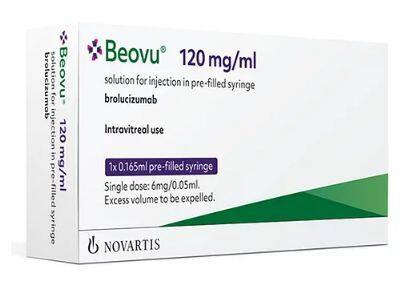
The active pharmaceutical ingredient of Beovu is brolucizumab (RTH258), a humanized single-chain antibody fragment (scFv) that targets all isoforms of vascular endothelial growth factor-A (VEGF-A). Single-chain antibody fragments have garnered significant attention in drug development due to their small size, enhanced tissue penetration, rapid clearance from systemic circulation, and favorable drug delivery properties.
The innovative structure of brolucizumab results in a small molecular weight of only 26 kDa, conferring potent inhibitory activity against all VEGF-A isoforms with high affinity. In preclinical studies, brolucizumab inhibited VEGF receptor activation by blocking ligand-receptor interactions. Increased signaling through the VEGF pathway is associated with pathological ocular angiogenesis and retinal edema. In patients with chorioretinal vascular diseases, inhibition of the VEGF pathway suppresses the growth of neovascular lesions, alleviates retinal edema, and improves visual acuity. (Bioon.com)