

Merck's KEYTRUDA® (pembrolizumab) Demonstrates Significant Overall Survival Benefit as First-Line Monotherapy in Metastatic NSCLC Regardless of KRAS Mutation Status
Dec 17, 2019 09:40
CST Updated
Dec 16, 14:45

MSD
Pharmaceutical R&D and Manufacturer

December 16, 2019 /BioValleyBIOON/ -- Merck & Co., a giant in tumor immunotherapy, recently announced exploratory analysis data from the pivotal Phase III KEYNOTE-042 study on lung cancer. The results showed that in tumors expressing PD-L1 (TumorIn patients with metastatic non-squamous non-small cell lung cancer (NSCLC) expressing PD-L1 (Tumor Proportion Score [TPS] ≥1%), first-line monotherapy with the anti-PD-1 agent Keytruda (generic name: pembrolizumab) improved overall survival (OS), progression-free survival (PFS), and overall response rate (ORR), regardless of KRAS mutation status.
MSD Research LaboratoriesTumorJonathan Cheng, Ph.D., Vice President of Clinical Research, stated: “KRAS mutations occur in approximately 20% of patients with NSCLC, and some previous studies have suggested that these mutations are associated with poorer treatment responses. Therefore, it is encouraging that in this exploratory analysis, Keytruda monotherapy was associated with survival benefits in patients with metastatic non-squamous NSCLC, regardless of KRAS mutation status.”
The objective of the exploratory analysis was to evaluate the incidence of KRAS mutations and their association with efficacy in the KEYNOTE-042 trial. Among the 1,274 treatment-naïve patients with metastatic non-squamous NSCLC whose tumors expressed PD-L1 (TPS ≥1%) and who were enrolled in the study, 301 patients had evaluable KRAS data (n=232 without KRAS mutations; n=69 with KRAS mutations, including n=29 with KRAS G12C mutations). Tissue tumor mutational burden (tTMB) and KRAS mutation status were determined byTumorTissue whole-exome sequencing (WES) and matched normal DNA (blood) assays were performed. In the study, patients were randomized 1:1 to receive either intravenous infusion of Keytruda 200 mg every three weeks (Q3W) (n=637) or investigator’s choice of chemotherapy (pemetrexed or paclitaxel) (n=637). Treatment continued until disease progression or unacceptable toxicity. The primary endpoint was overall survival (OS) in patients with TPS ≥50%, ≥20%, and ≥1%, assessed hierarchically. Secondary endpoints included progression-free survival (PFS) and objective response rate (ORR).
The results of this exploratory analysis indicate that, in patients with metastatic non-squamous NSCLC, Keytruda monotherapy is associated with improved clinical outcomes compared with chemotherapy, regardless of KRAS mutation status. In this analysis, Keytruda reduced the risk of death by 58% in patients with any KRAS mutation (HR=0.42 [95% CI: 0.22–0.81]) and by 72% in patients with KRAS G12C mutations (HR=0.28 [95% CI: 0.09–0.86]) compared with chemotherapy. The safety profile of Keytruda was consistent with findings from previously reported studies in patients with metastatic NSCLC.
Other Efficacy Results from This Exploratory Analysis:

Lung cancer is the leading cause of cancer-related deaths worldwide. It originates in lung tissue, typically within the cells lining the airways. The two main types of lung cancer are non-small cell lung cancer (NSCLC) and small cell lung cancer (SCLC). NSCLC is the most common type, accounting for approximately 85% of all cases. NSCLC has several subtypes, including adenocarcinoma (40% of lung cancers), squamous cell carcinoma (25–30%), and large cell carcinoma (10–15%).
Lung cancer can also be characterized by different biomarkers, including PD-L1, KRAS, ALK, EGFR, and ROS1. KRAS mutations occur in approximately 20% of NSCLC cases.
Keytruda is a PD-(L)1 cancer immunotherapy that helps detect and fight tumor cells by enhancing the body’s immune system. Keytruda is a humanized monoclonal antibody that blocks the interaction between PD-1 and its ligands, PD-L1 and PD-L2, thereby activatingTumorT lymphocytes of cells and healthy cells.
To date, multiple PD-(L)1TumorImmunotherapy approvals have been granted, with Keytruda leading the field and having received approval for more than 20 therapeutic indications.
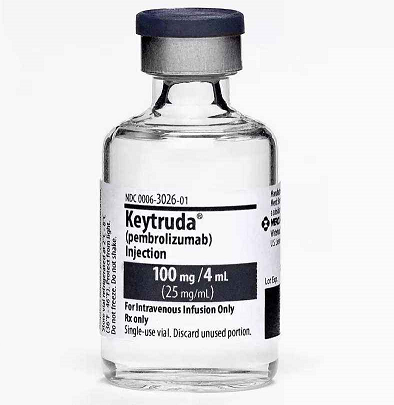
MSD has the largest immuno-oncology clinical development program in the industry, with over 1,000Clinical TrialInvestigating Keytruda in Multiple TypesTumorand its role in the treatment context. The Keytruda clinical program aims to understand the drug’s role in cancer and identify factors that may predict patient benefit from Keytruda therapy, including exploring several differentBiomarkers。
In late November this year, Keytruda was approved by China’s National Medical Products Administration (NMPA) for first-line treatment of metastatic squamous non-small cell lung cancer (NSCLC) in combination with carboplatin and paclitaxel. Notably, this approval marks the third first-line indication for Keytruda in NSCLC within less than a year. The drug is now approved in China for first-line treatment of both squamous and non-squamous NSCLC in combination with chemotherapy, as well as for monotherapy in NSCLC (Tumorthe first anti-PD-1 therapy with a Tumor Proportion Score (TPS) ≥1%)(Bioon.com)