

Johnson & Johnson: WHO Recommends All-Oral Sirturo (Bedaquiline)-Based Regimen for All Drug-Resistant Tuberculosis Patients
Dec 18, 2019 09:31
CST Updated
09:31

Johnson & Johnson
Healthcare Product Manufacturers, Health Service Providers
December 18, 2019 /BioValleyBIOON/ -- Johnson & Johnson (JNJ) recently announced that the World Health Organization (WHO) has issued a decision recommending the use of bedaquiline-containing regimens for all patients with drug-resistant tuberculosis. The company stated that the WHO’s Rapid Communication indicates that an all-oral regimen containing Johnson & Johnson’s Sirturo® (Chinese brand name: Sinairui®; generic name: bedaquiline) is the preferred treatment option for all patients with multidrug-resistant tuberculosis (MDR-TB) and rifampicin-resistant tuberculosis (RR-TB).
This decision, based on project data from various countries (particularly South Africa) and R&D technology partners, expands the use of bedaquiline in shorter treatment regimens to replace injectable agents. The WHO has recommended that national tuberculosis control programs phase out the use of short-course regimens containing injectable agents, which are known to cause toxic side effects in patients.
Paul Stoffels, M.D., Vice Chairman of the Executive Committee and Chief Scientific Officer at Johnson & Johnson, stated, “This is a landmark moment for patients with drug-resistant tuberculosis. Our scientists began identifying the compound that would become bedaquiline nearly 20 years ago. We hope that over the next 20 years, the world will truly reverse the trend of the tuberculosis epidemic. We look forward to doing our part to achieve this goal.”
Prior to the anticipated 2020 release of the latest edition of the WHO Guidelines for the Treatment of Drug-Resistant Tuberculosis, The Rapid Communication was issued to assist national tuberculosis programs in initiating plans for a swift transition to regimens described by the WHO as “more effective, less toxic, and easier to implement.”
According to the treatment guidelines issued by the WHO in March 2019, bedaquiline remains a “Group A” drug for long-term treatment regimens in patients with pulmonary multidrug-resistant tuberculosis (MDR-TB). For patients with extensively drug-resistant tuberculosis, severe extrapulmonary tuberculosis, resistance to fluoroquinolones, or prior exposure to second-line drugs, individualized long-term treatment regimens are recommended, which should include bedaquiline as a priority agent.
Jaak Peeters, Global Public Health Lead at Johnson & Johnson, stated: “The WHO’s decision reaffirms the importance and value of bedaquiline as a key component of modern tuberculosis treatment regimens. Johnson & Johnson is committed to working closely with countries and partners to further expand patient access to bedaquiline, building on the significant and rapid progress made in 2019. We look forward to accelerating these efforts further in 2020.”
For more than two decades, Johnson & Johnson has been a steadfast partner in the global fight against tuberculosis. When bedaquiline received approval from the U.S. Food and Drug Administration (FDA) in 2012,FDA) At the time of accelerated approval, the drug was the first targeted tuberculosis medication with a novel mechanism of action to be developed in over 40 years.
To date, Johnson & Johnson has provided more than 184,000 treatment courses of bedaquiline to 138 countries worldwide, including the 30 countries with the highest burden of multidrug-resistant tuberculosis (MDR-TB). Notably, through a four-year donation program in collaboration with the U.S. Agency for International Development and JSC Pharmstandard, the company has supplied 105,000 treatment courses free of charge to 80 countries.
Johnson & Johnson also works closely with governments and other partners in low- and middle-income countries with a high burden of disease, by training healthcare workers, improvingDiagnosis, raise awareness, reduce stigma against tuberculosis at the community level, and build key health system capacities and capabilities. The company also strives to ensure the appropriate use of bedaquiline through effective management to help prevent drug resistance.
Looking ahead, greater innovation is needed both in the laboratory and in the field to end the tuberculosis epidemic. In September 2018, Johnson & Johnson announced a 10-year plan aimed at continuing to expand access to treatment, improve case finding, and advance research and development to create the new tools needed to end tuberculosis. To support this effort, in October 2019, the company announced a $500 million commitment to develop and deliver innovative technologies for combating HIV and tuberculosis.
Tuberculosis is the world’s deadliest infectious disease, claiming 1.5 million lives globally in 2018. This public health challenge has been further exacerbated by the growing resistance to the most potent first-line drugs. In 2018, there were approximately one million new cases of drug-resistant tuberculosis (DR-TB), with roughly half occurring in three countries: India (27%), China (14%), and the Russian Federation (9%). Drug-resistant TB accounts for about one-third of all deaths attributable to antimicrobial resistance. Currently, only one-third of DR-TB patients are diagnosed.
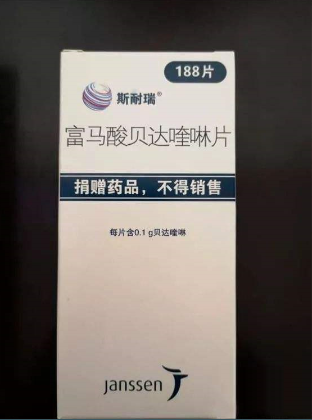
In August this year, the U.S. FDA approved Sirturo (bedaquiline, bedaquiline tablets) as part of combination therapy for the treatment of adolescents aged 12–18 years weighing at least 30 kg (66 lbs) with multidrug-resistant tuberculosis (MDR-TB). Sirturo is based on sputum culture conversion time throughFDAapproved under the accelerated approval program; further full approval will depend on confirmatoryClinical TrialValidation and Description of Clinical Benefit in China.
This label expansion marks the first regulatory milestone for Johnson & Johnson’s pediatric development program for Sirturo, with additional global regulatory submissions planned. The company is currently conducting further studies using a pediatric formulation of Sirturo in patients under 12 years of age.
Sirturo is a diarylquinoline antimicrobial agent indicated as part of combination therapy for the treatment of multidrug-resistant tuberculosis (MDR-TB) in adults and children (aged 12 to less than 18 years, weighing ≥30 kg).
In China, Sirturo (Sirturo®) was approved in December 2016 as part of combination therapy for the treatment of multidrug-resistant tuberculosis (MDR-TB) in adults aged 18 years and older. It should be noted that Sirturo should only be used when no other effective treatment regimens are available. Furthermore, this medication should be administered under directly observed therapy (DOT). Limitations of Use: Sirturo is not indicated for the treatment of: (1) latent infection caused by Mycobacterium tuberculosis; (2) drug-susceptible tuberculosis; (3) extrapulmonary tuberculosis; or (4) infections caused by nontuberculous mycobacteria (NTM). (Bioon.com)