

Eisai's Dual Orexin Receptor Antagonist Dayvigo (Lemborexant) Approved by U.S. FDA for Adult Insomnia
Dec 23, 2019 16:17
CST Updated
16:07

Eisai
Pharmaceutical Product R&D and Manufacturer

FDA
U.S. Food and Drug Administration

December 23, 2019 News /BioonBIOON/ -- Japanese pharmaceutical company Eisai recently announced that the U.S. Food and Drug Administration (FDA) has approved Dayvigo (lemborexant), an orexin receptor antagonist discovered and developed in-house by Eisai, for the treatment of insomnia in adults, a sleep-wake disorder characterized by difficulty falling asleep and/or staying asleep. According to the U.S. Drug Enforcement Administration (DEA) scheduling, Dayvigo is expected to be launched within the next three months as 5 mg and 10 mg tablets.
It is estimated that insomnia affects one in three adults. However, because safety is a major concern with sleep medications, new therapies face a difficult path to gaining acceptance among physicians and patients. Earlier this year, the FDA issued boxed warnings for a group of insomnia drugs, including Lunesta, Sonata, and Ambien, following reports of injuries and fatalities resulting from hazardous activities such as sleepwalking and sleep-driving in patients taking these medications.
Dayvigo inhibits orexin signaling by competitively binding to orexin receptors (OX1R and OX2R). Orexin is a naturally occurring chemical produced in the hypothalamus that regulates sleep and wakefulness.
Tushar Patel, Global Head of Eisai’s Neurology Business Group for Disorders of Arousal, stated, “Due to efficacy and safety concerns, there remains a significant unmet medical need in the treatment of insomnia. Dayvigo is a product that addresses both sleep onset and sleep maintenance issues. Its mechanism of action does not impair morning postural stability or cognitive function.”
The mechanism of action of lemborexant in the treatment of insomnia is believed to be through antagonism of orexin receptors. The orexin neuropeptide signaling system plays a role in wakefulness. Blocking the binding of the wake-promoting neuropeptides orexin A and orexin B to the orexin receptors OX1R and OX2R is thought to inhibit wake-driving signals. Lemborexant binds to the orexin receptors OX1R and OX2R, and as a competitive antagonist, it exhibits stronger inhibitory effects on OX2R.
This approval is based on data from the clinical development program evaluating lemborexant for the treatment of insomnia, which included two pivotal Phase III clinical studies, SUNRISE-1 (Study 304) and SUNRISE-2 (Study 303), enrolling approximately 2,000 patients. The SUNRISE-1 study was conducted in 1,006 patients aged ≥55 years (45% of whom were aged ≥65 years) with difficulty initiating sleep, and evaluated the efficacy and safety of lemborexant versus placebo and the active control zolpidem tartrate extended-release. The data showed that the study met its primary and secondary endpoints, with the most commonly reported adverse events in the lemborexant treatment group being headache and somnolence. The SUNRISE-2 study was conducted in 949 adult patients (aged 18–88 years) with insomnia disorder and evaluated the efficacy and safety of lemborexant versus placebo. The data showed that this study also met its primary and key secondary endpoints. The most commonly reported adverse events in the lemborexant treatment group were somnolence, nasopharyngitis, headache, and influenza.
In addition to these pivotal trials, Eisai conducted further studies to evaluate the safety of Dayvigo, including assessments of the effects of lemborexant on arousal from auditory stimuli, next-day postural stability and memory, and next-morning driving performance. The data showed that while there was no significant difference between lemborexant and placebo in the ability to awaken to sound, lemborexant was associated with dose-dependent impairments in attention and memory compared with placebo. Furthermore, no significant differences were observed between lemborexant and placebo regarding next-day postural stability or memory. Although 5 mg and 10 mg doses of lemborexant did not cause statistically significant impairment in next-morning driving performance in adult or elderly subjects compared with placebo, some subjects receiving the 10 mg dose exhibited impaired driving performance.
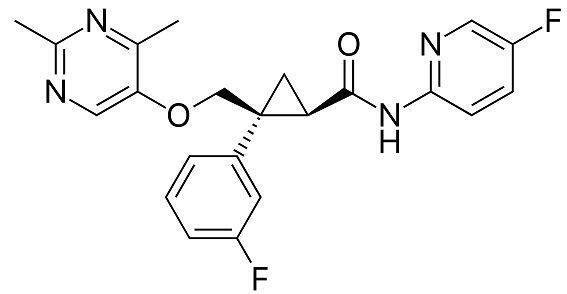
Lemborexant Molecular Structural Formula (Image Source: Wikipedia)
Lemborexant is a dual orexin receptor antagonist targeting OX1 and OX2, discovered and developed internally by Eisai. This compound inhibits orexin by competitively binding to the two orexin receptor subtypes (orexin receptor 1 and orexin receptor 2). In individuals with insomnia disorder, the orexin system, which regulates sleep and wakefulness, may not function properly. During normal sleep cycles, orexin system activity is suppressed; this suggests that lemborexant may promote the initiation and maintenance of sleep by intentionally interfering with orexinergic neurotransmission.
Orexin signaling is associated with other physiological functions, such as memory, mood, motivation, and attention. Therefore, in addition to insomnia disorder characterized by difficulties with sleep onset and/or maintenance (ISWRD), Eisai is also testing lemborexant for the treatment of Alzheimer’s disease (AD). Previously, the drug was co-developed by Eisai and Purdue Pharma; however, earlier this year, Eisai repurchased all rights to the drug. (Bioon.com)