

Can BCI Address Post-Stroke Disabilities? Two Industry Leaders Join Forces with a Breakthrough Endovascular Approach!
OYMotion
Provider of Rehabilitation Medical Technology Solutions
“A stroke patient can crush an entire family.” “My hand is clenched into a fist, rigid and unable to open.” “I used to walk with vigor, but now half of my body is paralyzed.” Searching for “stroke” on social media, the anguish of patients and their families comes rushing forward. Behind these words lie the daily struggles of millions of families.
China has an estimated 15 to 18 million prevalent stroke patients, with approximately 4 million new cases annually, and the incidence rate continues to rise at a pace of 8.7%. According to the "Report on Stroke Prevention and Treatment in China," the incidence of motor dysfunction after stroke is approximately 70% to 80%, with 30% to 66% of patients still experiencing functional impairments six months post-stroke. More starkly, the basic recovery rate for hand function is only 20%—meaning that for eight out of ten patients, hand function never fully returns to its pre-stroke state. Even more concerning is the trend toward younger stroke patients; as dietary patterns and lifestyles change, this formerly "elderly disease" is spreading to a broader population.
In the face of this vast unmet clinical need, brain-computer interfaces (BCIs) are held in high expectation. But the question remains: what kind of BCI can truly solve the problem?
Recently, OYMotion and Minimally Invasive Brain Science announced a partnership to jointly develop an "Interventional Brain-Computer Interface Rehabilitation System," aiming to explore new pathways for stroke rehabilitation.
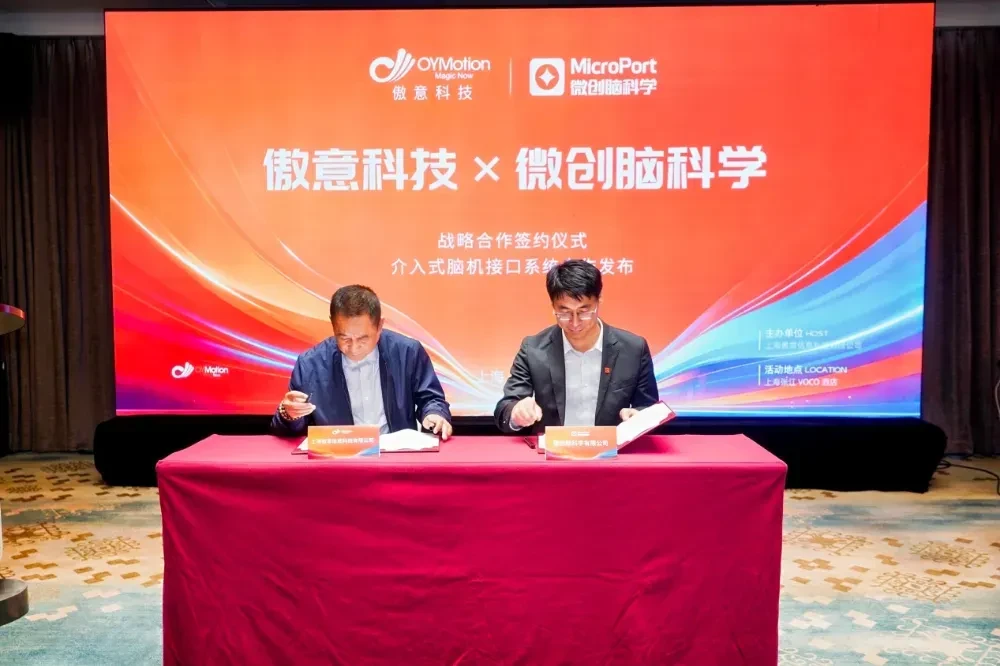
Collecting high-precision signals without craniotomy is the biggest breakthrough in this round
Signal Acquisition Methods for Brain-Computer Interfaces: A Long-Standing Core Contradiction Between Safety and Signal PrecisionFor a long time, signal acquisition in brain-computer interfaces (BCIs) has faced a core contradiction: it is difficult to achieve both safety and signal precision. Non-invasive methods are sufficiently safe, carrying no surgical risks, but the signals suffer significant attenuation after passing through the skull. Invasive methods offer high-quality signals, with electrodes placed directly adjacent to neurons, but they require craniotomy, making patient acceptance a persistent hurdle. Signals from safer methods lack precision, while those with high precision entail excessive risk. The industry has long struggled with this “seesaw” dilemma.
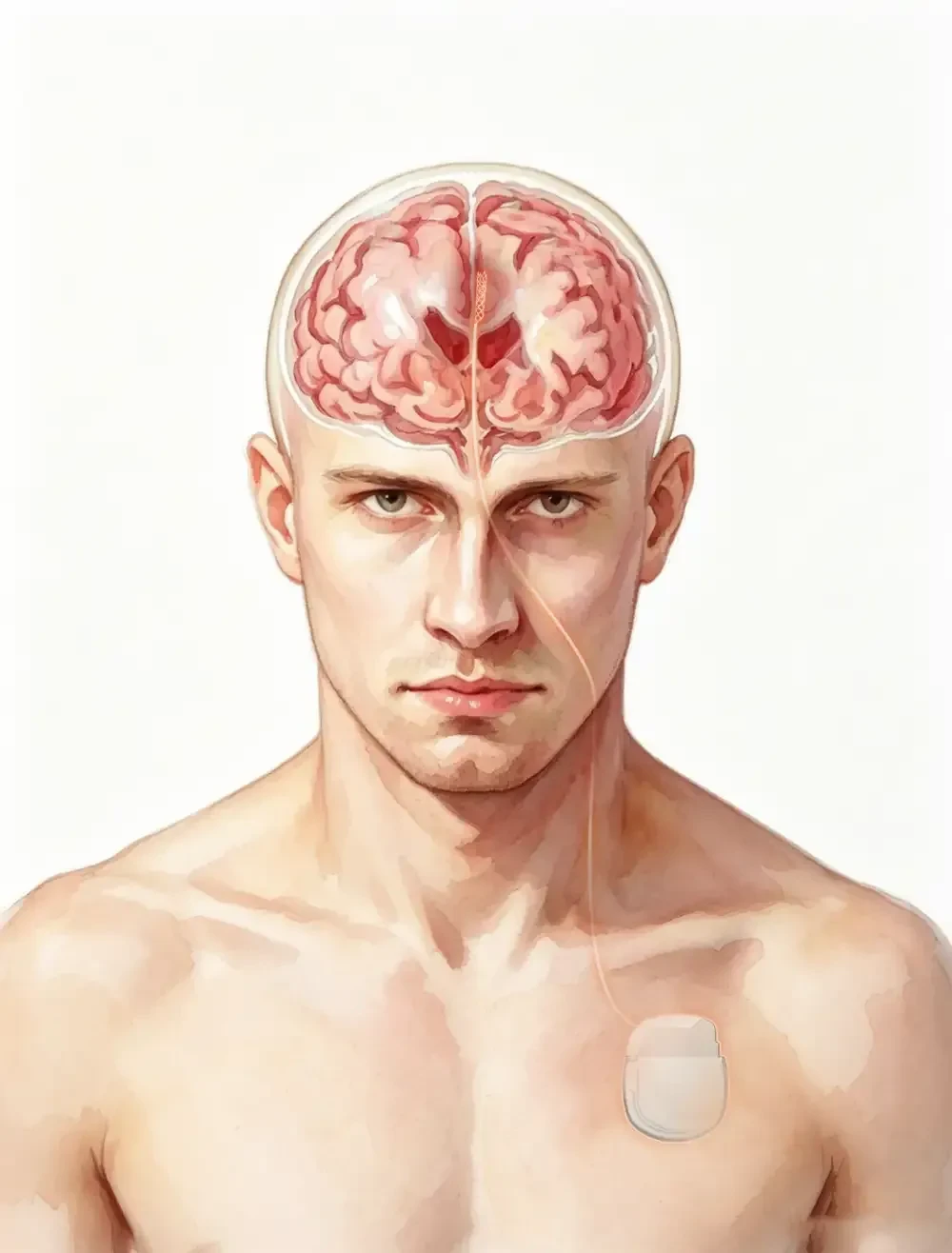
OYMotion and Minimally Invasive Brain Science (Suzhou) Co., Ltd. have jointly proposed an interventional approach. This system utilizes a minimally invasive vascular intervention route to deliver a signal-acquisition stent via the blood vessels to the target brain region. It enables high-quality intracranial EEG signal acquisition without the need for craniotomy, balancing clinical safety with signal precision.
When it comes to invasive brain-computer interfaces (BCIs), Dr. Zhang Dongdong, Director of the Brain Science Division at OYMotion, candidly remarked, “Invasive BCIs are not a recent development; they have been present in the United States for several years.” However, he believes that the R&D directions pursued by OYMotion and Minimally Invasive Brain Science hold their own practical significance: “Overseas application cases primarily focus on computer control and smart home control, which do not align well with our product development logic. We determine whether a product is worth developing based on three criteria: whether there is clear market demand, whether it delivers genuine clinical benefits, and whether it has definite commercial value. Only when all three criteria are met is a project worth pursuing. Our invasive BCI rehabilitation system precisely meets these three conditions.”
Following high-precision neural signal acquisition via an interventional approach, the system further integrates a lightweight exoskeleton robot. It translates decoded intracranial signals into precise motor control commands to drive the exoskeleton in assisting users with movement execution, effectively bridging the disrupted “intention–execution” pathway in patients with ischemic stroke. Through this repetitive active motor training, the system successfully establishes a complete closed-loop framework of “endovascular EEG acquisition → real-time decoding → exoskeleton servo execution → proprioceptive feedback → cortical plasticity remodeling,” thereby facilitating substantial neurological rehabilitation for patients with motor dysfunction.
“The Brain-Muscle-Machine” Path: OYMotion Blazed a Trail Where None Existed
The medical rehabilitation sector presents high barriers to entry. Any company seeking to develop related products must answer a critical question: Do you have accumulated expertise? MicroPort’s decision to partner with OYMotion was driven by OYMotion’s affirmative response: Yes, we do.
Previously, OYMotion launched a finger rehabilitation exoskeleton product and obtained medical device certification. Developed jointly by OYMotion and the team from Shanghai University of Traditional Chinese Medicine, this device integrates a “brain-muscle-machine” three-tier rehabilitation system. It is the first to combine electroencephalography (EEG), electromyography (EMG), and mechanical exoskeleton technology to enable active rehabilitation. The product was also recognized as one of the “2024 Shanghai Innovative Medical Devices.”
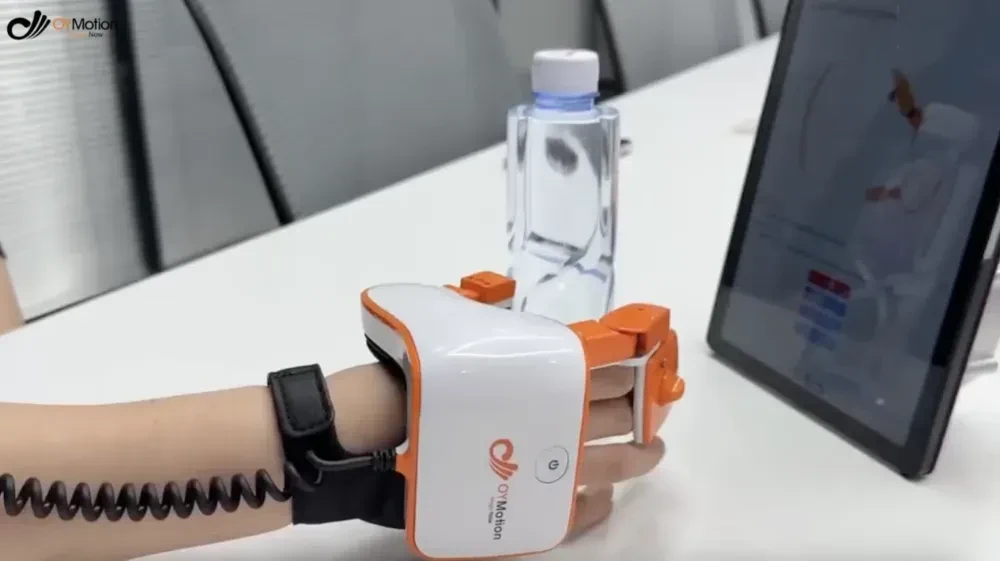
“The Brain-Muscle-Machine” System: The medical logic behind the “Brain-Muscle-Machine” system is not complex. Although many stroke patients are unable to perform movements, their brains still generate the intention to move, and the motor cortex remains activated. The task of brain-computer interfaces (BCIs) is to reconnect this “intention to move” signal back to the body. How is this achieved? OYMotion’s approach involves using electroencephalography (EEG) to detect “the intention to move” and electromyography (EMG) to determine “how the movement is executed.” Non-invasive EEG reflects genuine motor intent but has weaker real-time performance; EMG reflects the activity of lower motor neurons, indirectly providing feedback on the motor intent of upper motor neurons with better real-time responsiveness. The two signals are jointly analyzed for decision-making. Once a match is confirmed, the system drives a lightweight exoskeleton to complete a grasping action.
Thus, each of the patient’s “intentions to move” is translated into actual movement feedback; only through such genuine cerebral engagement can neural circuits be reshaped.
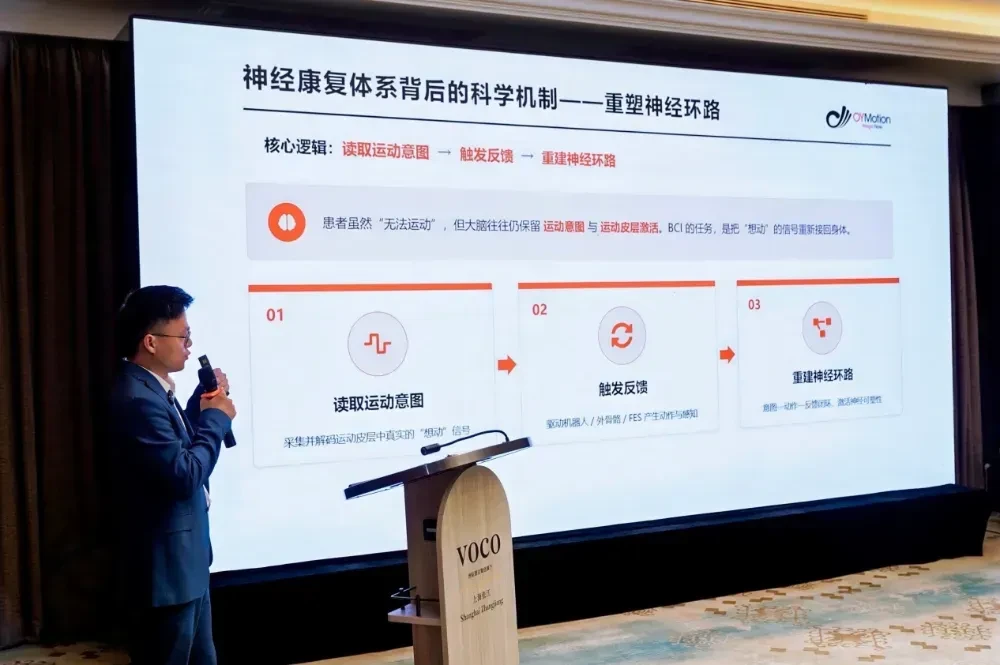 Dr. Zhang Dongdong, Director of the Brain Science Division at OYMotion
This is the fundamental difference between active rehabilitation and passive rehabilitation. In traditional rehabilitation, whether through manual manipulation by therapists or passive devices, patients passively receive movements without genuine engagement of the brain. In contrast, brain-computer interface (BCI) technology reads the patient’s motor intentions and triggers exoskeletons to execute movements. These motor intentions activate the motor cortex, thereby fundamentally promoting the reconstruction of neural circuits—achieving more long-lasting and thorough rehabilitation.
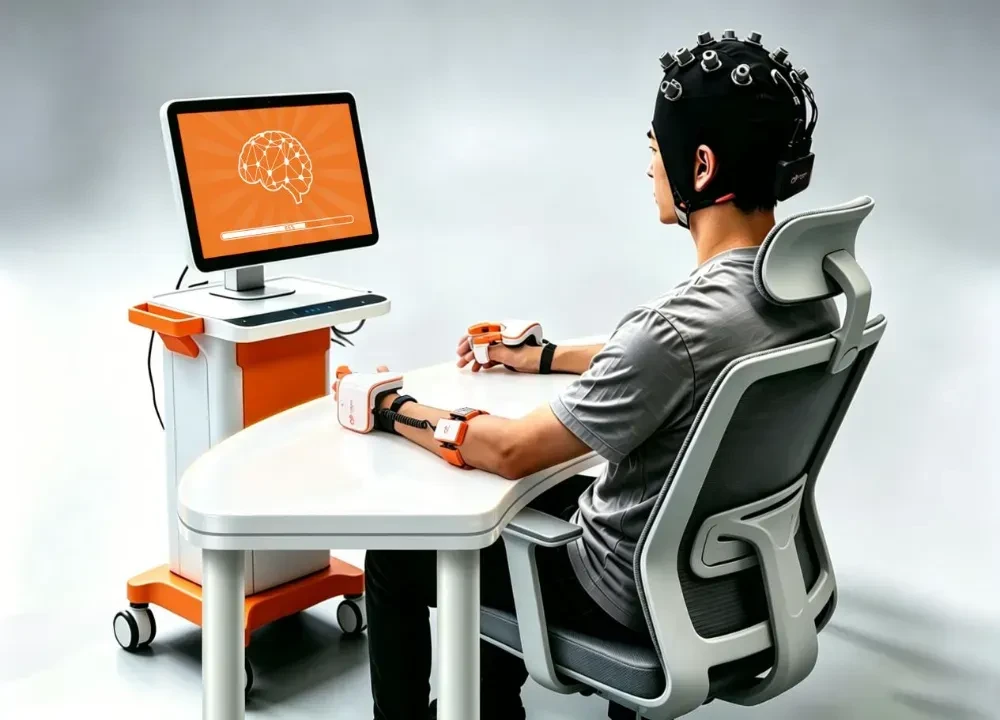
Clinical validation has confirmed this. With the aid of this device, stroke patients have been able to regain fine motor skills such as grasping small balls and pulling out tissues. A Malaysian gentleman who had suffered a stroke six years prior had lost mobility in his fingers and long missed the so-called “golden period” for rehabilitation. However, with the assistance of OYMotion’s product, his hand successfully performed a grasping motion, an outcome he himself found hard to believe. “Active rehabilitation is the future, and the ‘brain-muscle-machine’ pathway is a feasible approach that has been repeatedly validated,” stated OYMotion.
From Non-Invasive to Interventional: Not a Replacement, but “One More Option”
Given the existence of a “brain-muscle-machine” rehabilitation system and exoskeleton products tailored for stroke patients, why does OYMotion still pursue invasive approaches? The rationale lies in the consideration that “different patients require different solutions.”
Non-invasive brain-computer interfaces (BCIs) possess irreplaceable advantages—safety, non-invasiveness, low cost, and high patient acceptance—making them the most widely adopted form of BCI currently in use. OYMotion has further validated the value of the non-invasive approach through extensive clinical cases; notably, a stroke survivor regaining grasping ability after six years stands as the most compelling testament to its efficacy.
However, the severity of impairment in stroke patients varies widely, and a single solution cannot address all needs. As Dr. Zhang Dongdong stated, “There is no absolutely optimal technology in the brain-computer interface (BCI) industry; only technological pathways best suited to specific scenarios.” The development of invasive BCIs is not intended to replace non-invasive approaches, but rather to provide clinicians with an additional tool. When non-invasive signal acquisition reaches its limitations, invasive BCIs can obtain higher-quality intracranial signals from within the blood vessels. The two modalities are complementary, rather than mutually exclusive.
This aligns precisely with OYMotion’s “multimodal fusion” strategy. The future implementation path for the brain-computer interface (BCI) industry will not be dominated by a single technological route; rather, multiple approaches will perform their respective roles and work in synergy. OYMotion believes that the combination of “invasive + non-invasive” methods will offer extensive application potential. In this hybrid architecture, implantable electrodes capture high-fidelity signals from core regions, while peripheral modalities such as electroencephalography (EEG), eye tracking, and speech provide contextual information, thereby achieving “high precision + broad coverage.” This integration enables more accurate signal recognition and wider applicability.
OYMotion’s collaboration with Minimally Invasive Brain Science (Suzhou) Co., Ltd. represents a strategic expansion from the non-invasive domain into multimodal signal interaction, aiming to enhance the communication and interaction efficiency of brain-computer interface (BCI) systems. Currently, there are few enterprises in China dedicated to invasive BCIs, and the niche for multimodal fusion within the invasive BCI sector is even scarcer, indicating substantial room for future growth.
Furthermore, this collaboration will further expand the form factors of future products. Upper limb rehabilitation training will no longer be limited to the hand; in the future, it can extend to comprehensive coverage of joints such as the shoulder and elbow, better aligning with the real-world clinical needs of a broader patient population.
Zhang Qi, Vice President of the Board at OYMotion, assessed that only a few companies in China have brought brain-computer interface (BCI) products to market, and the industry remains on the eve of a large-scale commercialization boom. At this stage, the focus is shifting from the technology itself to “the integration of technology with application scenarios, the integration among technologies, and the integration of technology with business.”
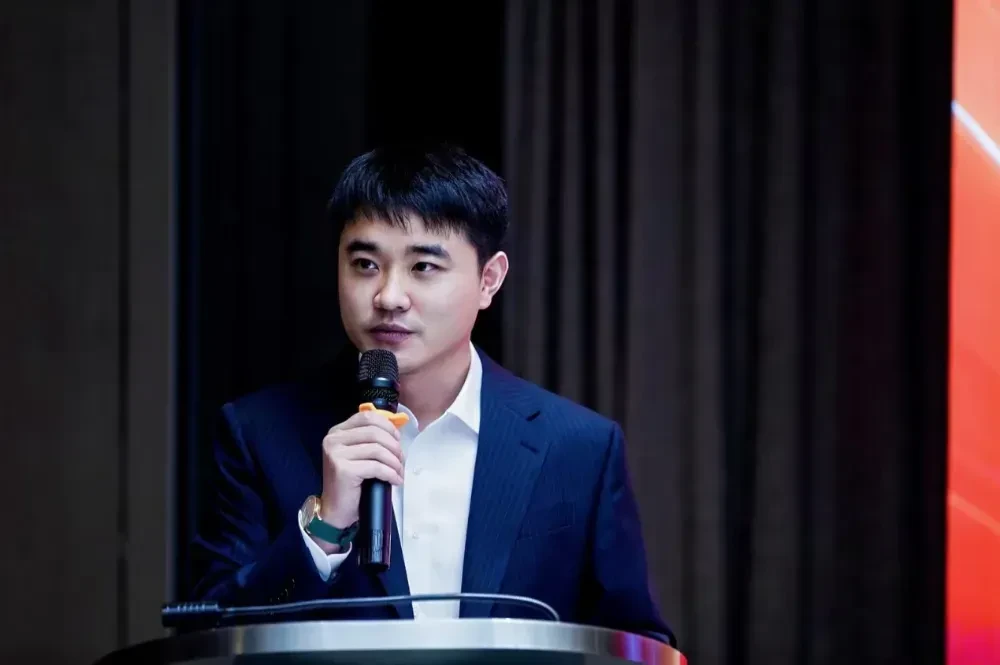 (Zhang Qi, Vice President and Director of OYMotion)
“The Interventional Brain-Computer Interface Rehabilitation System” is a quintessential example of such integration—a product targeting 15 million patients, with well-defined clinical pathways and a clear business logic. While the industry continues to debate which technological route is superior, OYMotion and Minimally Invasive have already chosen a more pragmatic path: letting real-world implementation provide the answers.

The Brain-Computer Interface Community is in ChinaThe First Brain-Computer Interface (BCI) Industry Service Platform, Pioneer and Leader of New Media for Brain-Computer Interfaces in China。We provide the following services primarily to enterprises, research teams, investment institutions, and industry practitioners:
Publicity and Reporting:Report on corporate updates, technical insights, and product introductions through articles, short videos, and live streams to enhance visibility and industry influence.。
Resource Matching:Match resources such as capital, supply chain, clinical institutions, and channel partners based on needs to facilitate genuine connections and promote collaboration.
Translation of Achievements:Assist the technical team in identifying industry partners, investors, and application scenarios to facilitate the translation of technology into products.
Event Planning and Execution:Undertaking the planning and execution of online and offline roadshows, salons, forums, and other events.
Other Customization Requirements:Including personalized services such as customized reporting, market research, and recruitment support.
Cooperation Negotiation,Please contact WeChat: ZuoLeiLeiya
(Note: Name-Organization-Collaboration)
Submission | Become a CreatorPlease contact WeChat: RoseBCI
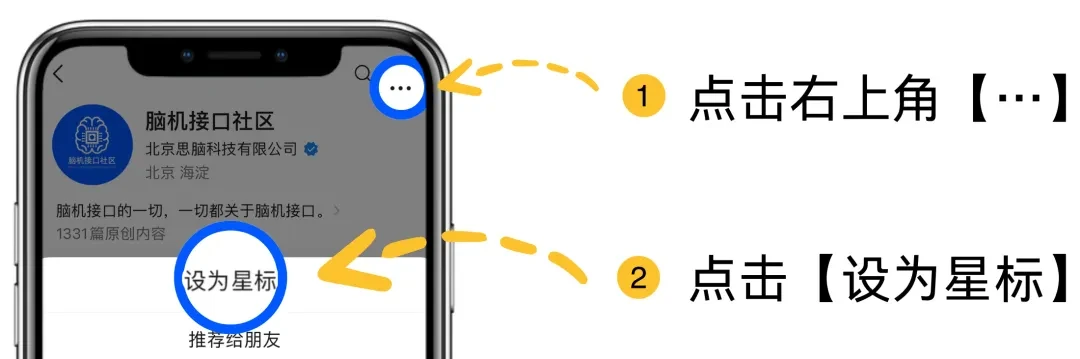
?Star and Pin to Top?
Stay Updated on Every Breakthrough in Brain-Computer Interface Frontiers
One-click Triple Action: "Share," "Like," and "Wow"
Feel free to chat in the comments section.