

Bristol-Myers Squibb’s Chemotherapy-Free R2 Regimen (Revlimid + Rituximab) Approved by European Commission as First-Line Treatment for Relapsed/Refractory Follicular Lymphoma
Dec 23, 2019 16:06
CST Updated
16:06
Bristol-Myers Squibb
Biopharmaceutical and Nutritional Product R&D and Sales
European Commission
The European Commission, abbreviated as the EU Commission, is a supranational body under the European Union. Within the EU political system, the European Commission primarily undertakes executive tasks, thus being roughly equivalent to the government in a national system. However, the European Commission has other functions as well. In particular, except for the few circumstances specified in the treaties, the European Commission is the only institution with legislative power in the EU legislative process.

December 23, 2019/BioValleyBIOON/-- Bristol-Myers Squibb (BMS) recently announced that the European Commission (EC) has approved a new indication for Revlimid (lenalidomide): in combination with rituximab (an anti-CD20 monoclonal antibody) (the R2 regimen), for the treatment of adult patients with previously treated follicular lymphoma (FL, grades 1-3a). Notably, the R2 regimen is the first chemotherapy-free combination regimen approved by the EC for the treatment of patients with FL.
In the United States, the R2 regimen was approved by the FDA in late May this year for the treatment of adult patients with previously treated follicular lymphoma (FL) or marginal zone lymphoma (MZL). Notably, R2 is theFDAThe first chemotherapy-free combination regimen approved for the treatment of patients with the aforementioned indolent non-Hodgkin lymphoma (NHL).
Revlimid is a blockbuster immunomodulatory agent acquired by Bristol-Myers Squibb (BMS) following its acquisition of Celgene. In early January, BMS announced the $74 billion acquisition of Celgene. After a series of twists and turns, this massive deal was successfully completed on November 21, 2019.
Follicular lymphoma (FL) is an indolent but incurable subtype of non-Hodgkin lymphoma (NHL) associated with immune system dysfunction. There remains an unmet medical need for patients who relapse or are refractory to prior therapies. It is hypothesized that the R2 combination works in concert with the patient’s immune system, leveraging the immunomodulatory properties of Revlimid and the CD20-targeting mechanism of rituximab, to help the patient’s own immune system combat cancer.
Nadim Ahmed, President of Hematology at Bristol-Myers Squibb, stated, “This approval represents a significant milestone for patients with follicular lymphoma who have not responded to current therapies or have experienced disease relapse after prior treatment. In the Phase III AUGMENT study, patients in the R2 regimen group experienced prolonged disease remission compared to those in the rituximab plus placebo group.”
Barts Cancer Institute, UK, European Hematology Association and BloodTumorProfessor John Gribben, Chair of the Academic Center, stated: “Immune dysfunction is a significant aspect of indolent non-Hodgkin lymphoma (NHL), including follicular lymphoma. By harnessing the patient’s own immune system, the R2 regimen represents a novel approach to the treatment of follicular lymphoma, offering patients a chemotherapy-free option with proven efficacy.”
This approval is based on data from the Phase III clinical study AUGMENT. This study was a randomized, double-blind, international clinical trial evaluating the efficacy and safety of the R2 regimen compared to rituximab plus placebo (R-placebo) in the treatment of advanced relapsed/refractory indolent lymphoma. A total of 358 patients were enrolled in the study, including those with follicular lymphoma (FL, n=295) and marginal zone lymphoma (MZL, n=63).
The results demonstrated that the study met its primary endpoint: compared with the rituximab plus placebo group, the R2 treatment group showed a highly statistically significant improvement in progression-free survival (PFS) (median PFS: 39.4 months vs. 13.8 months; HR=0.40; 95% CI: 0.29–0.55; p<0.0001). Furthermore, results from the MAGNIFY study also supported the efficacy and safety of the R2 regimen in patients with relapsed or refractory follicular lymphoma (FL), including those with rituximab-refractory FL.
Revlimid: The World's Second Best-Selling Drug, with Sales of $9.685 Billion in 2018
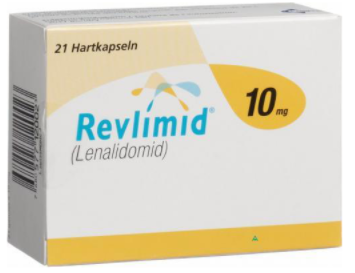
Revlimid is an immunomodulatory agent whose active pharmaceutical ingredient, lenalidomide, is a next-generation derivative of thalidomide. It lacks teratogenic toxicity, exhibits potency 100 times greater than that of thalidomide, and possesses immunomodulatory, anti-angiogenic, and anti-TumorCharacteristics. To date, Revlimid has been approved for multiple indications, which vary by country and region, including: multiple myeloma (MM), myelodysplastic syndromes (MDS), mantle cell lymphoma (MCL), follicular lymphoma (FL), and marginal zone lymphoma (MZL).
Revlimid is a blockbuster drug, with global sales reaching $9.685 billion in 2018, an 18% increase from 2017. The pharmaceutical market research firm EvaluatePharma previously predicted that Revlimid’s global sales would reach $10.94 billion in 2019, making it the second best-selling drug worldwide, just behind Humira (with expected 2019 sales of $20.97 billion).
In early January this year, Bristol-Myers Squibb (BMS) announced the acquisition of Celgene for a total consideration of $74 billion in cash and stock. Through the acquisition, Bristol-Myers Squibb will gain Celgene’sTumor, a portfolio of pipeline products with blockbuster potential in the fields of immunology and inflammation, including ozanimod, luspatercept, liso-cel (JCAR017), bb2121, fedratinib, and others. (Bioon.com)