

Roche's FoundationOne CDx Approved in Japan as Companion Diagnostic for Rozlytrek in ROS1-Positive NSCLC
Dec 27, 2019 09:53
CST Updated
09:47
Roche
Oncology Drug Research, Development, and Manufacturing
Chugai Pharmaceutical
Developer and Manufacturer of Anti-Cancer Drugs
December 27, 2019 /BioonBIOON/ -- Chugai Pharmaceutical, a Japanese pharmaceutical company controlled by Swiss pharmaceutical giant Roche, recently announced that the Japanese Ministry of Health, Labour and Welfare (MHLW) has approved the expanded use of FoundationOne® CDx Cancer Genomic Profile (hereinafter referred to as “F1CDx,” a cancer genomic profiling test) as a companion diagnostic for Roche’s targeted anticancer drug/tyrosine kinase inhibitor Rozlytrek (entrectinib) in the treatment of patients with ROS1 fusion-positive, locally advanced or metastatic non-small cell lung cancer (NSCLC).DiagnosisKit.
This approval allows physicians to use the F1CDx assay to detect ROS1 gene fusions, thereby identifying patients with non-small cell lung cancer (NSCLC) who may benefit from treatment with Rozlytrek. ROS1 gene fusions are abnormal genes formed when the ROS1 gene fuses with other genes (such as CD74) due to chromosomal translocation. The ROS1 fusion kinase produced by these gene fusions is believed to promote cancer cell proliferation. ROS1 gene fusions are present in approximately 1–2% of NSCLC cases, with higher prevalence observed in adenocarcinoma.
Rozlytrek is a ROS1/TRK inhibitor that was approved by the MHLW on June 18 this year for the treatment of adult and pediatric patients with advanced, recurrent NTRK fusion-positive solid tumors. This drug is a novel “broad-spectrum” anticancer agent and is the first tumor-agnostic (i.e., independent ofTumor(type-independent) drugs.
On March 15 this year, Chugai Pharmaceutical submitted regulatory application documents to the MHLW for Rozlytrek in the treatment of patients with ROS1 fusion-positive, locally advanced or metastatic NSCLC. The application is currently under review.
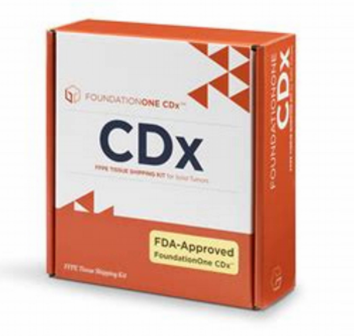
F1CDx is a test based onIn Vitro DiagnosticsThe device’s next-generation sequencing product utilizes DNA isolated from patient tumor tissue to detect and analyze substitutions, insertions, and deletions in up to 324 genes, selected gene rearrangements, as well as microsatellite instability (MSI) andTumorGenomic signatures, including tumor mutational burden (TMB).
F1CDx is a groundbreaking companionDiagnosisProduct, first approved in the United States in late November 2017FDAApproved. This approval is hailed as a major milestone in the field of precision medicine. F1CDx can simultaneously detect multiple regulatory agency–approved clinicalGeneticsMutations have surpassed the previous "one drug, one test" model.
In Japan, F1CDx was first approved at the end of June this year, marking the first pan-TumorNext-Generation Sequencing Products for Companion Diagnostics: As a comprehensive auxiliary diagnostic tool, this kit has been approved in Japan for companion diagnostics of 15 molecular targeted drugs to date. This latest approval will expand the application scope of this testing product as a companionDiagnosisKit, utilizing next-generation sequencing instruments to detect ROS1 gene fusions, screening for ROS1 fusion-positive locally advanced or metastatic NSCLC patients most likely to benefit from Rozlytrek treatment.
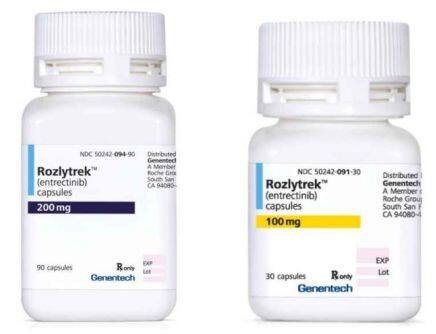
The active pharmaceutical ingredient of Rozlytrek is entrectinib, an oral, selective tyrosine kinase inhibitor (TKI) indicated for the treatment of locally advanced or metastatic solid tumors harboring NTRK1/2/3 (encoding TRKA/TRKB/TRKC) or ROS1 gene fusions. Entrectinib can cross the blood-brain barrier and inhibit the kinase activity of TRKA/B/C and ROS1 proteins, leading to the death of cancer cells with ROS1 or NTRK gene fusions. Entrectinib demonstrates efficacy against both primary and metastatic central nervous system (CNS) diseases and lacks adverse off-target activity. Currently, Roche is investigating the potential of entrectinib in treating various solid tumors, including non-small cell lung cancer (NSCLC), pancreatic cancer, sarcoma, thyroid cancer, salivary gland cancer, gastrointestinal stromal tumors, and cancers of unknown primary origin (CUP).
In the United States, Rozlytrek was approved on August 15, 2019FDAApproval: (1) for the treatment of pediatric and adult patients aged 12 years and older with advanced solid tumors harboring NTRK fusions; (2) for the treatment of adult patients with ROS1-positive metastatic non-small cell lung cancer (NSCLC). In the European Union, the European Medicines Agency (EMA) had previously granted Rozlytrek Priority Medicines (PRIME) status. Previously, Rozlytrek had been granted Breakthrough Therapy Designation (BTD) in the United States, PRIME designation in the European Union, and SAKIGAKE designation (for innovative drugs) and Orphan Drug designation in Japan.
It is particularly worth mentioning that Rozlytrek isFDAThe third approved drug based on commonalities across different tumor typesBiomarkersrather than anticancer drugs based on the tissue of origin of the tumor, marking a new paradigm in “tumor-agnostic” (i.e., independent of tumor type) cancer drug development. The agency had previously approved “Tumor"Agnostic" indications include: In May 2017, the approval of Merck & Co.’s Keytruda (pembrolizumab) for the treatment of pediatric and adult patients with microsatellite instability-high (MSI-H) or mismatch repair-deficient (dMMR) solid tumors; approved in December 2018BayerVitrakvi (larotrectinib) for the treatment of advanced solid tumors with NTRK gene fusions in children and adults. (Bioon.com)
Original Source: Chugai Obtainsapproval for Expanded Use of FoundationOne CDx Cancer Genomic Profile as a Companion Diagnostic of Rozlytrek for ROS1-positive Lung Cancer