

Merck's KEYTRUDA Fails to Significantly Extend Overall Survival in Phase III Trial for First-Line Extensive-Stage Small Cell Lung Cancer
Jan 08, 2020 14:14
CST Updated
14:14

MSD
Pharmaceutical R&D and Manufacturer

January 08, 2020 /BioonBIOON/ --TumorMerck & Co., a leader in immunotherapy, recently announced the results of the Phase III KEYNOTE-604 study (NCT03066778), evaluating Keytruda (pembrolizumab) in combination with chemotherapy as first-line treatment for extensive-stage small-cell lung cancer (ES-SCLC).
This study is a randomized, double-blind, placebo-controlled trial involving 453 newlyDiagnosisconducted in patients with ES-SCLC, evaluating the efficacy and safety of Keytruda combined with chemotherapy (etoposide plus platinum-based chemotherapy [carboplatin or cisplatin]) versus chemotherapy alone (etoposide plus platinum-based chemotherapy [carboplatin or cisplatin]). The study had two primary endpoints: overall survival (OS) and progression-free survival (PFS). Secondary endpoints included objective response rate (ORR), duration of response (DOR), safety, and quality of life (QoL).
The results showed that the study met one of the two primary endpoints: a statistically significant improvement in progression-free survival (PFS) was observed in the Keytruda plus chemotherapy combination group compared with the chemotherapy group (HR=0.75 [95% CI: 0.61–0.91]). For the other primary endpoint, overall survival (OS), the Keytruda plus chemotherapy combination group showed improvement compared with the chemotherapy group, but the data did not reach statistical significance as prespecified in the statistical analysis plan (HR=0.80 [95% CI: 0.64–0.98]). In this study, the safety profile of Keytruda was consistent with previously reported findings.
The results of this study will be presented at the upcoming medicalMeetingto be announced and will be discussed with regulatory authorities. Dr. Roy Baynes, Senior Vice President of MSD Research Laboratories and Global Head of Clinical Development, stated: “Extensive-stage small cell lung cancer is a highly aggressive malignantTumor, the results of KEYNOTE-604 demonstrated the potential of Keytruda in combination with chemotherapy to improve newDiagnosisthe prognosis of patients with extensive-stage small cell lung cancer. We sincerely thank the patients and researchers who participated in this study and are committed to helping patients facing refractory types of lung cancer.”
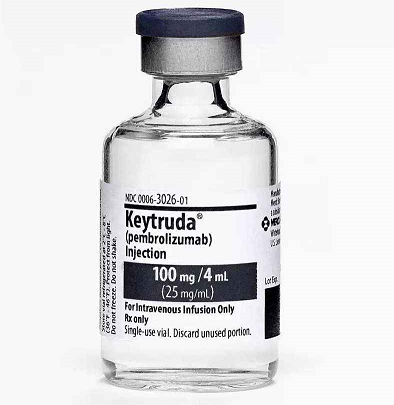
Currently, MSD is the absolute leader in the field of cancer immunotherapy, with its anti-PD-1 inhibitor Keytruda approved for more than 20 therapeutic indications. In addition to the five indications currently approved for lung cancer, the company is continuing to investigate the role of Keytruda across multiple settings and stages of lung cancer through an extensive clinical program, which includes 20 MSD-sponsoredClinical Trials, enrolling more than 10,000 patients.
According to the World Health Organization (WHO), lung cancer is the leading cause of cancer-related deaths worldwide, resulting in nearly 1.8 million deaths annually, which translates to more than 4,800 deaths globally each day. There are two main types of lung cancer: non-small cell lung cancer (NSCLC) and small cell lung cancer (SCLC), with SCLC accounting for approximately 15% of all lung cancer cases. SCLC is an aggressive disease that is often not detected until it has progressed to an advanced stage. Chemotherapy (with or without radiotherapy) has long been the standard first-line treatment. However, most patients experience relapse within one year. It is estimated that the five-year survival rate for patients diagnosed with SCLC at any stage in the United States is 6%.

Clinical Data on First-Line Treatment for SCLC (Image Source: EvaluatePharma)
March 2019, Roche PD-L1TumorTecentriq Immunotherapy Approved by U.S. FDA in Combination with Chemotherapy (Carboplatin + Etoposide) for First-Line Treatment of Adult Patients with Extensive-Stage Small Cell Lung Cancer (ES-SCLC). This approval makes Tecentriq in combination with chemotherapy (carboplatin + etoposide) the first and only cancer immunotherapy approved for the initial treatment of ES-SCLC, and alsoFDAThe first new first-line treatment regimen approved for patients with ES-SCLC in the past 20 years. In the Phase III IMpower133 study, Tecentriq plus chemotherapy significantly prolonged overall survival (median OS: 12.3 months vs. 10.3 months; HR=0.70, 95% CI: 0.54-0.91, p=0.0069) and significantly prolonged progression-free survival (median PFS: 5.2 months vs. 4.3 months, HR=0.77, 95% CI: 0.62-0.96, p=0.017) compared with chemotherapy alone.
Currently,AstraZenecaPD-L1TumorThe supplemental Biologics License Application (sBLA) for first-line treatment of ES-SCLC with immunotherapy Imfinzi (durvalumab) in combination with platinum-based chemotherapy is under review by the U.S.FDApriority review, with approval expected in the first quarter of 2020. In the Phase III CASPIAN study, the Imfinzi plus chemotherapy group demonstrated a significantly prolonged overall survival (OS) compared to the chemotherapy group (median OS: 13.0 months vs. 10.3 months), which is comparable to the OS results of Roche’s Tecentriq in the Phase III IMpower133 study.
Previously, analysts pointed out that if the Phase III KEYNOTE-604 study had succeeded, Keytruda would have posed a real threat to Tecentriq in the first-line treatment of ES-SCLC. However, the study unexpectedly ended in failure. For Roche, this setback for Merck & Co., Inc. has instead strengthened Tecentriq’s position in the first-line treatment of ES-SCLC. (Bioon.com)