

Sanofi's Next-Gen Basal Insulin Toujeo (Insulin Glargine U300) Approved by EU for Type 1 Diabetes in Children and Adolescents Aged 6+
Jan 12, 2020 12:49
CST Updated
12:49
Sanofi
Pharmaceutical R&D Developer

European Commission
The European Commission, abbreviated as the EU Commission, is a supranational body under the European Union. Within the EU political system, the European Commission primarily undertakes executive tasks, thus being roughly equivalent to the government in a national system. However, the European Commission has other functions as well. In particular, except for the few circumstances specified in the treaties, the European Commission is the only institution with legislative power in the EU legislative process.
January 12, 2020 /Bio ValleyBIOON/ -- Sanofi’s next-generation basal insulin, Toujeo (insulin glargine, 300 U/mL), has recently received approval from the European Commission (EC) for an expanded indication, for use in children and adolescents aged 6 years and olderDiabetesPatients, control blood glucose levels. Currently, Toujeo is indicated in the European Union for adults, adolescents, and children aged 6 years and older.DiabetesTreatment of the patient. In the United States, Toujeo was approved in late November 2019FDAApproved for expanded indications, for use in children and adolescents aged 6 years and olderDiabetesPatients. Previously, Toujeo was approved in the United States only for adult patients aged 18 years and older.
This approval is based on the evaluation of Toujeo (insulin glargine, 300 U/mL) and insulin glargine 100 U/mL (Gla-100) for the treatment of type 1DiabetesResults from the Phase III EDITION JUNIOR study in pediatric and adolescent patients (aged 6–17 years). This study was the first randomized, controlled trial comparing Toujeo with Gla-100 in this patient population, enrolling a total of 463 children and adolescents (aged 6–17 years) with type 1 diabetes. At screening, patients had glycated hemoglobin (HbA1c) levels between 7.5% and 11.0%. Throughout the study, patients continued their existing preprandial insulin regimen and were assessed for at least one year. The primary endpoint was the non-inferior reduction in HbA1c after 26 weeks of treatment.
The results demonstrated that the study met its primary endpoint: after 26 weeks of treatment, the mean reduction in blood glucose was comparable between the Toujeo group and the Gla-100 group (mean HbA1c reduction: 0.4% vs. 0.4%; difference: 0.004%; 95% CI: -0.17 to 0.18; the upper bound was below the prespecified non-inferiority margin of 0.3%). The risk of hypoglycemic events was also similar. Numerically lower percentages of patients in the Toujeo group experienced severe hypoglycemia (6% vs. 8.8%) and hyperglycemic ketosis (8.2% vs. 11.4%). Given that these are serious short-term complications, these findings hold significant clinical implications for patients with type 1 diabetes.
Based on these data, on October 17, 2019, the Committee for Medicinal Products for Human Use (CHMP) of the European Medicines Agency (EMA) adopted a positive opinion, recommending the expansion of the current indication for Toujeo in the European Union to include the treatment of children and adolescents (aged 6–17 years) with type 1 diabetes.
Professor Mike Baxter, a medical expert at Sanofi, stated: “Sanofi is committed to supporting patients with diabetes in managing their condition and achieving treatment goals. The European Union’s recent approval to expand the indications for Toujeo to include pediatric and adolescent patients will broaden the population that can benefit from Toujeo therapy and provide new treatment options for many young people living with diabetes.”
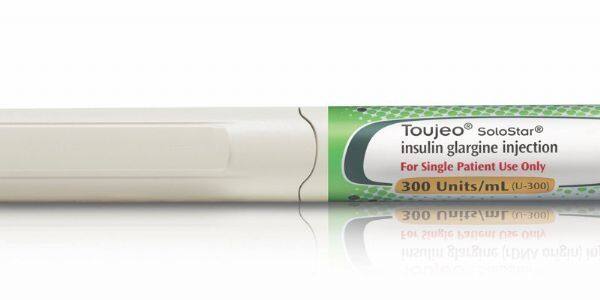
Toujeo is a next-generation basal insulin developed by Sanofi, serving as an upgraded version of its blockbuster insulin product, Lantus (insulin glargine, U100). As the world’s first long-acting insulin analog, Lantus has dominated the diabetes market for many years, with annual sales reaching $8 billion. Its U.S. patent (5656722*PED) expired on February 12, 2015.
Toujeo, developed as the successor to Lantus, is also the most important product in Sanofi’s diabetes pipeline. Toujeo was approved by the U.S.FDAApproved for use in adult patients, its main competitor is Novo Nordisk’s ultra-long-acting insulin degludec product, Tresiba; both insulins are administered once daily.
In 2018, Toujeo recorded sales of $840 million, while Lantus sales declined to $3.57 billion, and Novo Nordisk’s Tresiba generated $1.22 billion in revenue. According to the performance report released in late October 2019, Toujeo’s sales reached $649 million in the first nine months of 2019, whereas Lantus sales amounted to $2.283 billion, representing a 17.0% year-on-year decline. Sanofi is scheduled to announce its full-year 2019 financial results on February 6, 2020. (Bioon.com)
Original Source: Toujeo (insulin glargine) EU licence extended for use in adolescents and children from the age of 6 years with diabetes mellitus