

Skyrizi Demonstrates Superior Efficacy Over Cosentyx in Phase 3 Head-to-Head Trial for Moderate-to-Severe Plaque Psoriasis
Jan 15, 2020 09:37
CST Updated
09:37

AbbVie
Innovative Drug Developer

Novartis
Drug Development and Manufacturing

January 15, 2020 News /BioValleyBIOON/ -- AbbVie recently announced the evaluation of Skyrizi (risankizumab) andNovartisCosentyx (secukinumab) Head-to-Head Phase III Study (NCT03478787) in Plaque Psoriasis Met Primary and All Secondary Endpoints
This was a multicenter, randomized, open-label, efficacy-assessor-blinded, active-controlled study comparing the safety and efficacy of Skyrizi versus Cosentyx in adult patients with moderate-to-severe plaque psoriasis who were candidates for systemic therapy. In this study, patients were randomized in a 1:1 ratio to receive either: (1) Skyrizi (n=164) at a dose of 150 mg (administered as two 75-mg subcutaneous injections) at baseline, Week 4, and every 12 weeks thereafter; or (2) Cosentyx (n=163) at a dose of 300 mg (administered as two 150-mg subcutaneous injections) at baseline, Weeks 1, 2, 3, and 4, and every 4 weeks thereafter. The study had two primary endpoints (PASI 90: non-inferiority at Week 16 and superiority at Week 52) and three secondary endpoints (PASI 100 at Week 52, sPGA 0/1 at Week 52, and PASI 75 at Week 52). Safety was assessed in all patients.
The results demonstrated that the Skyrizi group achieved significantly higher skin clearance rates compared to the Cosentyx group, thereby meeting the primary endpoint of superiority in PASI 90 (at least a 90% improvement from baseline in the Psoriasis Area and Severity Index) at Week 52. Specifically, the proportion of patients achieving PASI 90 at Week 52 was 87% in the Skyrizi group versus 57% in the Cosentyx group (p < 0.001). The study also met the primary endpoint of non-inferiority for PASI 90 at Week 16, with 74% of patients in the Skyrizi group and 66% in the Cosentyx group achieving this response. Furthermore, Skyrizi demonstrated superiority over Cosentyx across all secondary endpoints, including PASI 100, PASI 75, and sPGA 0/1 at Week 52 (p < 0.001).
Existing safety data indicate that the safety profile of Skyrizi is consistent with previously reported study results, with no new safety signals observed over 52 weeks. The incidence of adverse events (AEs) was comparable between Skyrizi and Cosentyx. The most common AEs were nasopharyngitis, upper respiratory tract infection, headache, arthralgia, and diarrhea. The incidence of serious adverse events was 5.5% in the Skyrizi group and 3.7% in the Cosentyx group. The incidence of AEs leading to discontinuation of the study drug was 1.2% in the Skyrizi group and 4.9% in the Cosentyx group. No patient deaths occurred in either treatment group.

Psoriasis is the most common type ofAutoimmunityPsoriasis is characterized by immune system overactivation and widespread inflammation, leading to painful and itchy plaques appearing anywhere on the skin. Furthermore, patients with psoriasis experience significant emotional, psychological, and social burdens, which can exacerbate skin pain and itching and severely impair their quality of life.
Michael Severino, M.D., Vice Chairman and President of AbbVie, stated: “In this study, Skyrizi demonstrated superior efficacy compared to Cosentyx in helping patients achieve and maintain high levels of skin clearance at Week 52. Head-to-head study data such as these are critical in helping patients and their physicians make informed treatment decisions. We are pleased to add these results to the growing body of evidence supporting Skyrizi as a differentiated treatment option for patients with psoriasis.”
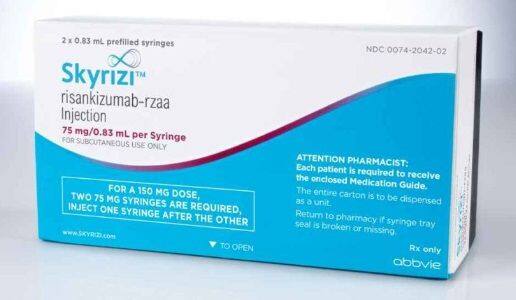
The active pharmaceutical ingredient of Skyrizi is risankizumab, a monoclonal antibody that selectively blocks the immune-inflammatory mediator interleukin-23 (IL-23) by specifically targeting its IL-23p19 subunit. IL-23 is a cytokine believed to play a key role in many chronic immune-mediated diseases. Risankizumab was originally developed by the German pharmaceutical company Boehringer Ingelheim (BI). In February 2016, AbbVie acquired the global commercialization rights to risankizumab through an upfront payment of $600 million.
In 2019, Skyrizi was approved in the United States and the European Union for the treatment of adult patients with moderate-to-severe plaque psoriasis. Currently, Skyrizi is in Phase III clinical trials for the treatment of Crohn's disease and psoriatic arthritis. Additionally, AbbVie is also evaluating Skyrizi for the treatment of other inflammatory conditions, such as ulcerative colitis.ImmunologyDisease.
Skyrizi is entering a highly crowded market, where the drug will compete with multiple other medications, including:NovartisCosentyx and Ilaris,Eli Lillysuch as Eli Lilly’s Taltz, Valeant’s Siliq, Johnson & Johnson’s Tremfya, and Sun Pharmaceutical’s Ilumya. Among these drugs, Tremfya and Ilumya are also selective biologic therapies targeting IL-23. Nevertheless, despite all this competition, the industry remains highly optimistic about the commercial prospects of Skyrizi. The pharmaceutical market research firm EvaluatePharma previously predicted that the drug’s annual sales would reach $2.2 billion in 2024.
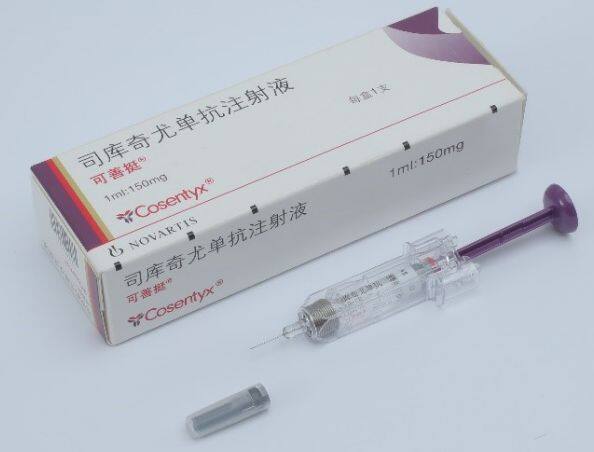
Cosentyx is the first fully human monoclonal antibody drug that specifically targets and inhibits interleukin-17A (IL-17A). It can selectively block the activity of circulating IL-17A, reduce immune system activity, and improve disease symptoms. Studies have revealed that IL-17A drives the body in multipleAutoimmunityplays an important role in the immune response of inflammatory diseases, including psoriatic arthritis (PsA), plaque psoriasis (PsO), and ankylosing spondylitis (AS).
Cosentyx was approved for marketing in January 2015 and has currently been approved for three indications (PsO, PsA, AS). Cosentyx has up to 5 years of continuous efficacy and safety data across the three major indications, with more than 250,000 patients worldwide having received treatment with this drug.
In China, Cosentyx® (Cosentyx) was approved on April 1, 2019, for the treatment of adult patients with moderate to severe plaque psoriasis who are candidates for systemic therapy or phototherapy. Notably, Cosentyx® (Cosentyx) was the first biologic agent for psoriasis to be approved from the “First Batch of Overseas New Drugs in Urgent Clinical Need” list released by the Center for Drug Evaluation of the National Medical Products Administration in 2018. On May 20, 2019,NovartisNovartis (China) announced the official nationwide launch of Cosentyx® (Secukinumab), bringing a new treatment option to patients with moderate-to-severe psoriasis in China.
In 2018, global sales of Cosentyx reached $2.837 billion, representing a 37% increase from 2017. Pharmaceutical market research firm EvaluatePharma predicts that Cosentyx will become the driving force behindNovartisAs one of the key products for future growth, with a steady expansion of indications, Cosentyx’s sales are expected to grow steadily in the coming years, with global sales projected to reach $5.5 billion in 2024. (Bioon.com)