

AstraZeneca's Anifrolumab Achieves Success in Pivotal Phase III TULIP-2 Trial for Systemic Lupus Erythematosus
Jan 23, 2020 14:00
CST Updated
14:00

AstraZeneca
Biopharmaceutical Manufacturer
January 23, 2020 News /Bio ValleyBIOON/ -- Recently, evaluationAstraZeneca(AstraZeneca) In DevelopmentMonoclonal Antibody DrugsAnifrolumab for the Treatment of SystemicLupus ErythematosusThe results of the pivotal Phase III TULIP-2 study (NCT02446899) in systemic lupus erythematosus (SLE) were published in the prestigious international medical journal The New England Journal of Medicine (NEJM), under the title:Trial of Anifrolumab in Active Systemic Lupus Erythematosus。
TULIP 2 was a multicenter, multinational, randomized, double-blind, placebo-controlled Phase III study designed to evaluate the efficacy and safety of intravenous anifrolumab versus placebo in adult patients (aged 18–70 years) with moderate-to-severe, active, autoantibody-positive systemic lupus erythematosus (SLE) who were receiving standard of care (SOC). These patients were required to be taking one or any combination of the following medications: oral corticosteroids (OCS), antimalarials, and/or immunosuppressants.
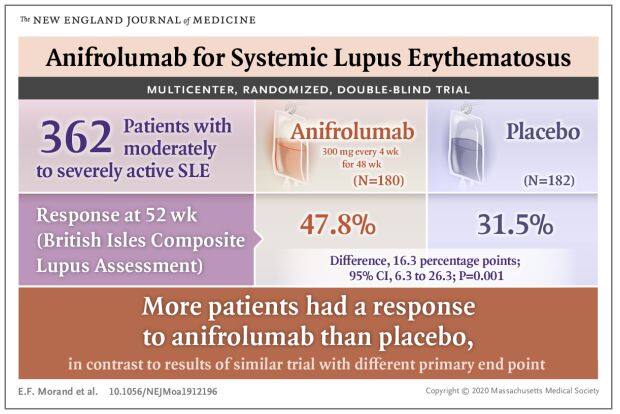
In the study, patients were randomized in a 1:1 ratio to receive either intravenous infusions of anifrolumab at a dose of 300 mg every 4 weeks or placebo for 48 weeks. The primary endpoint was the efficacy of anifrolumab in reducing disease activity, measured by the British Isles Lupus Assessment Group-based Composite Lupus Assessment (BICLA) response rate at Week 52. A BICLA response required improvement in all organs with disease activity at baseline and no new flares.
The results demonstrated that the study met its primary endpoint: when combined with standard of care, anifrolumab achieved a statistically significant and clinically meaningful reduction in lupus disease activity compared with placebo. At Week 52, the BICLA response rates were 47.8% in the anifrolumab group and 31.5% in the placebo group (difference: 16.3%, 95% CI: 6.3–26.3, p=0.0001). Furthermore, among patients with high interferon gene signatures, the response rates were 48.0% in the anifrolumab group and 30.7% in the placebo group; among those with low interferon gene signatures, the response rates were 46.7% and 35.5%, respectively. Secondary endpoints related to glucocorticoid dose and skin disease severity also showed significant benefits with anifrolumab, excluding swollen and tender joint counts and annualized flare rates.
In the study, the safety profile of anifrolumab was consistent with that observed in previous studies. The incidence of herpes infections was higher in the anifrolumab group than in the placebo group. Among patients treated with anifrolumab, the incidence rates of herpes zoster and bronchitis were 7.2% and 12.2%, respectively, and one patient died from pneumonia.
TULIP 2 was the second Phase III study evaluating anifrolumab in adult patients with moderate-to-severe SLE, in which the positive BICLA response was consistent with a prespecified analysis of the prior Phase III study, TULIP 1. However, the TULIP 1 study did not meet its primary endpoint of the SLE Responder Index 4 (SRI-4).
SLE is a debilitatingAutoimmunityDespite the disease burden, only one new therapy has been approved in the past 60 years. The results of the TULIP-2 study are encouraging, demonstrating that anifrolumab reduces disease activity in patients with systemic lupus erythematosus (SLE) by targeting the type I interferon receptor.
Anifrolumab is a fully human monoclonal antibody that binds to interferon alpha/beta receptor subunit 1 (IFNAR1), thereby blocking the activity of all type I interferons, including IFN-α, IFN-β, and IFN-ω. Type I interferons are cytokines involved in inflammatory pathways. Elevated type I interferon gene signatures have been observed in 60%–80% of adult patients with systemic lupus erythematosus (SLE), and this gene signature has been shown to correlate with disease activity.
TULIP is the pivotal Phase III program evaluating anifrolumab for the treatment of SLE (Treating Uncontrolled Lupus via the Interferon Pathway). The program comprises two Phase III studies (TULIP-1 and TULIP-2), which were conducted in adults with moderate-to-severe, active, autoantibody-positive SLE receiving standard of care, to assess the efficacy and safety of anifrolumab versus placebo. In the TULIP-1 study, 460 patients were randomized in a 1:2:2 ratio to receive intravenous infusions of anifrolumab 150 mg, anifrolumab 300 mg, or placebo every four weeks. The study evaluated the efficacy of anifrolumab in reducing disease activity using the SRI-4 endpoint, and the results were announced in August 2018. In the TULIP-2 study, 373 patients were randomized in a 1:1 ratio to receive intravenous infusions of anifrolumab 300 mg or placebo every four weeks. The study evaluated the efficacy of anifrolumab in reducing disease activity using the BICLA endpoint. Following a comprehensive assessment of the TULIP-1 study, BICLA, a well-established tool for measuring disease activity in adults with SLE, was selected as the primary endpoint for TULIP-2. Additionally, the TULIP program includes a Phase III long-term extension study in SLE and a Phase II study in lupus nephritis.
Current Status of New Drugs for SLE:GlaxoSmithKlineBenlysta (Belimumab) Stands Out, Approved in China
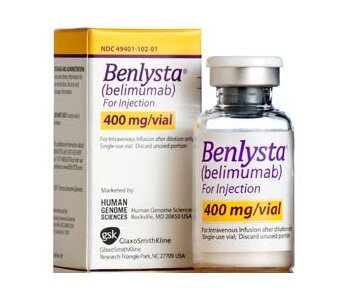
SLE is a chronicAutoimmunityIn autoimmune diseases, the immune system attacks the body's healthy tissues. If the condition is not controlled, it can lead to a range of symptoms, including pain, rash, fatigue, joint swelling, fever, long-term organ damage, and even premature death. The disease also has a significant impact on patients' physical and mental health. It is estimated that there are approximately 5 million lupus patients worldwide. Traditional treatments include steroids and immunosuppressants. Over the past 60 years, only one new drug has been approved for the treatment of lupus, namelyGlaxoSmithKlineBynlysta (belimumab), approved in the United States and the European Union in 2011 for adult patients with autoantibody-positive systemic lupus erythematosus (SLE).
Anifrolumab has a different mechanism of action from Benlysta, the latter being the first specific inhibitor of B-lymphocyte stimulator (BLyS). It blocks the binding of soluble BLyS, a B-cell survival factor, to BLyS receptors on B cells. Benlysta does not bind directly to B cells; however, by binding to BLyS, it inhibits the survival of B cells (including autoreactive B cells) and reduces their differentiation into plasma cells that produce immunoglobulins. Benlysta can reduce the number of abnormal B lymphocytes that exacerbate lupus. These abnormal B lymphocytes cause the immune system to mistakenly attack blood vessels and other healthy tissues, leading to lupus and other autoimmune diseases.
In China, Benlysta (brand name: Beiliteng) received marketing approval from the NMPA in July 2019. As the first biologic agent approved globally for the treatment of SLE, Beiliteng was approved in China for use in combination with standard therapy in adult patients with active, autoantibody-positive SLE who exhibit high disease activity despite standard treatment. Belimumab is a fully human monoclonal antibody administered intravenously that inhibits B-cell proliferation and differentiation, inducing autoreactive BApoptosisthereby reducing autoantibodies in the serum to achieve the therapeutic goal for SLE. (Bioon.com)
Original source:Trial of Anifrolumab in Active Systemic Lupus Erythematosus