

Roche's First-in-Class CD79b-Targeted ADC Polivy Receives EU Approval for Diffuse Large B-Cell Lymphoma (DLBCL)
Jan 23, 2020 14:01
CST Updated
14:01

Roche
Oncology Drug Research, Development, and Manufacturing
January 23, 2020 /BIOON/ -- Swiss pharmaceutical giant Roche recently announced that the European Commission (EC) has granted conditional approval for the antibody-drug conjugate (ADC) Polivy (polatuzumab vedotin-piiq), in combination with bendamustine and MabThera (generic name: rituximab) (BR regimen), for use in patients ineligible for hematopoieticStem CellsTreatment of adult patients with relapsed or refractory (R/R) diffuse large B-cell lymphoma (DLBCL) post-transplantation.
In the United States,FDAIn June 2019, Polivy in combination with the BR regimen received accelerated approval for the treatment of patients with relapsed or refractory diffuse large B-cell lymphoma (R/R DLBCL) who had previously received at least two prior therapies. In both the United States and the European Union, Polivy has been granted orphan drug designation for the treatment of DLBCL, as well as Breakthrough Therapy Designation (BTD) in the U.S. and Priority Medicines (PRIME) designation in the EU, marking Roche’s first PRIME designation from European regulators. Currently, Roche is submitting applications to regulatory authorities worldwide with the aim of making this new treatment regimen available to more patients as soon as possible.
Polivy’s accelerated approval in the United States and conditional approval in the European Union were based on the complete response rate observed in randomized controlled clinical trials; further approval will depend on confirmatoryClinical TrialValidation and Description of Efficacy. Notably, Polivy is the first chemoimmunotherapy approved for the treatment of relapsed/refractory diffuse large B-cell lymphoma (R/R DLBCL), significantly improving clinical outcomes compared to commonly used regimens. DLBCL is an aggressive hematologic malignancy in which each recurrence typically renders the disease more difficult to treat.
Levi Garraway, M.D., Chief Medical Officer and Global Head of Product Development at Roche, stated: “With this approval, patients in the European Union with relapsed or refractory diffuse large B-cell lymphoma (DLBCL) will have the opportunity to benefit from this new Polivy-based combination regimen. For patients battling this aggressive disease, the prognosis is poor and there are few treatment options available. We are proud to deliver this first-in-class therapy to those who need it most.”
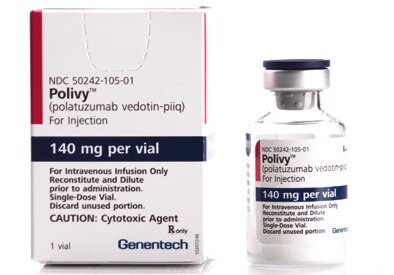
Polivy was developed by Genentech, a subsidiary of Roche, in SeattleHeredityThe company is developing its ADC technology, a first-in-class antibody-drug conjugate (ADC) specifically targeting CD79b. This ADC comprises a humanized anti-CD79b antibody conjugated to the anti-mitotic agent MMAE (monomethyl auristatin E) and is currently under development for the treatment of several types of non-Hodgkin lymphoma (NHL). CD79b is highly and specifically expressed in most B-cell NHL subtypes, making it a promising target for novel therapeutic development. Polatuzumab vedotin selectively binds to CD79b and disrupts these B cells, thereby maximizing cancer cell destruction while minimizing impact on normal cells.
Polivy approvalFDAThe accelerated approval and the conditional approval by the European Commission (EC) were both based on data from the global Phase Ib/II clinical study GO29365. In the Phase II portion of this study, 80 patients with relapsed or refractory diffuse large B-cell lymphoma (R/R DLBCL), who had been heavily pretreated, were randomly assigned to two treatment arms: (1) polatuzumab vedotin plus bendamustine plus rituximab (PBR); and (2) bendamustine plus rituximab (BR). The median number of prior therapies received by these patients was 2 (range: 1–7 in the PBR arm; range: 1–5 in the BR arm).
Notably, this is the first and only randomized pivotal clinical study demonstrating that in patients ineligible for hematopoieticStem CellsIn transplant-eligible patients with relapsed/refractory diffuse large B-cell lymphoma (R/R DLBCL), the response rate was higher than that observed with BR (a commonly used treatment regimen). The results showed that the complete response rate in the PBR regimen group reached 40% (n=16/40, 95% CI: 25–57), whereas it was only 18% in the BR regimen group (n=7/40, 95% CI: 7–33).
The study also demonstrated that the PBR regimen group had more than a twofold longer overall survival (median OS: 12.4 months vs. 4.7 months; HR=0.42) compared with the BR regimen group. Furthermore, the duration of response (DOR, defined as the time from initial response to disease progression) was longer in the PBR regimen group than in the BR regimen group (median DOR: 10.3 months vs. 4.1 months; HR=0.44). Regarding safety, the most common adverse events in both the PBR and BR regimen groups included:Anemia, thrombocytopenia, neutropenia, fatigue, diarrhea, nausea, and fever. (Bioon.com)