

Eisai’s Antiepileptic Drug Fycompa® Approved in Japan for Monotherapy and Pediatric Use in Partial-Onset Seizures, with New Granule Formulation; Launched in China in January
Jan 24, 2020 11:18
CST Updated
11:18
Eisai
Pharmaceutical Product R&D and Manufacturer
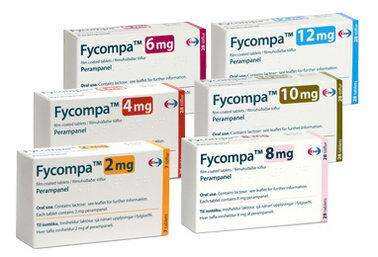
January 24, 2020 News /Bio ValleyBIOON/ -- Eisai recently announced that the supplemental New Drug Application (sNDA) for its antiepileptic drug Fycompa® (Weiketai®, generic name: perampanel) has been approved by the Japanese Ministry of Health, Labour and Welfare (MHLW). The approvals include: an additional indication for Fycompa as monotherapy for the treatment of partial-onset seizures; an additional indication for Fycompa for the treatment of partial-onset seizures in pediatric epilepsy patients aged 4 years and older; and a new fine-granule formulation of Fycompa.
The approval of monotherapy for partial-onset seizures is based on data from Phase III clinical studies (FREEDOM/Study 342) conducted in Japan and South Korea. This study was a multicenter, open-label, single-arm study designed to determine the efficacy and safety of Fycompa as monotherapy for the first-line treatment of partial-onset seizures in epilepsy patients aged 12–74 years, and to compare this efficacy and safety with results from other antiepileptic drug (AED) monotherapy studies. The primary efficacy endpoint was the proportion of patients who achieved seizure freedom during the maintenance phase (26 weeks) while receiving a daily dose of 4 mg of Fycompa. The results showed that the proportion of patients achieving seizure freedom exceeded the efficacy criteria, thereby meeting the study’s primary endpoint. In terms of safety, the most commonAdverse Reactions(≥10%) Included dizziness, somnolence, nasopharyngitis, and headache, which is consistent with the known safety profile of Fycompa.
Approval for the treatment of partial-onset seizures in pediatric patients aged 4 years and older was based on the results of a Phase III clinical study (Study 111) conducted in Japan, the United States, and Europe. The study evaluated the efficacy and safety of adjunctive Fycompa in pediatric patients (aged 4 to <12 years) with poorly controlled partial-onset seizures or primary generalized tonic-clonic (PGTC) seizures. The results demonstrated that the efficacy and safety profile of Fycompa in pediatric patients was consistent with that observed in patients aged 12 years and older.
In addition, the additional approval of the fine-granule formulation of Fycompa was based on the results of a bioequivalence study comparing the fine granules and tablets conducted in Japan. Eisai developed this formulation to facilitate easier administration of Fycompa for children and patients who have difficulty swallowing tablets.
Epilepsy can be broadly classified according to seizure type, with partial seizures accounting for approximately 60% of cases and generalized seizures for approximately 40%. Primary generalized tonic-clonic (PGTC) seizures, also known as grand mal seizures, are the most common and severe type of generalized seizure, representing about 60% of all generalized seizure cases. PGTC seizures are characterized by loss of consciousness and generalized convulsions. Common symptoms of grand mal seizures include foaming at the mouth, upward deviation of the eyes, convulsions of the limbs, and screaming; severe cases may result in incontinence of urine and feces, as well as status epilepticus. Seizures result from an imbalance between neuronal excitation and inhibition in the brain. These imbalances may be triggered by various neurochemical mechanisms, which remain poorly understood.
Fycompa is a first-in-class antiepileptic drug (AED) developed internally by Eisai. It is a highly selective, noncompetitive antagonist of AMPA-type glutamate receptors. Glutamate is the primary neurotransmitter mediating seizures. As an AMPA receptor antagonist, Fycompa reduces the hyperexcitability of seizure-related neurons by targeting the activity of postsynaptic AMPA receptors and glutamate; this mechanism of action differs from that of currently marketed antiepileptic drugs (AEDs).
To date, Fycompa has been approved in more than 65 countries worldwide as an adjunctive therapy for the treatment of partial-onset seizures (POS), with or without secondary generalization, in patients aged 12 years and older with epilepsy. In addition, Fycompa has been approved in more than 60 countries worldwide as an adjunctive therapy for the treatment of primary generalized tonic-clonic (PGTC) seizures in patients aged 12 years and older with epilepsy. In the United States and Japan, Fycompa is also indicated as both monotherapy and adjunctive therapy for the treatment of partial-onset seizures (with or without secondary generalization) in patients aged 4 years and older with epilepsy. To date, Fycompa has been used to treat more than 270,000 patients worldwide. Currently, Eisai is conducting a global Phase III clinical study (Study 338) to evaluate Fycompa for the treatment of epilepsy associated with Lennox-Gastaut syndrome.
In China, Fycompa (Wei Ke Tai®, generic name: perampanel) submitted a New Drug Application (NDA) in September 2018 as an adjunctive therapy for partial-onset seizures in patients with epilepsy aged 12 years and older. Due to its significant clinical benefits compared to existing medications, the National Medical Products Administration (NMPA) of China granted Fycompa priority review status in January 2019 and approved it in September 2019.
In early January this year, Eisai launched Fycompa (Vimpat®) in the Chinese market. The drug is a once-daily tablet used as an adjunctive therapy for partial-onset seizures (with or without secondary generalization) in epilepsy patients aged 12 years and older.
It is estimated that there are approximately 9 million epilepsy patients in China, with about 60% affected by focal seizures. Among these, 40% of patients with focal seizures require adjunctive therapy. Approximately 30% of epilepsy patients do not achieve seizure control with currently available antiepileptic drugs (AEDs), indicating a significant unmet medical need in this field. (Bioon.com)