

AstraZeneca and Daiichi Sankyo’s HER2-Targeted ADC Enhertu Redefines Treatment for HER2-Positive Gastric Cancer with Successful Phase II Trial
Jan 28, 2020 12:39
CST Updated
12:39

AstraZeneca
Biopharmaceutical Manufacturer

Daiichi-Sankyo
Pharmaceutical R&D Developer
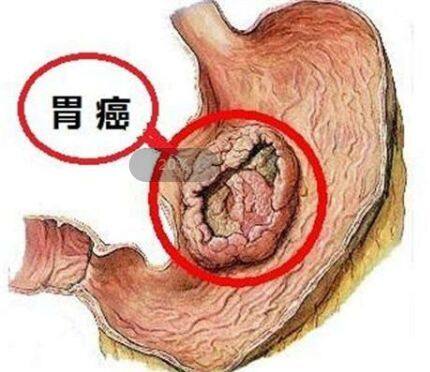
January 28, 2020 /BioonBIOON/ --AstraZenecaAstraZeneca and its partner Daiichi Sankyo recently announced that the registrational Phase II DESTINY-Gastric01 trial, evaluating Enhertu (fam-trastuzumab deruxtecan-nxki, DS-8201), a HER2-targeted antibody-drug conjugate (ADC), for the treatment of HER2-positive metastatic gastric cancer, met its primary endpoint of objective response rate (ORR) and the key secondary endpoint of overall survival (OS).
This was an open-label, multicenter, registrational Phase II trial that enrolled 189 patients from Japan and South Korea with HER2-positive advanced gastric cancer or gastroesophageal junction adenocarcinoma (defined as IHC 3+ or IHC 2+/ISH+), who had experienced disease progression after prior treatment with two or more regimens (including 5-FU, platinum-based chemotherapy, and trastuzumab). In the study, patients were randomized in a 2:1 ratio to receive Enhertu (6.4 mg/kg) or investigator’s choice of chemotherapy (paclitaxel or irinotecan monotherapy) once every three weeks. The primary endpoint was objective response rate (ORR), and secondary endpoints included overall survival (OS), progression-free survival (PFS), duration of response (DOR), disease control rate (DCR), time to treatment failure (TTF), pharmacokinetics (PK), and safety endpoints.
The results showed that the study met its primary endpoint: compared with the chemotherapy group, the Enhertu group achieved statistically significant and clinically meaningful improvements in ORR. Furthermore, compared with the chemotherapy group, the Enhertu group also demonstrated statistically significant and clinically meaningful improvements in the key secondary endpoint of OS. In the study, the overall safety and tolerability profile of Enhertu was consistent with previously published Phase I trial data. The most common adverse events (≥30%, all grades) were hematologic and gastrointestinal, including decreased neutrophil count,Anemia, nausea, and decreased appetite. Treatment-related interstitial lung disease (ILD) and pneumonitis were reported in the study, predominantly Grade 1 and 2, with two cases of Grade 3 and one case of Grade 4. No ILD-related deaths (Grade 5) occurred among gastric cancer patients in the Phase I trial or the DESTINY-Gastric01 trial.
These results confirm that in The LancetTumoractivity of Enhertu in patients with HER2-positive advanced gastric cancer in a non-randomized Phase I trial published in the Journal》. Data from DESTINY-Gastric01 will be presented at the upcoming medicalMeetingpublished above.
AstraZenecaTumorExecutive Vice President of R&D José Baselga stated, “Gastric cancer is usually diagnosed at an advanced stageDiagnosis“...patients face a significantly high mortality rate, making the need for new therapies particularly urgent. Given the results previously observed in our HER2-positive development program and now in HER2-positive metastatic gastric cancer, we believe this antibody-drug conjugate has the potential to redefine treatment for patients with HER2-positive cancers.”
In addition to planning discussions with Japan’s Ministry of Health, Labour and Welfare (MHLW), AstraZeneca and Daiichi Sankyo also intend to discuss these data with other regulatory authorities. In Japan, Enhertu has been granted Sakigake designation for the treatment of HER2-positive gastric cancer.
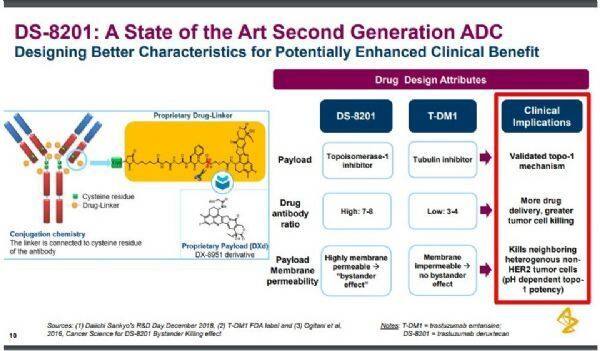
Enhertu (fam-trastuzumab deruxtecan-nxki, DS-8201) is a next-generation antibody-drug conjugate (ADC) that links trastuzumab, a humanized monoclonal antibody targeting HER2, to a novel topoisomerase I inhibitor, an exatecan derivative (DX-8951 derivative, DXd), via a tetrapeptide linker. This design enables targeted delivery of the cytotoxic agent into cancer cells, thereby reducing systemic exposure to the cytotoxic payload compared with conventional chemotherapy.
In March 2019, AstraZeneca and Daiichi Sankyo reached an agreement worth up to $6.9 billion for immuno-Tumoracademic collaboration to jointly develop Enhertu for the treatment of patients with various levels of HER2 expression or HER2 mutations, including gastric cancer, colorectal cancer, and lung cancer, as well as those with low HER2 expressionBreast CancerUnder the agreement, both parties will jointly develop and commercialize Enhertu globally. Daiichi Sankyo retains exclusive rights in the Japanese market and assumes full responsibility for manufacturing and supply.
In December 2019, Enhertu received approval from the U.S. FDA for adult patients with HER2-positive metastatic breast cancer who had previously received two or more anti-HER2 therapies in the metastatic setting. Previously,FDAEnhertu was granted Breakthrough Therapy Designation and Fast Track Designation. According toTumorBased on the objective/definitive mode (Mode B), here is the translation:Response Rate and Duration of Response Data; Enhertu Was Approved Under the Accelerated Approval Program. Continued Approval for This Indication Is Contingent Upon Verification and Description of Clinical Benefit in Confirmatory Trials.
Pharmaceutical market research firm EvaluatePharma previously predicted that Enhertu’s sales would reach $2 billion in 2024 after its launch. (Bioon.com)