

Lilly and Incyte Announce Phase 3 Success of Oral JAK Inhibitor Olumiant (Baricitinib) in Moderate-to-Severe Atopic Dermatitis
Jan 28, 2020 12:38
CST Updated
12:38

Eli Lilly
Global Pharmaceutical R&D and Production Company

Incyte
Small Molecule Drug Developer

January 28, 2020 News /BioValleyBIOON/ -- U.S. pharmaceutical giantEli Lilly(Eli Lilly) and partner Incyte recently announced that the Phase 3 clinical study BREEZE-AD4, evaluating the oral JAK inhibitor Olumiant (baricitinib) for the treatment of adult patients with moderate-to-severe atopic dermatitis (AD), met its primary endpoint.
This was a multicenter, double-blind, randomized, placebo-controlled study conducted outside the United States in adult patients with moderate-to-severe atopic dermatitis (AD) who had an inadequate response to, were intolerant of, or had contraindications for cyclosporine therapy. The efficacy and safety of Olumiant (at three doses: 1 mg, 2 mg, and 4 mg) or placebo, each in combination with topical corticosteroids (TCS), were evaluated. The primary endpoint was the proportion of patients achieving EASI75 (≥75% improvement from baseline in the Eczema Area and Severity Index [EASI] score) at Week 16 of treatment.
The results showed that Olumiant at a 4 mg dose met the primary endpoint: at Week 16 of treatment, the proportion of patients achieving EASI75 was significantly higher in the Olumiant 4 mg + TCS group compared to the placebo + TCS group (31.5% vs. 17.2%, p ≤ 0.05). Additionally, at Week 16 of treatment, as assessed by the validated Investigator’s Global Assessment (vIGA), a higher proportion of patients in the Olumiant 4 mg + TCS group achieved an AD vIGA score of clear or almost clear (vIGA score of 0 or 1: 21.7% vs. 9.7%, p ≤ 0.05) compared to the placebo + TCS group. Furthermore, at Week 16 of treatment, the proportion of patients achieving a 4-point improvement in the Itch Numerical Rating Scale (Itch NRS) was significantly higher in all three Olumiant + TCS dose groups compared to the placebo + TCS group (placebo group: 8.2%; Olumiant 1 mg, 2 mg, and 4 mg groups: 23.1%, 22.9%, and 38.2%, respectively).

The safety profile in this study was consistent with that previously observed for Olumiant in ADClinical Trialsconsistent with the known safety results. The most common treatment-emergent adverse events (TEAEs) included nasopharyngitis, headache, and influenza. No venous thromboembolism (VTE) events or deaths were reported in the trial.
Recently,Eli LillyRegulatory application documents for Olumiant in the treatment of moderate-to-severe AD have been submitted to the European Medicines Agency (EMA), with plans to submit regulatory applications in the United States and Japan in 2020. Full results from the BREEZE-AD4 study will be presented at upcoming scientificMeetingand published in peer-reviewed journals.
Eli LillyImmunologyDr. Lotus Mallbris, Vice President of Development, stated, “There is an urgent need for additional treatment options for patients with moderate-to-severe AD, particularly those who have failed conventional systemic therapies such as cyclosporine. Ongoing insights from the AD clinical development program further illustrate the therapeutic potential of baricitinib in patients with AD.”
Atopic Dermatitis (AD) is a severe chronic inflammatory skin disease, primarily characterized by intense pruritus, prominent eczematous changes, and xerosis. The disease often onset in infancy and childhood, with some patients affected throughout their lifetime. It can significantly impair patients' quality of life due to chronic recurrent eczematous rashes, severe pruritus, sleep deprivation, dietary restrictions, and psychosocial impacts.
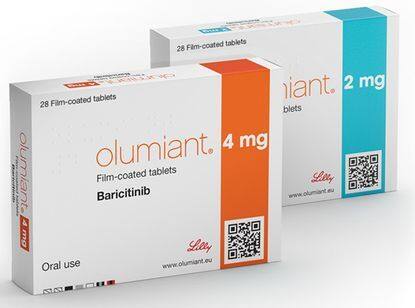
The active pharmaceutical ingredient of Olumiant is baricitinib, a selective, reversible JAK1 and JAK2 inhibitor administered orally once daily, currently in clinical development for various inflammatory diseases andAutoimmunityTreatment of sexually transmitted diseases, including classRheumatoid Arthritis(RA), psoriasis,DiabetesKidney Disease, Atopic Dermatitis, SystemicLupus Erythematosusetc. There are four JAK enzymes, namely JAK1, JAK2, JAK3, and TYK2. JAK-dependent cytokines are involved in various inflammatory andAutoimmunityThe pathogenesis of immune-mediated diseases suggests that JAK inhibitors may be widely used for the treatment of various inflammatory disorders. In kinase profiling assays, baricitinib demonstrated 100-fold greater inhibitory potency against JAK1 and JAK2 than against JAK3.
Eli LillyReached an exclusive collaboration agreement with Incyte in 2009 to jointly develop Olumiant and certain follow-on compounds. To date, Olumiant has been approved in more than 60 countries worldwide (including the United States, the European Union, and Japan) as monotherapy or in combination with methotrexate for the treatment of moderate to severe active rheumatoid arthritis in patients who have had an inadequate response or intolerance to one or more disease-modifying antirheumatic drugs (DMARDs).Rheumatoid ArthritisTreatment of adult patients with rheumatoid arthritis (RA). In clinical studies, Oluminant demonstrated significant improvements in the signs and symptoms of RA compared to standard-of-care therapies (e.g., methotrexate monotherapy or adalimumab combined with background methotrexate therapy).
Olumiant is approved at doses of 4 mg and 2 mg in the European Union, and at a dose of 2 mg in the United States. For administration, Olumiant is taken orally once daily, either as monotherapy or in combination with methotrexate (MTX) or other non-biologic disease-modifying antirheumatic drugs (non-biologic DMARDs). Concomitant use of Olumiant with other JAK inhibitors, biologic DMARDs, or potent immunosuppressants (such as azathioprine and cyclosporine) is not recommended. Notably, the US prescribing information for Olumiant includes a boxed warning regarding serious infections and malignancy.Tumorand the risk of thrombosis. (Bioon.com)
Original Source: Lilly and Incyte Announce Top-Line Results from Phase 3 Study (BREEZE-AD4) of Oral Selective JAK Inhibitor Baricitinib in Combination with Topical Corticosteroids in Patients with Moderate to Severe Atopic Dermatitis Not Controlled with Cyclosporine