


On January 27, Roche announced the completion of its submission to the FDA of a supplemental Biologics License Application (sBLA) for Tecentriq (atezolizumab) in combination with Avastin (bevacizumab) for the treatment of unresectable hepatocellular carcinoma in patients who have not received prior systemic therapy.
In July 2018, the FDA granted Breakthrough Therapy Designation for this indication to Tecentriq based on Phase Ib data. The agency will also review the marketing application for Tecentriq in combination with Avastin under the Real-Time Oncology Review (RTOR) pathway. RTOR is a major innovative policy for the approval of new oncology drugs, implemented by the FDA in 2018, aiming to enable patients to access breakthrough therapies with reliable efficacy and safety profiles as early as possible through a more efficient review process. Under the RTOR framework, sponsors must voluntarily opt in; it allows them to submit application materials before the completion of all clinical trials, thereby potentially reducing the time from application submission to approval to just a few weeks.
Roche’s current application is primarily based on the results of the Phase III IMbrave150 study. The IMbrave150 study employed a global, multicenter, open-label design. A total of 501 patients with unresectable hepatocellular carcinoma (HCC) who had not previously received systemic therapy were randomized in a 2:1 ratio to receive either intravenous infusion of atezolizumab 1200 mg plus bevacizumab 15 mg/kg on Day 1 of each 21-day cycle, or oral sorafenib 400 mg twice daily on Days 1–21 of each cycle. Treatment continued until unacceptable toxicity occurred or until the investigator determined that continued treatment offered no clinical benefit.
The results showed that, in patients with unresectable hepatocellular carcinoma who had not previously received systemic therapy, Tecentriq plus Avastin as a first-line treatment significantly prolonged overall survival compared with sorafenib (13.2 months vs. not mature), reducing the risk of death by 42% (HR=0.58; 95% CI: 0.42–0.79; P=0.0006). It also significantly prolonged progression-free survival (PFS) (6.8 vs. 4.3 months), with 6-month PFS rates of 55% and 37%, respectively, reducing the risk of disease progression or death by 41% (HR=0.59; 95% CI: 0.47–0.76; P<0.0001). Patients demonstrated significant survival benefits.
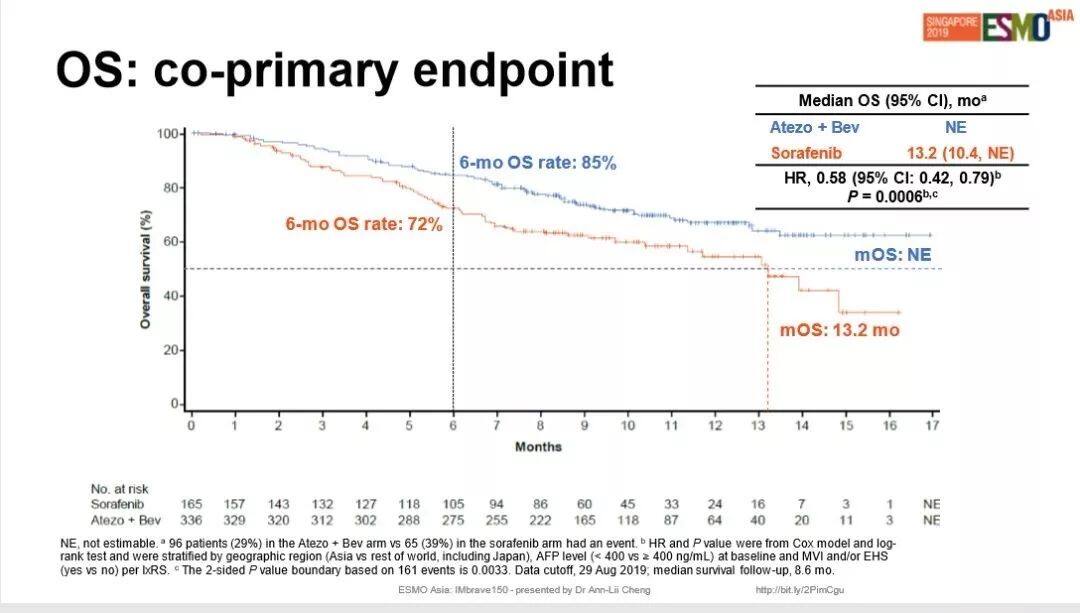
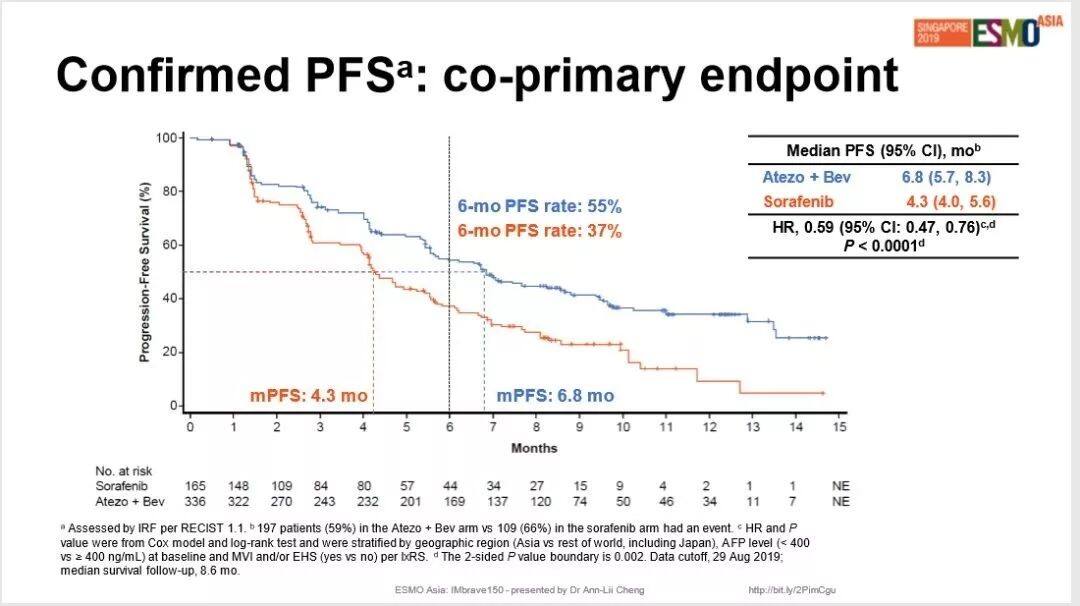
In terms of safety, the incidence of grade 3–4 serious adverse events in the Tecentriq + Avastin group was similar to that in the sorafenib group (57% vs. 55%), and the incidence of grade 5 serious adverse events was comparable (5% vs. 6%).
Liver cancer is a common and high-incidence malignancy. Globally, there are approximately 854,000 new cases of liver cancer annually, with 466,000 cases in China, accounting for half of the global total. Worldwide, 810,000 patients die from liver cancer each year, including 422,000 in China. Currently, the first-line standard treatments for liver cancer are primarily sorafenib-targeted therapy or the FOLFOX chemotherapy regimen containing oxaliplatin; however, their efficacy is limited.
For more than a decade since the approval of sorafenib, no drug had managed to outperform sorafenib in head-to-head comparisons as first-line therapy. Opdivo and Keytruda were both accelerated for approval as second-line treatments for liver cancer; however, their post-marketing confirmatory studies failed to meet predefined endpoints, ultimately ending in failure. The combination regimen of Tecentriq plus Avastin has broken the stalemate in first-line treatment of hepatocellular carcinoma that persisted for over a decade, demonstrating the best efficacy observed to date in Phase III clinical trials of first-line systemic therapy for unresectable hepatocellular carcinoma. It is also the first novel therapy in more than ten years to surpass the existing standard of care, sorafenib, in clinical studies.
Levi Garraway, Chief Medical Officer at Roche, stated, “Liver cancer is the fastest-growing cause of cancer-related deaths in the United States. In the IMbrave150 study, the combination regimen of Tecentriq plus Avastin was demonstrated to be the first therapy in over a decade to show superior survival benefits compared with the current standard of care. We are pleased that these clinical results are undergoing FDA review via the Real-Time Oncology Review program, and we look forward to working closely with regulatory authorities to bring this novel treatment option to patients with unresectable hepatocellular carcinoma as soon as possible.”