

Astellas and FibroGen Submit sNDA for Evrenzo (Roxadustat) to Treat Anemia in Non-Dialysis-Dependent Chronic Kidney Disease Patients in Japan
Feb 03, 2020 12:14
CST Updated
Jan 31, 08:46

Astellas
Pharmaceutical R&D Manufacturer

FibroGen
Developer of Oral Small Molecule Inhibitors
January 30, 2020 News /Bio ValleyBIOON/ -- Japanese pharmaceutical company Astellas and its partner FibroGen recently jointly announced that they have submitted a supplemental new drug application (sNDA) to the Japanese Ministry of Health, Labour and Welfare (MHLW), seeking approval for Evrenzo (Chinese brand name: Airuizhuo; generic name: roxadustat), for non-dialysisClinical TrialTreatment of Chronic Kidney Disease (CKD) in Patients with Non-Dialysis-Dependent (NDD)Anemia. In Japan, Evrenzo was approved in September 2019 for the treatment of CKD-related anemia in dialysis patients, and the drug was launched in November 2019.
Anemia in chronic kidney disease (CKD) significantly worsens the prognosis of renal disease, accelerates progression to kidney failure, and increases the risk of cardiovascular complications, while also substantially impairing patients’ quality of life and cognitive function. Achieving and maintaining target hemoglobin levels can be challenging, and roxadustat offers an important oral therapeutic option.
This sNDA submission is based on threeClinical Trial(1517-CL-0310, 1517-CL-0314, 1517-CL-0303) results. Dr. Bernhardt G. Zeiher, Chief Medical Officer of Astellas, stated: “The data demonstrate that roxadustat effectively increases and maintains hemoglobin (Hb) levels within the target range in patients with CKD-related anemia who are not on dialysis. This sNDA submission represents an important next step in bringing roxadustat to more such patients in Japan, which is particularly significant in the non-dialysis setting, as many patients’ anemia is currently either untreated or not managed to target.”
Renal anemia is one of the major complications during the decompensated stage of renal function in chronic kidney disease (CKD). As CKD progresses, the prevalence and severity of CKD-related anemia gradually increase. Renal anemia is more refractory to correction than conventional anemia, leading to severe fatigue and reduced quality of life in patients. Currently, the standard treatment for renal anemia involves erythropoietin (EPO) replacement therapy using erythropoiesis-stimulating agents (ESAs), such as epoetin alfa, combined with intravenous iron supplementation. Administered via subcutaneous injection, this regimen can effectively increase hemoglobin (Hb) levels in CKD patients and improve clinical symptoms.
Roxadustat is the first small-molecule hypoxia-inducible factor prolyl hydroxylase inhibitor (HIF-PHI) developed globally for the treatment of renal anemia. The physiological role of hypoxia-inducible factor (HIF) not only increases erythropoietin expression but also upregulates the expression of erythropoietin receptors and proteins that promote iron absorption and circulation. Roxadustat inhibits prolyl hydroxylase (PH) by mimicking one of its substrates, ketoglutarate, thereby affecting the role of PH in maintaining the balance between HIF synthesis and degradation rates, ultimately achieving the correction of anemia.
As the first HIF-PHI globally, roxadustat promotes endogenous erythropoietin production, improves iron absorption and utilization, reduces hepcidin levels, and is not subject to the negative effects of inflammation on hemoglobin and erythropoiesis, thereby effectively promoting red blood cell production. Roxadustat has been proven to induce erythropoiesis. In multiple subpopulations of patients with chronic kidney disease, roxadustat maintains erythropoietin levels at or near the normal physiological range, thereby increasing red blood cell count. It remains effective regardless of inflammatory status and can avoid the need for intravenous iron supplementation.
Roxadustat was discovered by FibroGen and developed in collaboration with the Japanese pharmaceutical company Astellas for the treatment of CKD-related anemia in both dialysis-dependent and non-dialysis-dependent patients. Furthermore, FibroGen has alsoAstraZenecaCollaboration to develop roxadustat in the United States, China, and other markets.
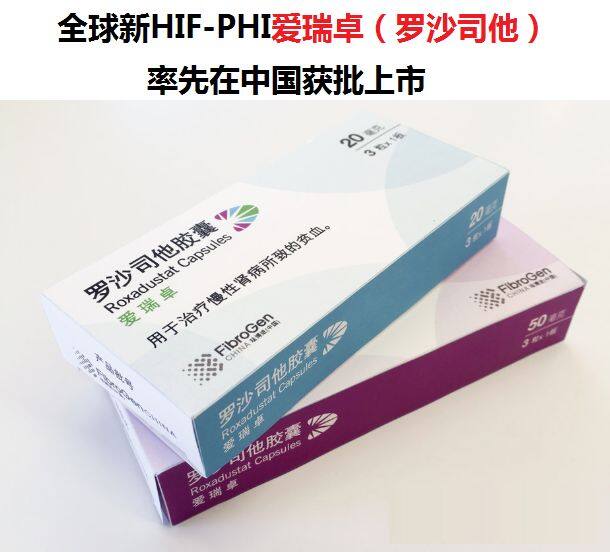
In December 2018, roxadustat (brand name: Evrenzo) was first approved in China for the treatment of anemia in patients with chronic kidney disease (CKD) on dialysis. In August 2019, the drug received approval in China for a new indication: the treatment of anemia in patients with non-dialysis-dependent chronic kidney disease (NDD-CKD). As a global first-in-class innovative drug, roxadustat has achieved comprehensive application in China for both dialysis-dependent and non-dialysis-dependent CKD patients with anemia, bringing a novel therapeutic breakthrough to the vast population of Chinese patients with chronic kidney disease. AstraZeneca and FibroGen China are expected to launch roxadustat in the Chinese market in the second half of this year. (Bioon.com)
Original Source: Astellas Submits Supplemental New Drug Application forapproval of Evrenzo (roxadustat) for the Treatment of Anemia Associated with Chronic Kidney Disease in Non-Dialysis Dependent Patients in Japan