

Bayer's Nubeqa (Darolutamide) Demonstrates Significant Overall Survival Benefit in Phase III ARAMIS Trial for Non-Metastatic Castration-Resistant Prostate Cancer
Feb 03, 2020 14:25
CST Updated
Jan 31, 08:46

Bayer
Pharmaceutical Product R&D Developer

January 30, 2020 /Bio ValleyBIOON/ -- German pharmaceutical giantBayer(Bayer) recently announced the final analysis results of the pre-specified overall survival (OS) endpoint from the pivotal Phase III ARAMIS study evaluating Nubeqa (darolutamide) for the treatment of non-metastatic castration-resistant prostate cancer (nmCRPC). The data demonstrated that the Nubeqa plus androgen deprivation therapy (ADT) group achieved a statistically significant prolongation in OS compared to the placebo plus ADT group. Previously reported results showed that the primary efficacy endpoint, metastasis-free survival (MFS), was significantly improved in the Nubeqa plus ADT group compared to the placebo plus ADT group. Updated OS and other endpoints, along with updated long-term safety data, will be presented at an upcoming scientificMeetingpublished above.
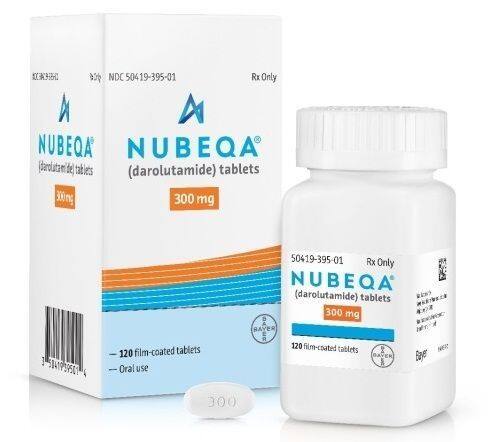
Nubeqa is an oral non-steroidal androgen receptor (AR) inhibitor with a unique chemical structure that binds to the receptor with high affinity, exhibits potent antagonistic activity, and thereby inhibits receptor function and the growth of prostate cancer cells.
Nubeqa, developed in collaboration between Bayer and the Finnish pharmaceutical company Orion, has been approved in the United States, Brazil, and Japan for the treatment of patients with nmCRPC, namelyTumorPatients with prostate cancer that has not yet spread to other parts of the body and is no longer responsive to medical or surgical therapies aimed at lowering testosterone levels. Applications for Nubeqa are ongoing or planned in the European Union and other regions. This medication will provide clinicians with a new treatment option that significantly prolongs metastasis-free survival (MFS) in patients with nmCRPC.
Nubeqa Approved Based on Data from the Pivotal Phase III ARAMIS Study. Results demonstrated that, in patients with nmCRPC, Nubeqa plus ADT significantly prolonged metastasis-free survival (median MFS: 40.4 months vs. 18.4 months; p<0.0001) and reduced the risk of metastasis or death by 59% (HR=0.41; 95% CI: 0.34–0.50) compared with placebo plus ADT. The Nubeqa plus ADT regimen exhibited a favorable safety profile in this study.
Globally, prostate cancer is the second most common malignancy in menTumorIn 2018, an estimated 1.2 million people were diagnosed with prostate cancer, and 358,000 died from the disease. Prostate cancer is the fifth leading cause of cancer-related death in men, primarily affecting men over the age of 50, with risk increasing with age. Castration-resistant prostate cancer (CRPC) refers to prostate cancer that continues to progress despite androgen deprivation therapy (ADT) reducing testosterone levels to very low levels. Approximately one-third of patients with non-metastatic castration-resistant prostate cancer (nmCRPC) develop metastases within two years. Patients with nmCRPC are typically asymptomatic; the primary treatment goal is to delay the spread of prostate cancer and limit treatment-related side effects.
Nubeqa features a unique chemical structure that binds to the receptor with high affinity, demonstrating potent antagonistic activity, thereby inhibiting receptor function and the growth of prostate cancer cells. Unlike other existing treatments for nmCRPC, Nubeqa does not cross the blood-brain barrier, resulting in fewer potential drug interactions and central nervous system side effects (such as seizures, falls, and cognitive impairment).
In addition to nmCRPC, Bayer and Orion are also advancing another Phase III clinical study, ARASENS, to evaluate the efficacy and safety of darolutamide in the treatment of metastatic hormone-sensitive prostate cancer (mHSPC). (Bioon.com)