

AI-Driven Drug Repurposing Identifies Baricitinib as a Potential Therapeutic for COVID-19

BenevolentAI
AI Drug Discovery Developer

Imperial College London
A Polytechnic University Renowned for Excellence in Teaching and Research
On February 4, Imperial College London and the AI-driven drug discovery company BenevolentAI jointly announced that, through deep learning and knowledge graph technologies, they had identified the drug “baricitinib” as having potential for treating COVID-19. Baricitinib is already marketed in China.
This message was delivered viaThe LancetPublished: Imperial College London and BenevolentAI jointly published this correspondence article.
This drug was identified through artificial intelligence screening. Based on the genomic sequencing results of the novel coronavirus and the molecular mechanisms of viral protein genomes, the authors concluded that baricitinib has the potential to reduce viral infection of lung cells.
Baricitinib is a classic JAK kinase inhibitor that can be used in combination with one or more TNF inhibitors.
However, this conclusion requires further clinical validation before it can be definitively confirmed.
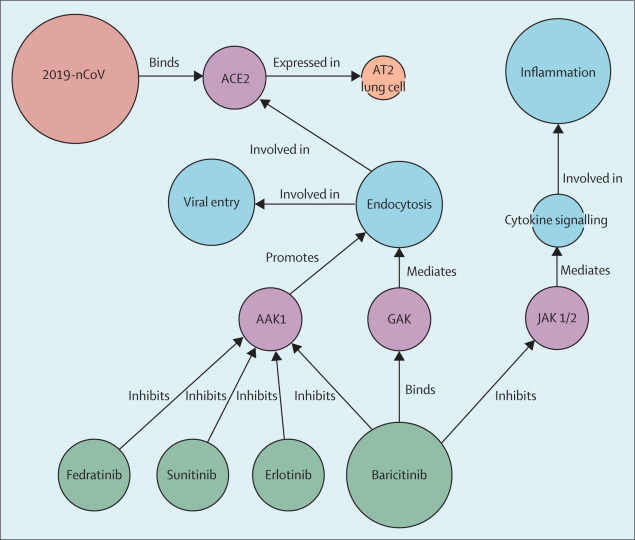
36Kr has learned that baricitinib is primarily used to treat moderate-to-severe active rheumatoid arthritis in adults, with mild adverse reactions. The drug was developed by Eli Lilly and Company and is marketed under the brand name “Olumiant.” Since its launch in 2017, Olumiant has been used in more than 60 countries worldwide, benefiting over 50,000 patients. In July 2019, baricitinib received approval from China’s National Medical Products Administration for market entry in the country.
BenevolentAIThe company is headquartered in London, UK. Its core competency lies in its artificial intelligence engine, which leverages AI technology to analyze medical information and support new drug development. By extracting valuable insights from vast amounts of healthcare data, the company enables researchers to utilize these cutting-edge and relevant findings to address complex medical challenges. With a global presence, the company operates a research center in Cambridge and maintains offices in New York and Belgium. Current research efforts are focused on disease areas such as amyotrophic lateral sclerosis (ALS), Parkinson’s disease, glioblastoma, and sarcopenia.
In layman's terms, AI-driven new drug development involves using artificial intelligence to conduct "virtual" screening of 5,000–10,000 compounds. This approach replaces certain laboratory experiments with database-driven analysis, significantly accelerating the research and development process.
Star companies in this field include Insilico, Atomwise, Numerate, BenevolentAI, and others; some Chinese companies are also at the forefront globally, including Iceberg Biosciences and XtalPi.