

EYLEA® (aflibercept) Injection Reduced Risk of Vision-Threatening Events by 75% in Diabetic Retinopathy Patients Over Two Years
Feb 11, 2020 10:33
CST Updated
10:33
Regeneron
Biopharmaceutical Manufacturer
February 11, 2020 /Bioon/ -- Regeneron recently announced positive two-year data from the Phase III PANORAMA trial, which evaluated the ophthalmic drug Eylea (aflibercept intravitreal injection solution, 2 mg/0.5 mL) for the treatment of moderate to severe non-proliferativeDiabetespatients with non-proliferative diabetic retinopathy (NPDR). These data were recently presented for the first time at the 17th Annual Angiogenesis, Exudation, and Degeneration Meeting held in Miami, USA.
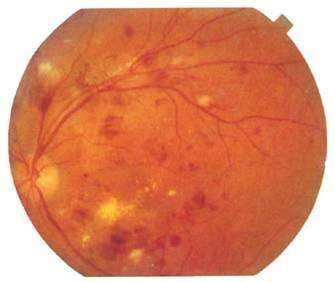
Data from pre-specified exploratory analyses at 2 years indicated that untreated moderately severe to severe NPDR can lead to vision-threatening events, including vision-threatening complications (VTCs; proliferativeDiabetesretinopathy or neovascularization of the anterior segment of the eye) and involving the foveaDiabetesCenter-Involved Diabetic Macular Edema (CI-DME)
According to the Kaplan-Meier analysis,More than half (58%) of untreated sham-injection group patients developed VTC or CI-DME within 2 years after entering the trial. In contrast, Eylea treatment demonstrated at least a 75% reduction in the likelihood of these vision-threatening events (nominal p < 0.0001).
The 2-year results also showed that patients receiving regular Eylea treatment benefited more compared to those who received Eylea treatment less frequently. According to the protocol, the trial patient group that received Eylea every 8 weeks during the first year switched to PRN (pro re nata) dosing in the second year when physicians determined that these patients required “as-needed” administration (i.e., the 8-week/PRN group). Among these patientsDiabetesThe proportion of patients with an improvement of >2 levels in the Diabetic Retinopathy Severity Scale (DRSS) score from baseline decreased in the second year (80% at Week 52,Week 100 was 50%).*
In contrast, among patients who continued to receive Eylea treatment every 16 weeks (i.e., the 16-week group), the proportion of patients with a DRSS score improvement of >2 levels from baseline remained consistent in the second year (65% at Week 52,62% at Week 100).*
In the second year, patients in the 8-week/PRN group received a mean of 1.8 injections (instead of the expected 6); a review of independent reading center data on investigators’ PRN decisions indicated that some of these patients may have been underdosed according to the trial protocol rules. Patients in the 16-week group received 2.6 injections in the second year (instead of the expected 3).
(*: Week 52 p < 0.0001; Week 100 nominal p < 0.0001, as all prespecified endpoints were considered exploratory at Week 100.)
In the 2-year PANORAMA trial, adverse events were consistent with the known safety profile of Eylea. The incidence of serious ocular adverse events in the study eye was 2% in the 8-week/PRN group, 0% in the 16-week group, and 2% in the sham injection group. The incidence of ocular inflammation was 2% and 1% in the two Eylea treatment groups, respectively, and 1% in the sham injection group. The incidence of arterial thromboembolic treatment-emergent adverse events, as defined by the Antiplatelet Trialists’ Collaboration (APTC), was 3% and 6% in the two Eylea treatment groups, respectively, and 5% in the sham injection group.
Charles C. Wykoff, MD, investigator in the PANORAMA trial and a vitreoretinal surgeon and ophthalmologist at Retina Consultants of Houston, commented, “These data reinforce that regular Eylea treatment is highly effective in reducing the risk of new vision-threatening events in patients with moderate to severe non-proliferative diabetic retinopathy (NPDR). The PANORAMA trial demonstrated that more than half of untreated patients experienced vision-threatening events within two years, highlighting the value of proactive and regular treatment for patients.”

Eylea is a novel intravitreal VEGF inhibitor. It is a recombinant fusion protein composed of the extracellular domains of human vascular endothelial growth factor (VEGF) receptors 1 and 2 fused to the Fc fragment of human immunoglobulin G1. Eylea functions as a soluble decoy receptor for members of the VEGF family, including VEGF-A, and for placental growth factor (PlGF). It binds these factors with high affinity, thereby inhibiting their interaction with endogenous VEGF receptors. Consequently, Eylea suppresses abnormal angiogenesis and vascular leakage.
To date, Eylea has been approved for five indications in more than 100 countries worldwide, primarily for the treatment of vision impairment caused by retinal diseases: diabetic macular edema (DME), diabetic retinopathy (DR), neovascular (wet) age-related macular degeneration (nAMD), macular edema (ME) secondary to retinal vein occlusion (RVO, including branch RVO [BRVO] and central RVO [CRVO]), and vision impairment due to myopic choroidal neovascularization (myopic CNV).
In China, Eylea (Aflibercept) is the first anti-VEGF drug approved for the treatment of DME. The recommended dosage is 2 mg, administered via monthly injections for the initial five months (i.e., five doses), followed by examinations and injections every two months (8 weeks). After 12 months of treatment, the dosing interval may be extended based on visual acuity and anatomical outcomes.
In late November 2019, the National Healthcare Security Administration issued an announcement that Eylea (Ailiya®) would be officially included in the "National Basic Medical Insurance, Work-Related Injury Insurance, and Maternity Insurance Drug Catalog (2019 Edition)" effective January 1, 2020. The approved indications include the treatment of diabetic macular edema (DME) in adults and neovascular (wet) age-related macular degeneration (nAMD) in adults. (Bioon.com)