

Novartis Announces Capmatinib Granted FDA Priority Review as First Potential Targeted Therapy for METex14-Mutated Advanced NSCLC
Feb 12, 2020 10:24
CST Updated
10:24

Novartis
Drug Development and Manufacturing

FDA
U.S. Food and Drug Administration
February 12, 2020 News / Bioon BIOON/ --Novartis(Novartis) recently announced that the U.S. Food and Drug Administration (FDA) has accepted the New Drug Application (NDA) for capmatinib (INC280) and granted it Priority Review, shortening the review cycle from the standard 10 months to 6 months. Capmatinib is a MET inhibitor currently being evaluated for the treatment of patients with metastatic non-small cell lung cancer (NSCLC) harboring MET exon 14 skipping (METex14) mutations, including both treatment-naïve (first-line) and previously treated patients.
Advanced NSCLC with MET exon 14 skipping mutations is a lung cancer associated with a very poor prognosis, and there are currently no established treatment regimens specifically targeting this aggressive form of the disease. If approved, capmatinib would become the first therapy specifically indicated for advanced NSCLC with MET exon 14 skipping mutations.
Previously, the FDA granted capmatinib two Breakthrough Therapy Designations (BTD): (1) for the first-line treatment of patients with metastatic NSCLC harboring MET exon 14 skipping mutations; and (2) for the treatment of patients with metastatic NSCLC harboring MET exon 14 skipping mutations whose disease has progressed during or after platinum-based chemotherapy. Furthermore,FDACapmatinib was also granted Orphan Drug Designation (ODD).
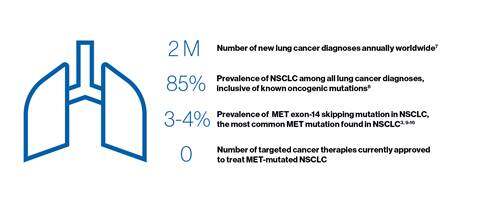
Lung cancer is the most common cancer, with approximately 2.1 million new cases diagnosed and 1.8 million deaths worldwide in 2018. Non-small cell lung cancer (NSCLC) is the most prevalent type of lung cancer, accounting for about 85% of all lung cancer cases. MET exon 14 skipping mutation is a well-established oncogenic driver, occurring in 3–4% of newly diagnosed advanced NSCLC cases. Although rare, this mutation is an indicator of poor prognosis, and currently there are no therapies specifically approved for advanced NSCLC harboring MET exon 14 skipping mutations.
Capmatinib is an investigational, oral, potent, and selective MET inhibitor licensed by Novartis from Incyte in 2009. Under the agreement, Incyte grantedNovartisExclusive global rights to develop and commercialize capmatinib and certain successor compounds for all indications.
AsNovartisAs part of the ongoing collaboration with Foundation Medicine, Roche’s cancer genetic testing company, capmatinib’s companionDiagnosisMethods are currently under development, including those forTumorTissue and liquid biopsy; this companion diagnostic method will be incorporated into FoundationOne® CDx (F1CDx) companionDiagnosisthe product and Foundation Medicine’s upcoming liquid biopsy platform, which is currently undergoingFDAreview. Foundation Medicine is a leading provider of comprehensive genomic profiling solutions for patients with advanced cancers, including non-small cell lung cancer (NSCLC).
NovartisJohn Tsai, Global Head of Drug Development and Chief Medical Officer, stated: “We areFDA“We are very encouraged by the granting of priority review for capmatinib, a MET inhibitor with the potential to represent a significant therapeutic advance for this highly aggressive population of patients with MET exon 14 skipping mutation–positive non-small cell lung cancer (NSCLC). The results from the GEOMETRY mono-1 trial clearly demonstrate that METex14 is an oncogenic driver, and we look forward to bringing capmatinib to these lung cancer patients. This therapy has the potential to become the first targeted treatment for METex14 mutations, thereby transforming clinical practice and improving patient outcomes.”
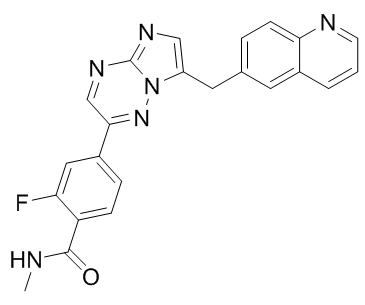
Chemical Structure of Capmatinib (Image source: medchemexpress.cn)
The NDA for capmatinib is based on the positive results from the Phase II clinical study GEOMETRY mono-1. This was an international, prospective, multi-cohort, non-randomized, open-label study involving 97 patients.TumorConducted in adult patients with locally advanced or metastatic NSCLC harboring MET exon 14 skipping mutations. In the study, patients received oral capmatinib 400 mg tablets twice daily.
Results showed that, as assessed by the Blinded Independent Review Committee (BIRC) according to the Response Evaluation Criteria in Solid Tumors version 1.1 (RECIST v1.1): (1) In treatment-naïve patients (Cohort 5b: 28 patients who had not received prior treatment), the overall response rate (ORR) was 67.9% (95% CI: 47.6–84.1), and the median duration of response (DOR) was 11.14 months (95% CI: 5.55–not estimable [NE]). (2) In previously treated patients (Cohort 4: 69 patients who had received prior treatment), the ORR was 40.6% (95% CI: 28.9–53.1), and the DOR was 9.72 months (95% CI: 5.55–12.98). (3) Adverse events were consistent with previously reported data, and no new safety signals were observed; the most common treatment-related adverse events included peripheral edema, nausea, increased creatinine, and vomiting. Among patients treated with capmatinib, 84% experienced adverse events, and 36% experienced Grade 3/4 adverse events (with only 4.5% being Grade 4).
These results reveal the therapeutic potential of capmatinib in NSCLC patients harboring MET exon 14 skipping mutations. The superior ORR data in treatment-naïve patients, compared to those previously treated, highlight earlyDiagnosisClinical Relevance Between Detection and Early Treatment. (Bioon.com)
Original Source: Novartis Announces MET Inhibitor Capmatinib (INC280), the First Potential Treatment for METex14-Mutated Advanced Non-Small Cell Lung Cancer, Granted PriorityFDA review