

Cardiovascular MedTech Innovator XinZhi Medical Files IPO Prospectus for Its Proprietary Drug-Coated Balloon Embracing the 'Intervention Without Implant' Trend

XinZhi Medical
Cardiovascular Medical Device R&D Developer
“Intervention without implantation is a clinical trend; I believe the growth rate of drug-coated balloons will surpass that of cardiac stents in the future,” commented Sheng Weiwen, who has 15 years of experience in product research and development in the field of cardiovascular disease.
Cardiovascular diseases have become the primary threat to the health of the Chinese population. Among these, coronary artery diseases are particularly prevalent, with their incidence rising year by year. In 2018, the number of percutaneous coronary intervention (PCI) procedures in China exceeded 900,000, representing a year-on-year increase of approximately 21.5% compared to the previous year. From 2009 to 2018, the compound annual growth rate (CAGR) was 16.7%, indicating an overall accelerating growth trend.
In percutaneous coronary intervention (PCI), stent implantation for the treatment of coronary artery stenosis is the mainstream therapeutic approach, with data indicating that it accounts for nearly 90% of procedural cases. Millions of stents are implanted annually.
Although coronary stenting is the mainstream treatment, it has certain drawbacks. For instance, there are risks of postoperative "stent thrombosis" and bleeding, in-stent restenosis, and suboptimal prognostic outcomes.
Are there other treatment options available to help improve this situation? Sheng Weiwen, founder of Shanghai XinZhi Medical Technology Co., Ltd. (hereinafter referred to as “XinZhi Medical”), told VCBeat that the coronary drug-coated balloon developed by his company will bring new possibilities to percutaneous coronary intervention.
In 2016, Sheng Weiwen, who had been engaged in the research and development of cardiovascular disease products at a well-known domestic enterprise, identified a market opportunity for drug-coated balloons, a novel therapeutic approach for percutaneous coronary intervention.
“It can be said that drug-coated balloons are poised to become one of the representative treatment options for ‘intervention without implantation’ in percutaneous coronary intervention procedures,” said Sheng Weiwen.
Drug-coated balloons are a non-stent therapeutic technique applied in both coronary and peripheral arterial diseases. By locally releasing anti-proliferative drugs to the arterial wall, they effectively inhibit neointimal hyperplasia. According to Sheng Weiwen, the advent of drug-coated balloons can reduce stent usage and improve long-term patient outcomes.
“Due to their safety and efficacy, drug-coated balloons have gained recognition among physicians both domestically and internationally. We have observed that there are few coronary drug-coated balloon products available in the domestic market, while imported coronary drug-coated balloons are generally expensive, resulting in limited patient uptake,” said Sheng Weiwen.
He noted that at the time, only one coronary drug-coated balloon was available on the market, and it was from abroad. This clearly indicates substantial potential for the localization of coronary drug-coated balloons in China.
Compared with traditional stent procedures, the most distinctive feature of drug-coated balloons is the absence of implants, which significantly reduces the clinical risks associated with conventional stents and addresses the limitations of existing treatments. Typically, patients require lifelong anticoagulant therapy after stent implantation. In contrast, due to the notable absence of implants with drug-coated balloons, patients generally need anticoagulant therapy for only one month, providing them with greater peace of mind and convenience.
With a relatively untapped market and strong clinical efficacy, Sheng Weiwen made up his mind in 2017 to build a technical team, successfully establishing “XinZhi Medical.” He introduced that XinZhi Medical is positioned as a high-tech enterprise specializing in the research, development, and production of medical devices, dedicated to the R&D of cardiovascular and peripheral vascular interventional medical devices, including the currently highly关注的 coronary drug-coated balloons.
“XinZhi Medical focuses on the research and development of drug-coated balloons, aiming to leverage our technological advantages to create a high-quality, affordably priced domestically produced drug-coated balloon that benefits more patients,” said Sheng Weiwen.
After six months of dedicated research and development, XinZhi Medical has launched its coronary drug-coated balloon product—the Drug-Eluting Balloon Catheter.
The drug-eluting balloon catheter developed by XinZhi Medical primarily consists of a paclitaxel drug coating and a balloon catheter. The balloon dilation catheter is advanced to the lesion site over a guidewire. Contrast media is injected through the catheter lumen to inflate the balloon to a specified degree, thereby dilating stenotic or occluded vessels and maintaining the dilation for a designated period.
Ensures that the drug on the balloon (paclitaxel) is fully, rapidly, and uniformly released onto the local vessel wall, inhibiting intimal hyperplasia of vascular smooth muscle, restoring distal blood supply, and preventing thrombus formation.
“Drug release takes only 30–60 seconds. Once the drug is fully released, the balloon and catheter are withdrawn from the body, leaving no implants behind. The entire treatment process is simple and efficient,” said Sheng Weiwen.
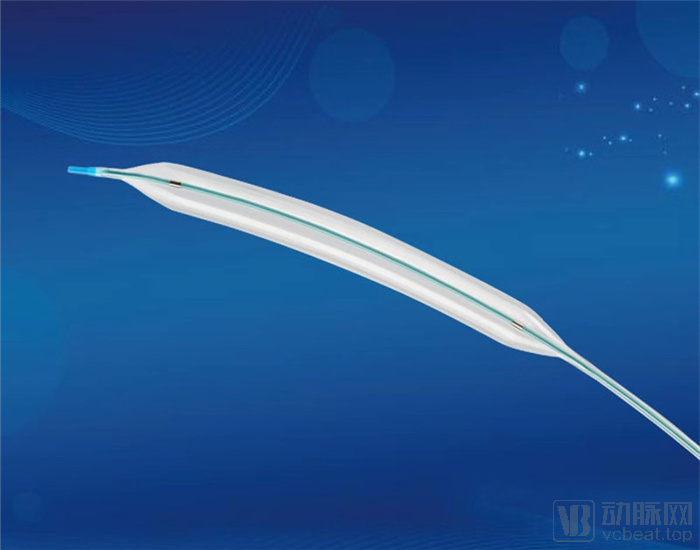
(Product Image)
He introduced that XinZhi Medical’s drug-eluting balloon catheter product offers multiple design advantages. First, this coronary drug-coated balloon utilizes MultiLayer PTX coating technology, which ensures a uniform coating, effectively reduces drug loss during delivery, and enhances the transfer rate of the drug to the vessel wall. Second, the balloon catheter features an ingenious design with excellent maneuverability and crossability.
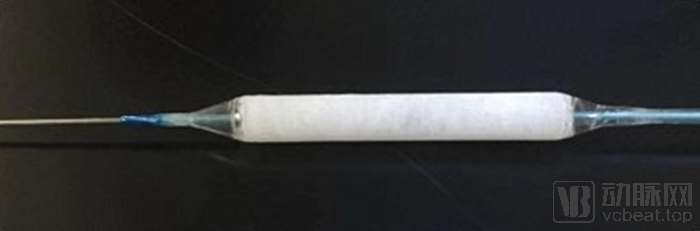
(Product Image)
Furthermore, it achieves an extremely fine particle size to ensure greater drug contact with and absorption by the vessel wall, while preventing occlusion of distal small vessels.
Sheng Weiwen pointed out that, compared to similar foreign products, “XinZhi Medical’s product has undergone significant improvements.” He stated that clinical trials for this product have already been launched at more than ten renowned hospitals in China, with progress proceeding very smoothly.
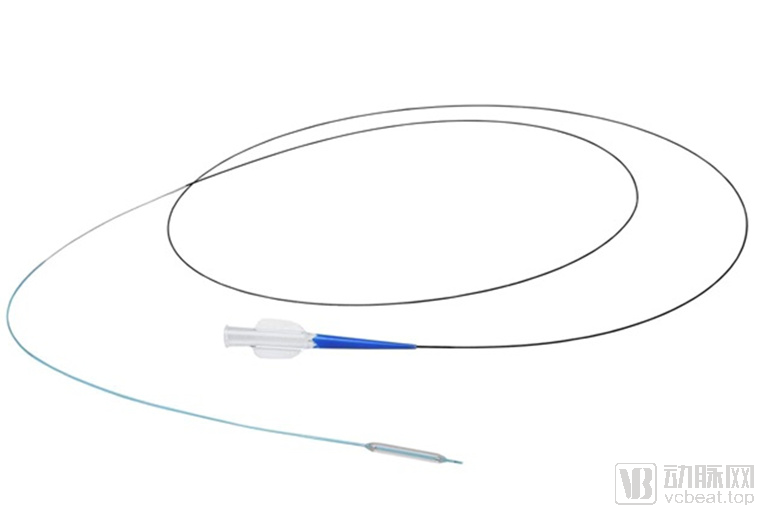
(Product Image)
Professor Tao Ling, Chief Physician of the Department of Cardiology at Xijing Hospital, Vice Chairman of the Cardiovascular Medicine Committee of the PLA Medical Science and Technology Commission, Member of the Society for Cardiovascular Angiography and Interventions (SCAI), and Principal Investigator for drug-coated balloons, once commented: “Building on the experience gained from previous generations of products developed by international companies, XinZhi Medical has adopted novel design and manufacturing processes to significantly optimize the coating of its drug-coated balloons. This advancement further enhances drug transfer efficiency while ensuring excellent deliverability. The pre-market confirmatory clinical trials currently underway are nearing completion, and the future market launch of this product will enrich clinicians’ therapeutic options!”
Sheng Weiwen told VCBeat that XinZhi Medical’s drug-coated balloon product has completed clinical trials in over 200 cases and is currently undergoing post-procedural follow-up. Based on existing data, the clinical outcomes are highly promising.
Not only this product, but several other products developed by XinZhi Medical are also outstanding. For example, the fistula drug-coated balloon addresses issues such as stenosis and occlusion of hemodialysis access in patients undergoing hemodialysis; the scoring balloon provides a practical solution for severely calcified lesions in peripheral arteries; the cutting balloon offers an optimized solution for vessel preparation prior to the placement of drug-coated balloons and drug-eluting stents.
The development of these product categories has expanded clinical indications, empowering physicians to manage complex and diverse diseases, thereby injecting new momentum into cardiovascular interventional therapy.
Upholding innovation, XinZhi Medical has filed 14 domestic patents and 2 PCT patents to date. Furthermore, the company has garnered interest from investment firms such as Founder Hesheng Capital and Chende Capital, successfully securing two rounds of financing totaling tens of millions of yuan.