


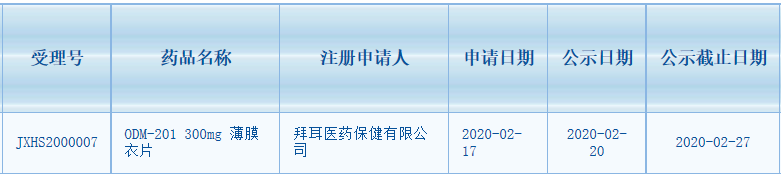
On February 20, the CDE website indicated that ODM-201 (darolutamide), submitted by Bayer in China, was proposed for inclusion in the priority review program under Category (I) as one of three innovative drugs with significant therapeutic advantages.
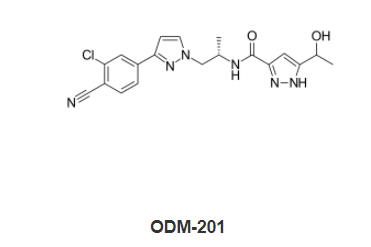
Darolutamide is a non-steroidal androgen receptor inhibitor (ARi) jointly developed by Bayer and Orion. Its unique chemical structure exhibits high affinity for receptor binding and potent antagonistic activity, thereby inhibiting receptor function and the growth of prostate cancer cells. Studies have shown that, compared with apalutamide and enzalutamide, darolutamide has lower blood-brain barrier permeability and lower affinity for GABAA receptors, resulting in fewer adverse reactions. The drug was approved by the FDA on July 30, 2019, under the brand name Nubeqa, for the treatment of patients with non-metastatic castration-resistant prostate cancer (nmCRPC).
Results from the ARAMIS trial, a randomized (2:1), double-blind, placebo-controlled, multicenter clinical study, demonstrated that darolutamide combined with androgen deprivation therapy (ADT) significantly prolonged metastasis-free survival (MFS) compared to placebo plus ADT (40.4 vs. 18.4 months). Common adverse reactions in the darolutamide plus ADT group included fatigue (16% vs. 11%), pain in extremities (6% vs. 3%), and rash (3% vs. 1%). In both study groups, 9% of patients discontinued treatment due to adverse events.
Prostate cancer is the second most common malignant tumor in men worldwide. In 2018, an estimated 1.2 million men were diagnosed with prostate cancer, and approximately 358,000 people died from the disease globally. Prostate cancer is the fifth leading cause of cancer-related deaths in men. The prostate is part of the male reproductive system, and prostate cancer is caused by the abnormal proliferation of cells within the prostate. It primarily affects men over the age of 50, with the risk of developing the disease increasing with age.
Treatment options for prostate cancer include surgery, radiation therapy, and medications such as hormone receptor antagonists, which work by blocking testosterone production or preventing its action at target sites. However, in nearly all cases, the cancer eventually develops resistance to hormone therapy. Prostate cancer that continues to progress despite androgen deprivation therapy (ADT), even when testosterone levels are reduced to very low levels, is known as castration-resistant prostate cancer (CRPC). In the United States, it was estimated that more than 73,000 men were diagnosed with CRPC in 2019. Approximately one-third of patients with non-metastatic CRPC develop metastases within two years.