

Rituxan Gains New Indication in Japan for Treatment of Acquired Thrombotic Thrombocytopenic Purpura (aTTP)
Feb 23, 2020 15:42
CST Updated
15:42

Roche
Oncology Drug Research, Development, and Manufacturing
Chugai Pharmaceutical
Developer and Manufacturer of Anti-Cancer Drugs

Zenyaku Kogyo
Biopharmaceutical Manufacturer

February 23, 2020 /BioValleyBIOON/ -- Chugai Pharmaceutical, a Japanese pharmaceutical company controlled by Roche, and Zenyaku Kogyo Co., Ltd.Chugai Pharmaceutical Co., Ltd. and Zenyaku Kogyo Co., Ltd. recently announced jointly that the Japanese Ministry of Health, Labour and Welfare (MHLW) has approved a new indication for Rituxan (MabThera; generic name: rituximab) 100 mg and 500 mg injections for the treatment of acquired thrombotic thrombocytopenic purpura (aTTP). Rituxan is co-marketed in Japan by the two companies, which will continue to collaborate closely.
Thrombotic Thrombocytopenic Purpura (TTP) is a severe disseminated thrombotic microangiopathy characterized by microangiopathic hemolyticAnemia, characterized by consumptive thrombocytopenia due to platelet aggregation and organ damage (e.g., to the kidneys and central nervous system) caused by microthrombi formation. This disease is driven by platelet aggregation resulting from reduced activity of ADAMTS13 (a disintegrin and metalloproteinase with thrombospondin type 1 motif), a large-molecule cleaving enzyme in the body. Previously, TTP had a poor prognosis and a short clinical course, with a mortality rate as high as 80–90% if not treated promptly. With the clinical application of plasma exchange, the prognosis has improved significantly, and the mortality rate has decreased to 10–20%.
TTP can be classified into congenital TTP (cTTP), caused by ADAMTS13 gene abnormalities, and acquired TTP (aTTP), caused by autoantibodies against ADAMTS13. In treatment guidelines in Japan and other countries, Rituxan is listed as one of the treatment options for patients who fail plasma exchange (the first-line treatment for aTTP) or experience early relapse. In Japan, TTP affects approximately 500 people annually, with the vast majority (95%) of cases reported as aTTP.
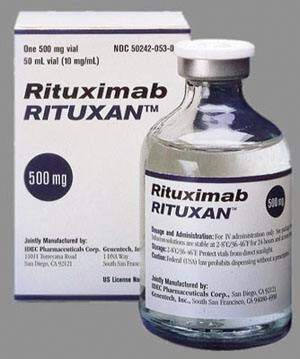
Rituxan is a therapeutic monoclonal antibody that targets and binds to the CD20 antigen on the surface of both normal and malignant B cells, subsequently mobilizing the body’s natural defenses to attack and kill the marked B cells. Currently, in addition to various typesTumorIn addition, Rituxan is also approved for the treatment of various types ofAutoimmunitySexually transmitted diseases, including: classRheumatoid Arthritis(RA), granulomatosis with polyangiitis (GPA), microscopic polyangiitis (MPA), pemphigus vulgaris (PV).
In late September 2019, Rituxan was approved by the U.S. FDA, in combination with glucocorticoids (GCC), for the treatment of GPA and MPA in pediatric patients aged 2 years and older. Notably, Rituxan is the first and only drug approved by the FDA for the treatment of GPA and MPA in pediatric patients aged 2 years and older. GPA and MPA are two rare, potentially life-threatening vasculitides that affect small and medium-sized blood vessels. This indication was granted throughFDAapproved through the priority review program, also marking Rituxan’s first pediatric indication.
Granulomatosis with Polyangiitis (GPA) and Microscopic Polyangiitis (MPA) are two types of anti-neutrophil cytoplasmic antibody (ANCA)-associated vasculitis (AAV). AAV is a form of vasculitis that primarily affects small blood vessels. Generally, both GPA and MPA involve the small vessels of the kidneys, lungs, sinuses, and various other organs; however, the clinical presentation may vary among individual patients. GPA and MPA are both considered rare diseases, with an estimated global prevalence of 23–160 cases per million population. Pediatric-onset GPA and MPA are even rarer and are associated with severe, potentially life-threatening symptoms. (Bioon.com)
Original Source: Anti-CD20 Monoclonal Antibody “Rituxan,”approved for Additional Indication of Acquired Thrombotic Thrombocytopenic Purpura