

Roche's Alecensa (Alectinib) Gains New Indication in Japan for ALK-Positive Anaplastic Large Cell Lymphoma
Feb 23, 2020 15:43
CST Updated
15:43

Roche
Oncology Drug Research, Development, and Manufacturing
Chugai Pharmaceutical
Developer and Manufacturer of Anti-Cancer Drugs
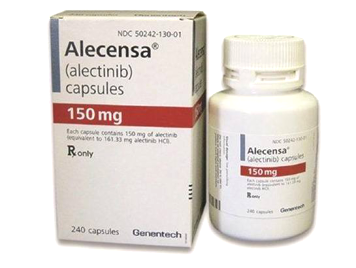
February 23, 2020 News /BioonBIOON/ -- Chugai Pharmaceutical, a Japanese pharmaceutical company controlled by Roche, recently announced that the Ministry of Health, Labour and Welfare (MHLW) of Japan has approved a new indication for Alecensa (alectinib) 150 mg capsules for the treatment of recurrent or refractory ALK fusion gene-positive anaplastic large cell lymphoma (ALK+ ALCL). Previously, the MHLW had granted orphan drug designation to Alecensa for this indication.
Chemotherapy is the standard treatment for ALCL. However, there is no established standard of care for patients with ALCL who relapse after chemotherapy, leading to a growing need for new and effective therapies. The approval of the new indication for Alecensa will provide an important new treatment option for patients with relapsed or refractory ALK-positive ALCL.
This approval is based on data from the ALC-ALCL study. This is a multicenter, Phase II study initiated in 2015 to evaluate the efficacy and safety of Alecensa in patients with relapsed or refractory ALK-positive anaplastic large cell lymphoma (ALK+ ALCL). A total of 10 patients were enrolled in the study. The results showed that the overall response rate (ORR) for Alecensa treatment was 80.0% (two-sided 90% CI: 56.15–95.91%). The incidence of adverse reactions was 100%, with the most commonAdverse ReactionsIncluding: maculopapular rash (40.0%, 4/10 cases), as well as upper respiratory tract infection, bronchitis, and elevated blood alkaline phosphatase (each 30.0%, 3/10 cases).
ALCL is a non-Hodgkin lymphoma originating from T cells within the lymphocyte lineage and is one of the four subtypes of peripheral T-cell lymphomas, classified as a malignant lymphoma. Its malignancy grade is categorized as "intermediate-grade," requiring monthly monitoring for disease progression. In Japan, ALCL accounts for 1.5%–2.0% of all malignant lymphomas, with approximately half of the cases reported as ALK-positive. Considering data from a global study indicating that the 5-year successful treatment survival rate for patients with ALK+ ALCL receiving chemotherapy is 60%, relapsed and refractory cases are estimated to account for 40%.
Alecensa is a novel small-molecule tyrosine kinase inhibitor (TKI) targeting ALK. It can cross the blood-brain barrier and demonstrates robust efficacy against brain metastases. The drug has been approved for: (1) second-line monotherapy in patients with ALK-positive NSCLC who have experienced disease progression after prior treatment with Xalkori (crizotinib); (2) first-line monotherapy in patients with ALK-positive NSCLC; and (3) monotherapy in patients with relapsed or refractory ALK-positive anaplastic large cell lymphoma (ALCL).
It is worth mentioning that in the National Comprehensive Cancer Network (NCCN) guidelines,For the treatment of ALK-positive metastatic NSCLC, Alecensa is the only first-line therapy listed as preferred (Category 1).
In China, Alecensa was approved in August 2018 as a monotherapy for the treatment of patients with ALK-positive non-small cell lung cancer (NSCLC). Lung cancer is the most common type of cancer and the leading cause of cancer-related deaths. NSCLC is the most prevalent form of lung cancer, and ALK-positive NSCLC represents a distinct subtype that is frequently observed in younger patients (median age: 52 years) without a history of smoking, particularly among those with adenocarcinoma, a specific type of NSCLC. Approximately 5% of NSCLC cases are ALK-positive. (Bioon.com)
Original Source: Chugai Obtainsapproval for Additional Indication of Alecensa for Recurrent or Refractory ALK Fusion Gene-Positive Anaplastic Large Cell Lymphoma