

Lilly's CYRAMZA (Ramucirumab) Plus Erlotinib Receives FDA Advisory Committee Support as First-Line Therapy for Metastatic EGFR-Mutated NSCLC
Feb 27, 2020 14:28
CST Updated
14:28

Eli Lilly
Global Pharmaceutical R&D and Production Company

FDA
U.S. Food and Drug Administration

February 27, 2020 /BioValleyBIOON/ --Eli Lilly(Eli Lilly) recently announced that the U.S. Food and Drug Administration (FDA)TumorThe Oncologic Drugs Advisory Committee (ODAC) voted 6 in favor and 5 against to support that, based on the results of the Phase III RELAY study, the anti-VEGFR monoclonal antibody Cyramza (ramucirumab) in combination with erlotinib demonstrates a favorable benefit/risk profile for the first-line treatment of patients with epidermal growth factor receptor (EGFR) mutation-positive metastatic non-small cell lung cancer (NSCLC). During the drug review process, the advisory committee provides independent opinions and recommendations from external medical experts to the FDA.FDAThere is no obligation to follow the advisory committee's recommendations, but this is often done.
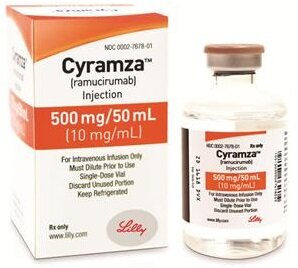
Cyramza is a monoclonal antibody against vascular endothelial growth factor receptor 2 (VEGFR2), and erlotinib is a tyrosine kinase inhibitor (TKI) that targets and inhibits EGFR kinase activity.The combination of two drugs targeting the VEGFR and EGFR pathways holds promise as a novel first-line treatment option for patients with metastatic NSCLC harboring EGFR mutations.According to the data from the RELAY study,Eli LillyRegulatory applications have also been submitted in regions outside the United States. In January 2020, the European Commission (EC) approved Cyramza in combination with erlotinib as a first-line treatment for adult patients with metastatic NSCLC harboring activating EGFR mutations. In Japan, this combination therapy is under review, with results expected in the second half of 2020.
RELAY is a global, randomized, double-blind, placebo-controlled Phase III study evaluating Cyramza in combination with erlotinib versus placebo in combination with erlotinib as first-line treatment for patients with metastatic NSCLC whoseTumorwith EGFR exon 19 deletions or exon 21 (L858R) substitution mutations. The study commenced in 2015, randomly assigning 449 patients from North America, Europe, and Asia. The primary endpoint was progression-free survival (PFS), and secondary endpoints included safety, response rate, overall survival (OS), and patient-reported outcomes.
The results showed that the study met its primary endpoint:Compared with the placebo + erlotinib treatment group (n=225), the Cyramza + erlotinib treatment group (n=224) showed a 7-month prolongation in progression-free survival (PFS), representing a statistically and clinically significant improvement (median PFS: 19.4 months vs. 12.4 months; HR=0.59, 95% CI: 0.46–0.79, p<0.0001).Furthermore, improvements with Cyramza plus erlotinib treatment were consistently observed across all secondary and exploratory endpoints, including duration of response, time to second disease progression (PFS2), and duration of targeted therapy. In all prespecified subgroups, including those with exon 19 and exon 21 mutationsTumorPatients also demonstrated continuous improvement. Overall survival (OS) was immature at the time of data analysis, and the study will continue until the final number of OS events is reached.

Targetable mutations play a pivotal role in determining treatment strategies for non-small cell lung cancer (NSCLC). The most common mechanism of acquired resistance to first- and second-generation EGFR-TKIs as first-line therapy is the T790M mutation, which is acquired in approximately 30%–60% of patients during disease progression. In the RELAY study, the incidence of T790M mutation upon disease progression was similar across treatment groups.
In the study, the observed safety profile was consistent with that of previous Phase III clinical studies of Cyramza and the established safety profile of erlotinib. Compared with the placebo + erlotinib treatment group, the most common (incidence >5%) Grade 3 or higher adverse events with a higher incidence (difference ≥5%) in the Cyramza + erlotinib treatment group wereHypertension, acneiform rash and diarrhea.
It is worth noting that the RELAY study is also the second Phase III study to yield positive data evaluating Cyramza for the treatment of metastatic NSCLC. In the prior Phase III clinical trial, REVEL, the Cyramza plus docetaxel regimen significantly prolonged overall survival (OS) compared with placebo plus docetaxel in patients with metastatic NSCLC whose disease had progressed during or after platinum-based chemotherapy for locally advanced or metastatic disease, thereby meeting the primary endpoint of the study. The secondary endpoints, including progression-free survival (PFS) and response rate, were also met. Data from the REVEL study support the current indication for Cyramza as a second-line treatment for NSCLC.
Globally, lung cancer is the leading cause of cancer-related deaths, and non-small cell lung cancer (NSCLC) is the most common type, accounting for approximately 80%–85% of all lung cancer cases. There is no cure for patients with metastatic NSCLC; survival rates are low, and disease progression after the development of acquired resistance remains a formidable challenge. Most patients receive multiple lines of therapy, and first-line treatment options may influence the selection of subsequent therapies. Currently, tyrosine kinase inhibitors (TKIs) are the standard of care for treating EGFR-mutated NSCLC.
Erlotinib and Cyramza target signaling pathways that are key drivers of tumor growth and progression. Erlotinib is a tyrosine kinase inhibitor (TKI) that selectively inhibits EGFR kinase activity, whereas Cyramza is an anti-angiogenic therapy targeting VEGF, capable of blockingTumorblood supply.
In the United States, Cyramza has been approvedFDAApproved for four distinct cancer indications: (1) as monotherapy or in combination with paclitaxel for patients with advanced or metastatic gastric or gastroesophageal junction adenocarcinoma (GEJA) who have experienced disease progression during or after fluoropyrimidine- or platinum-containing chemotherapy; (2) in combination with docetaxel for patients with metastatic non-small cell lung cancer (NSCLC) whose disease has worsened during or after platinum-based chemotherapy; (3) in combination with the FOLFIRI regimen for patients with metastatic colorectal cancer (mCRC) who have experienced disease progression during or after prior treatment with bevacizumab, oxaliplatin, and fluoropyrimidine; (4) as monotherapy for the treatment of patients with hepatocellular carcinoma (HCC) who have an alpha-fetoprotein (AFP) level ≥400 ng/mL and have been treated with sorafenib. (Bioon.com)