

AI-Powered Drug Discovery in the Fight Against COVID-19: XtalPi's Breakthrough Approach
XtalPi
Computation-Driven Innovative Drug R&D Provider
After a month-long intense battle, the COVID-19 epidemic gradually came under control. On February 18, the number of newly discharged patients exceeded the number of newly confirmed cases for the first time. Since then, the number of existing confirmed cases has been decreasing day by day. By the afternoon of February 27, the number of existing confirmed cases had dropped to 43,284, a further decrease of 2,413 from the previous day.
Drug repurposing has been the mainstay in the fight against the pandemic. Many antiviral drugs have demonstrated certain therapeutic efficacy against COVID-19. However, as these medications were not specifically developed for COVID-19, it is difficult for any single agent to reverse the course of the disease on its own. Meanwhile, the development of new drugs targeting SARS-CoV-2 appears to be too time-consuming.
Old drugs have limited efficacy, while the development of new drugs is progressing slowly. In this dilemma, the integration of artificial intelligence with new drug research and development appears to offer another viable path toward a solution.
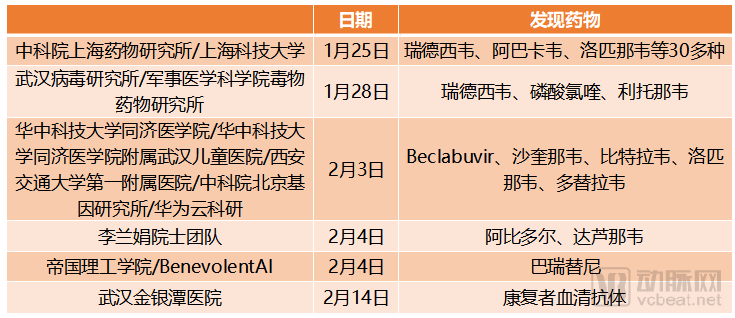
Some Institutions Predict Drugs That May Be Effective in Treating COVID-19 (Excluding Traditional Chinese Medicine Proprietary Products)
On January 25, 2020, a joint research team from the Shanghai Institute of Materia Medica, Chinese Academy of Sciences, and ShanghaiTech University, led by Academicians Jiang Hualiang and Rao Zihe, identified a number of existing drugs and traditional Chinese medicines (TCMs) that may have therapeutic effects against novel pneumonia. The team rapidly expressed the 2019-nCoV main protease (Mpro) and obtained its high-resolution crystal structure. Subsequently, employing a strategy combining virtual screening with enzymatic assays, they conducted drug screening focused on approved marketed drugs, as well as compounds from their self-established “Drug-Like Compound Database” and “Medicinal Plant-Derived Compound Database.” As a result, they discovered more than 30 drugs, bioactive natural products, and TCMs that may be effective in the treatment of COVID-19.
This research outcome represents the first batch of drugs screened for potential efficacy against COVID-19. Among the more than 30 drugs, there are 12 anti-HIV drugs, 2 anti-RSV drugs, 1 anti-human cytomegalovirus drug, 1 antipsychotic drug, 1 immunosuppressant, as well as other drugs and active natural products.
Following the initial disclosure of drug candidates, research teams from both China and abroad have successively released their analytical findings. The drug types have primarily focused on antiviral agents. Several drugs identified in these studies, such as Arbidol proposed by Academician Li Lanjuan’s team and Chloroquine Phosphate put forward by the Wuhan Institute of Virology, have been incorporated into the latest released “Diagnosis and Treatment Protocol for Novel Coronavirus Pneumonia (Trial Version 6)” after undergoing clinical practice.
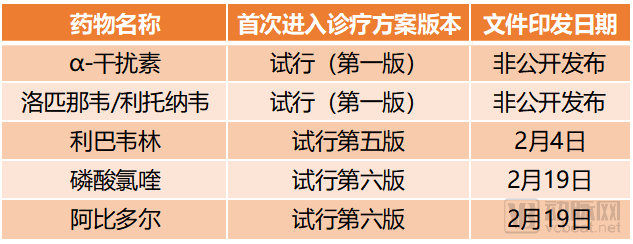
《Antiviral Drugs Recommended in the "Diagnosis and Treatment Protocol for Novel Coronavirus Pneumonia (Trial Version 6)"
Established drugs have demonstrated their value in clinical practice; however, concerns persist that while these medications offer some therapeutic benefit for COVID-19, they are not specifically targeted against the SARS-CoV-2 virus. At a press conference held on February 18, Academician Zhong Nanshan specifically shared his views on the clinical use of chloroquine phosphate. He stated that although the drug shows clinical efficacy, it does not yet meet the criteria for a specific curative treatment.
To date, most research institutions disclosed have relied on traditional methods, such as in vitro experiments or manual analysis, to identify specific therapeutic agents against the novel coronavirus. In the current landscape of new drug development, while many traditional approaches remain the gold standard in research, numerous emerging technologies are accelerating the process. In particular, the integration of artificial intelligence (AI) has enabled a qualitative leap in data processing capabilities throughout drug discovery. So, what role can AI play in the search for specific therapeutics against COVID-19?
In fact, in the search for old drugs, some companies have already used artificial intelligence technology. BenevolentAI, an AI + new drug R&D company based in the UK, used its own artificial intelligence technology to find that baricitinib may have an inhibitory effect on the novel coronavirus.
Localpharmaceutical R&D companiesalso actively seekingEffective TreatmentMethods, such asChinaLeading companies in the AI drug discovery sector, currently raising a new round of financingXtalPi, thenwithA Different PerspectiveEntryConducted research and shared findings, contributing to the fight against the epidemic.。
For XtalPi, the deep integration of AI models with physics-based thinking is essential to simultaneously meet the demands for speed and precision in drug development. The most direct and effective drug screening strategy in response to the pandemic involves leveraging cloud-based supercomputing to support physicochemical algorithms in building viral models, and then, starting from structural analysis, using AI to accelerate the identification of FDA-approved marketed drugs with antiviral activity.
XtalPi’s competitive advantages lie in its leading quantum physics-based drug simulation algorithms, its AI-driven drug discovery platform, and robust supercomputing resources spanning multiple cloud platforms, enabling the rapid execution of large-scale, high-precision drug simulations. Even when data on the novel coronavirus were scarce, XtalPi was able to leverage limited available information to investigate the virus’s key structures and infection mechanisms at the molecular level, thereby identifying effective strategies to block infection and treat pneumonia.
On January 20, the NCBI publicly released the genetic sequence of the novel coronavirus for the first time, laying the foundation for constructing protein structural models of the virus. Structure-based drug screening and design is a computational approach that offers higher accuracy and success rates. On the same day, XtalPi established a COVID-19 research team. Leveraging the genetic sequence and using the homologous protein crystal structures of the SARS virus as a reference, the team built three-dimensional structural models of key proteins on SARS-CoV-2, including 3CLpro and PLpro, which are involved in the viral replication process, as well as the receptor-binding domain (RBD) of the Spike protein, which is closely associated with patient infection.
On February 2, XtalPi released these high-precision models, along with extensive computational data and research findings, on its social media channels and corporate website, where they were downloaded thousands of times within a few days. These models provide a foundation for investigating viral molecular mechanisms, as well as for the design and screening of potential therapeutics. As research progresses, XtalPi continues to periodically update the shared resources available for download by peers.
Based on these models, XtalPi used molecular dynamics simulations to discover that the viral Spike protein can bind stably to the human ACE2 receptor protein with high affinity. Dr. Zhang Peiyu, Chief Scientist at XtalPi, stated that this computationally validates the strong transmissibility of the novel coronavirus and its potential for human-to-human transmission. Leveraging this computational approach, the molecular-level quantitative model assessment for determining the risk of human-to-human transmission of similar future viruses could be completed within a day, enabling frontline researchers to rapidly and multidimensionally predict disease threats.
In terms of strategic choices in drug development, XtalPi is advancing simultaneously in two directions: drug repurposing screening and de novo drug design. Compared with traditional new drug development, drug repurposing offers faster progress and shorter timelines, as the stability and safety of the drugs have already been validated through multiple experiments. This strategy’s advantages are particularly pronounced when addressing outbreaks of emerging infectious diseases. In the process of target selection for drug repurposing, XtalPi has decided to focus on three critical protein targets involved in viral replication and transcription: 3CLpro, PLpro, and Rdrp.
According to Zhang Peiyu, these three targets are also effective for inhibiting the severe acute respiratory syndrome (SARS) virus and the Middle East respiratory syndrome (MERS) virus. Furthermore, since these targets are present on the viruses rather than in the human body, they are less likely to cause severe side effects. XtalPi utilized its self-developed artificial intelligence-based virtual drug screening platform, ID4 (Intelligent Digital Drug Discovery and Development), to screen more than 2,900 FDA-approved drug molecules and over 10,000 traditional Chinese medicine component molecules. This process identified 183 candidate molecules with potential inhibitory effects on these two targets. On February 5, XtalPi further narrowed the search to the top 38 molecules among FDA-approved drugs through high-precision activity prediction and structural assessment.
“The drugs on this candidate list still require further in vitro cell experiments and animal models to validate their activity. In the interest of scientific rigor, we have only disclosed our screening results to peers,” introduced Zhang Peiyu. Currently, XtalPi has purchased experimental proteins and is conducting biochemical experiments to validate the candidate molecules identified through drug repurposing screens.
However, drug repurposing has inherent limitations that are difficult to overcome. These drugs were not designed or developed specifically for coronaviruses, and their efficacy is often unsatisfactory. Furthermore, addressing new indications may require increased dosages due to potency issues, leading to unacceptable side effects in patients. For instance, recent reports have shown that the clinical efficacy of lopinavir/ritonavir (Kaletra) and arbidol is suboptimal. In contrast, while new drug development requires a longer timeline, the window for research is exceedingly short. Zhang Peiyu candidly noted that one major reason no effective drugs or vaccines have been developed for SARS and MERS to date is that epidemics subsided before drug candidates could enter clinical trials, making it impossible to recruit sufficient patients to complete these studies. XtalPi aims to leverage its AI-driven R&D platform and collaborate with other pharmaceutical companies to accelerate the development of safe, highly effective anti-COVID-19 drugs with potential broad-spectrum activity against coronaviruses, thereby contributing to the long-term fight against these pathogens.
In de novo drug design, XtalPi selected the Spike protein and other key proteins of the coronavirus as its breakthrough targets, which are widely recognized as attractive targets for developing antiviral drugs.
The spike protein (S protein) of coronaviruses binds to the human ACE2 receptor, a critical step in SARS-CoV-2 infection of human cells. In both SARS-CoV and MERS-CoV, the S protein plays a similar role. Many vaccine candidates currently under development are based on the S protein. Furthermore, in the development of peptide and small-molecule drugs, blocking the interaction between the S protein and ACE2 can prevent SARS-CoV-2 from infecting human cells, thereby achieving therapeutic effects.
Notably, on February 21, the Institute of Microbiology, Chinese Academy of Sciences, shared the 2.5-Å resolution crystal structure of the complex formed by the receptor-binding domain (RBD) of the SARS-CoV-2 spike protein and ACE2. XtalPi compared its homology model, optimized through molecular dynamics simulations, with this crystal structure, revealing a high degree of overlap and accurately predicting the conformations of key residues and their hydrogen-bonding patterns. XtalPi’s related results had already been released on February 2, nearly three weeks ahead of the experimental findings, demonstrating comparable guidance value for the development of small molecules, vaccines, and antibodies.
Following computational simulations of the interaction between the S protein and ACE2, XtalPi further investigated the epitopes of these two proteins—i.e., the sites where they directly interact—to identify key peptide fragments and amino acid residues. Additionally, free energy perturbation methods were employed to predict and evaluate how mutations in epitopic amino acids might affect viral infectivity and pathogenicity. The preprint of this study has just been published on ChemRxiv.
Free Energy Perturbation (FEP) calculation is a high-precision algorithm for evaluating the binding affinity between small-molecule drugs and their targets. It is widely recognized in academia as one of the most rigorous methods for calculating binding affinity, albeit requiring substantial computational resources. Building on this method, XtalPi has developed its proprietary XFEP calculation, which further enhances efficiency and specificity by integrating AI-driven acceleration and optimization. “We allocated significant resources to this project, even suspending an R&D initiative in another area to advance it. Moving forward, we can perform more extensive calculations, such as systematically mutating every amino acid within the epitope. In the event of a similar pandemic in the future, we anticipate being able to complete scans of all key mutations within a single day. This would enable us to assess in advance how potential viral mutations might impact transmissibility and pathogenicity,” said Zhang Peiyu.
Through comprehensive protein mutation analysis, XtalPi aims to predict potential viral mutations in advance and, on this basis, screen for candidates with optimal activity, toxicity, and key physicochemical properties, thereby developing safe and efficient drugs capable of addressing viral drug-resistance mutations and possessing potential broad-spectrum antiviral properties. To balance so many considerations in drug development, only artificial intelligence technology may be up to this formidable task.
“The greatest advantage of artificial intelligence lies in its ability to significantly expand the search space for new drugs, using millions of potentially active molecular scaffolds as the starting point for screening,” said Zhang Peiyu. By combining AI with computational chemistry and comprehensively evaluating multiple key properties to score candidate molecules, this approach can progressively identify compounds that are most ideal and have the highest likelihood of successful development. “In our collaborative drug discovery projects, the active molecules screened using this method have been well validated in cell-based models, significantly shortening the R&D timeline. We hope this technology will be applied in future antiviral drug development.”
Epitope analysis primarily relies on computational physics and computational chemistry to determine these structures, whereas the recommendation of antibodies or peptides targeting specific epitopes necessitates more advanced artificial intelligence methods. For instance, in vaccine development, AI can be employed to predict which antigens exhibit superior interactions with major histocompatibility complex (MHC) molecules, whose protein products are human leukocyte antigen (HLA) molecules.
In the development of antibody-based therapeutics, AI can leverage information derived from antibody libraries to construct models and subsequently calculate binding affinity, thereby helping to enhance antibody activity. Traditional approaches to improving antibody activity typically rely on random mutagenesis, which has a relatively low success rate. In contrast, AI-driven modeling can help identify the most advantageous mutation sites, enabling direct enhancement of drug efficacy through site-directed mutagenesis.
In research related to the current epidemic, XtalPi has established collaborations with multiple research institutions and pharmaceutical companies to initiate next-phase work, while also accelerating several COVID-19-related R&D projects for various pharmaceutical firms. XtalPi has ordered samples of small molecules identified through its proprietary analysis, as well as proteins for experimental use, and is currently preparing to conduct further cell-based and animal studies in partnership with collaborators possessing Biosafety Level 3 (BSL-3) certification.
On the afternoon of February 17, at a press conference held by the Joint Prevention and Control Mechanism of the State Council in response to the novel coronavirus pneumonia epidemic, the therapeutic efficacy of chloroquine phosphate demonstrated in clinical trials for the treatment of COVID-19 was affirmed. Subsequently, in the "Diagnosis and Treatment Protocol for Novel Coronavirus Pneumonia (Trial Version 6)" issued on February 19, chloroquine phosphate was included as one of the optional antiviral treatment regimens.
Prior to these announcements, XtalPi had already collaborated with Zhongsheng Pharmaceutical to establish a special task force for chloroquine research, leveraging its proprietary drug simulation technology to investigate the molecular mechanisms underlying chloroquine’s efficacy in treating COVID-19. On February 18, shortly after relevant national authorities announced the therapeutic effectiveness of chloroquine, XtalPi released its research findings.
XtalPi employed molecular-level simulations and computations to conduct molecular dynamics simulations of the potential mechanisms of action of chloroquine, aiming to elucidate the fundamental mechanisms and effective binding modes underlying chloroquine’s treatment of COVID-19. In conjunction with current literature reports, XtalPi outlined four possible mechanisms by which chloroquine may treat COVID-19. Notably, XtalPi proposed a novel potential mechanism whereby “chloroquine inhibits the transcription and translation processes of SARS-CoV-2 via PLpro,” and used computational and simulation approaches to validate the existing hypothesis that “chloroquine weakens viral-receptor binding by interfering with the terminal glycosylation of ACE2.” XtalPi has currently partnered with Zhongsheng Pharmaceutical to accelerate experimental validation.
Zhang Peiyu stated, “The integration of AI models with quantum physics and computational chemistry for drug simulation played a pivotal role in the early stages of the pandemic response. It helped us enhance the speed, accuracy, and breadth of screening, thereby supporting R&D decision-making and enabling us to allocate limited experimental resources more effectively in subsequent research.” Previously, XtalPi’s crystal form prediction, solid-state drug design, and screening technologies had served dozens of pharmaceutical companies, including Pfizer, achieving milestone progress in collaborations within the field of AI-driven drug discovery and design. This urgent R&D task also allowed the team to accumulate valuable experience in working under pressure, completing a substantial amount of multidimensional research within a short timeframe.
Whether for vaccines or new drugs, completing preclinical research is merely the first step; subsequent lengthy clinical trials are required to demonstrate safety and efficacy before final market approval can be granted. For rapidly evolving outbreaks such as the current COVID-19 pandemic, there have been persistent questions as to whether initiating new drug development at the molecular level now constitutes merely a waste of resources.
First, for AI-driven new drug development companies, research is inherently part of their growth trajectory. The data processed during this pandemic will be retained by these firms, becoming part of their structured data assets and potentially proving valuable at some stage in their future development. Meanwhile, such sudden events characterized by tight deadlines and heavy workloads present an excellent opportunity for these companies to train their teams and refine their algorithms.
In addition, XtalPi has also expressed its concerns about the future.
Zhang Peiyu believes that this epidemic is the most direct test of the rapid response capability of China's drug R&D industry, and it also exposes the weaknesses accumulated by the industry in infectious disease research.“The coronavirus family hasGenerationofSevena human-transmissible variant, the next outbreak may be only a matter of time. It is believed that in the wake of this epidemic,China PharmaIndustryofFocus willFromMinoritySeveral Blockbuster Targets Expand to a BroaderDiseaseScope of Study.WithFor long-term planning, develop more targeted broad-spectrum antiviral drugs,OnlyFundamentally constrain the potential harm that similar epidemics may cause in the future. Meanwhile, we also observe the rapid spread of the diseaseandResearch on diseases is increasingly not confined within national borders. Addressing such sudden public health emergencies requires the joint efforts and cooperation of scientists worldwide.”
In our discussions with other R&D-focused enterprises, we received the same response. Current efforts may not yield significant impact in the context of the current pandemic. However, in the longer term, should the pandemic resurge or more challenging coronaviruses emerge, these research endeavors will serve as a cornerstone, positioning us at a greater advantage in responding to future outbreaks.