March 09, 2020 News /
BioonBIOON/ -- The European Medicines Agency (EMA) Committee for Medicinal Products for Human Use (CHMP) recently issued a review opinion recommending the refusal of approval
Eli Lilly(Eli Lilly) New indication application for Emgality (galcanezumab) for the treatment of episodic cluster headache (ECH) in adults. The CHMP’s opinion will now be submitted to the European Commission (EC) for review, which will make a final decision within the next 2–3 months. As the EC typically adopts the CHMP’s recommendations, this means that the new indication for Emgality in the treatment of ECH is highly likely to be rejected for approval. In the EU, Emgality was approved in November 2018 for the preventive treatment of migraine in adults.
In the United States, Emgality was first approved by the FDA in September 2018 for the preventive treatment of migraine in adults. In June 2019, Emgality received approval for a new indication: the treatment of episodic cluster headache (ECH) in adults to reduce attack frequency. Previously,
FDAEmgality has been granted Breakthrough Therapy designation and Priority Review for the preventive treatment of ECH.
Notably, Emgality is the first medication approved for the treatment of episodic cluster headache (ECH). It is also the first and only calcitonin gene-related peptide (CGRP) antibody approved to treat two distinct headache disorders. For the treatment of ECH, after training by healthcare professionals, patients can self-administer Emgality via subcutaneous injection at home at the onset of the cluster period (300 mg, administered as three consecutive 100 mg subcutaneous injections), followed by once-monthly injections until the end of the cluster period.
In the European Union, the Marketing Authorization Application (MAA) for Emgality for the indication of episodic cluster headache (ECH) was based on data from a randomized, 8-week, double-blind, placebo-controlled Phase III study. The study enrolled a total of 106 adult patients with ECH, who were randomized in a 1:1 ratio to receive either monthly subcutaneous injections of Emgality (300 mg; n=49) or placebo (n=57). The mean baseline weekly frequency of ECH attacks was 17.8 in the Emgality group and 17.3 in the placebo group.
The results showed that during weeks 1–3 of treatment, the mean weekly reduction in cluster headache attacks was 8.7 in the Emgality group and 5.2 in the placebo group (p=0.036). At week 3, the weekly frequency of cluster headache attacks decreased by 71.4% from baseline in the Emgality group, compared with a 52.6% reduction in the placebo group (p=0.046). Regarding safety, overall, the safety profile of once-monthly Emgality (300 mg) in patients with episodic cluster headache (ECH) was consistent with that observed in migraine patients treated with once-monthly Emgality (120 mg). During the double-blind treatment phase of the ECH study, two patients in the Emgality group discontinued treatment due to adverse events.
According to the information published on the EMA website, the CHMP opinion is:The results of this single study did not clearly demonstrate the efficacy of Emgality in preventing headache episodes in patients with ECH, with benefits not outweighing the risks. Therefore, it is recommended to deny approval of Emgality for the ECH indication.
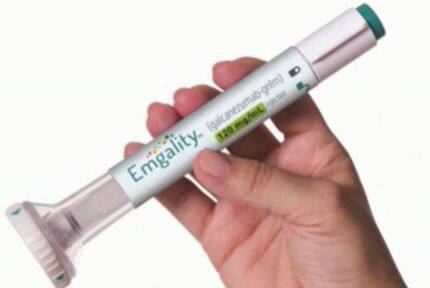
Cluster Headache (CH) belongs to primary headache disorders, known as trigeminal autonomic cephalalgias, characterized by the sudden onset of severe to very severe pain on one side of the head. Although CH is severely disabling, due to insufficient awareness, this condition is difficult to
DiagnosisIt is often misdiagnosed, and for some individuals, it takes an average of 5 years or longer to achieve a definitive diagnosis. A cluster period typically lasts from 2 weeks to 3 months, with attack frequencies ranging from once every 2 days to up to 8 times per day; each attack lasts 15–180 minutes. Episodic cluster headache (ECH) accounts for 85%–90% of cluster headache (CH) cases.
Emgality selectively blocks the calcitonin gene-related peptide (CGRP) receptor, which plays a key role in the pathogenesis of migraine. CGRP is a neuropeptide that has been shown to be released during migraine attacks and is considered a trigger for such episodes. Currently, CGRP and its receptor have become prominent targets in the development of migraine medications. Migraine is the third most prevalent disease and the sixth leading cause of disability worldwide, and it has been listed by the World Health Organization (WHO) as one of the top 10 most disabling diseases. It is estimated that there are over 1 billion migraine sufferers globally.
As of now, four monoclonal antibody-based migraine therapies targeting CGRP and its receptor have been launched, namely: Amgen/
NovartisAimovig (targeting the CGRP receptor), Teva's Ajovy (targeting CGRP),
Eli LillyEmgality (targeting CGRP) and Lundbeck’s Vyepti (targeting CGRP). Regarding administration, Aimovig and Emgality are both administered as once-monthly subcutaneous injections; Ajovy is administered as a subcutaneous injection either once monthly or once every three months; and Vyepti is administered as an intravenous infusion once every three months. All four drugs are indicated for the preventive treatment of migraine.
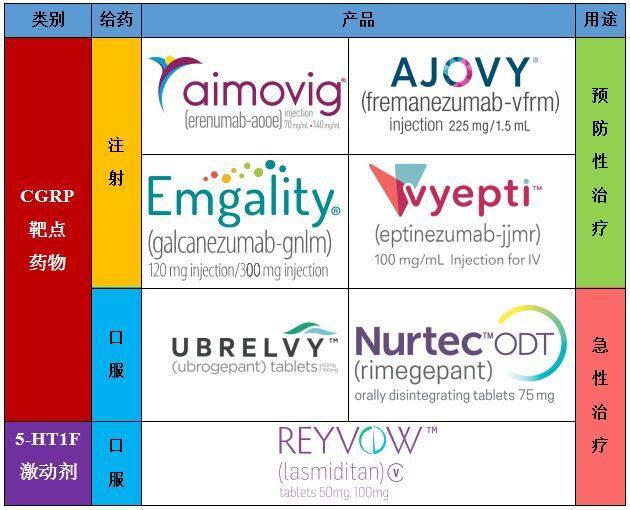
In addition, some pharmaceutical companies are developing oral CGRP receptor antagonists. In December 2019, Allergan’s Ubrelvy (ubrogepant) received approval from the U.S. FDA for the acute treatment of migraine (with or without aura) in adults, becoming the first oral CGRP receptor antagonist approved globally for the treatment of migraine attacks. As for Biohaven, in addition to the approved Zydis ODT (rimegepant orally disintegrating tablets), the company also has a conventional rimegepant tablet under review.
FDAReview, with approval expected in mid-2020.
In the acute treatment of migraine, it is particularly noteworthy that in October 2019,
Eli LillyOral drug Reyvow (lasmiditan) approved in the United States
FDAApproved for the acute treatment of migraine (with or without aura) in adults. This approval is significant, as the drug is a 5-HT1F receptor agonist and represents the first new class of acute migraine therapies approved in two decades.
(Bioon.com)
Original source: CHMP: refusal of a change to the marketing authorisation for Emgality (galcanezumab)