

Bristol Myers Squibb Announces Phase III ELOQUENT-1 Trial Failure of Empliciti-Based ERd Regimen in Newly Diagnosed, Transplant-Ineligible Multiple Myeloma Patients
Mar 10, 2020 10:29
CST Updated
10:29

Bristol-Myers Squibb
Biopharmaceutical and Nutritional Product R&D and Sales

March 10, 2020 /Bio ValleyBIOON/ -- Bristol-Myers Squibb (BMS) recently announced the top-line results of the Phase III ELOQUENT-1 trial. This is a randomized, open-label trial in newDiagnosisThe study was conducted in patients with multiple myeloma (MM) who had not received prior treatment and were ineligible for transplantation, evaluating the efficacy and safety of the three-drug regimen Empliciti (elotuzumab) combined with Revlimid (lenalidomide) and low-dose dexamethasone (ERd) versus the two-drug regimen of lenalidomide plus low-dose dexamethasone (Rd). In this study, both regimens were administered continuously until disease progression.
The results showed that in the final analysis, compared with the Rd regimen, the ERd regimen did not demonstrate a statistically significant improvement in progression-free survival (PFS), failing to meet the primary endpoint of the study. In this study, the safety profile of the ERd regimen was generally consistent with the known safety profiles of Empliciti, Revlimid, and dexamethasone.
Bristol-Myers Squibb will complete a comprehensive evaluation of the study data and collaborate with investigators at future medicalMeetingresults were announced. Noah Berkowitz, M.D., Senior Vice President of Global Clinical Development in Hematology at Bristol-Myers Squibb, stated:
“Although we are disappointed that the ELOQUENT-1 trial did not meet its primary endpoint in patients with newly diagnosed, previously untreated, transplant-ineligible multiple myeloma, the combination of Empliciti, Revlimid, and dexamethasone remains a standard treatment for patients with relapsed/refractory multiple myeloma (R/R MM), offering the potential for prolonged survival in patient populations in need of additional treatment options.”
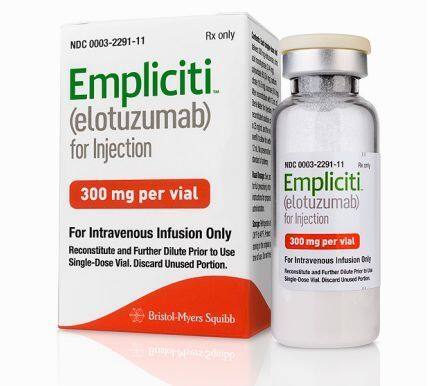
Empliciti was co-developed by Bristol-Myers Squibb and AbbVie, with Bristol-Myers Squibb solely responsible for its commercialization. Empliciti is an immunomodulatory antibody that targets signaling lymphocytic activation molecule family member 7 (SLAMF7, also known as CS1), a glycoprotein expressed on the surface of myeloma cells. It is also expressed on natural killer (NK) cells and plasma cells, and is present at lower levels in specific immune cell subsets within the hematopoietic lineage.
Empliciti has a dual mechanism of action: (1) Direct activation pathway: Activates the immune system directly via the SLAMF7 pathway through natural killer (NK) cells; (2) Antibody-dependent cellular cytotoxicity (ADCC): Empliciti targets and binds to SLAMF7 molecules on the surface of multiple myeloma cells, marking these malignant cells and enhancing the ability of natural killer cells to kill them through antibody-dependent cellular cytotoxicity.
Empliciti is the first immunomodulatory antibody therapy approved for the treatment of multiple myeloma (MM). In the United States, Empliciti was initially approved in November 2015 in combination with Revlimid (lenalidomide) and low-dose dexamethasone (the ERd triplet regimen) for adult patients with MM who had previously received one to three prior therapies. In November 2018, Empliciti received additional approval in combination with Pomalyst (pomalidomide) and low-dose dexamethasone (the EPd triplet regimen) for adult patients with MM who had previously received at least two prior therapies, including lenalidomide and a proteasome inhibitor (PI).
In the European Union, the ERd and EPd regimens were approved in May 2016 and August 2019, respectively. The ERd regimen is indicated for adult patients with multiple myeloma (MM) who have received at least one prior therapy, while the EPd regimen is indicated for adult patients with relapsed or refractory multiple myeloma (R/R MM) who have received at least two prior therapies, including lenalidomide and a proteasome inhibitor (PI), and have demonstrated disease progression on or after the last therapy. (Bioon.com)