

T-MAXIMUM Bio Announces IPO Filing: Pioneering Third-Generation Allogeneic CAR-T Platform with Extended Half-Life for Off-the-Shelf Cancer Immunotherapy
Maximum Biology
Developer of Novel Immunotherapy Technologies
CAR-T cell therapy is currently one of the most cutting-edge treatments for cancer; however, as an emerging form of cellular immunotherapy, it faces numerous clinical challenges that urgently need to be addressed. Most notably, Novartis’ marketed CAR-T therapy, Kymriah, is priced at $475,000 per treatment course. Such an “astronomical” price deters many patients with acute lymphoblastic leukemia from accessing the therapy. Pricing is only one factor; other issues, such as the lengthy treatment cycle and variable patient responses, further hinder the widespread clinical adoption of CAR-T cell therapy.
Currently, the two CAR-T therapies on the market are both autologous CAR-T cell therapies targeting CD19. Autologous CAR-T cell therapy is also one of the hot research directions in CAR-T therapy. "Autologous CAR-T," as the name suggests, involves extracting healthy T cells from the patient, "loading" them through cultivation, and then infusing them back into the patient to specifically attack tumor cells, achieving the effect of curing cancer. This "self-collection and self-use" approach of "autologous CAR-T" is also one of the reasons why CAR-T therapy is expensive.
If large quantities of pre-loaded T cells are readily available for direct infusion into tumor patients for anticancer therapy, the cost of CAR-T therapy would naturally be significantly reduced. This is one of the advantages of allogeneic CAR-T cell therapy.
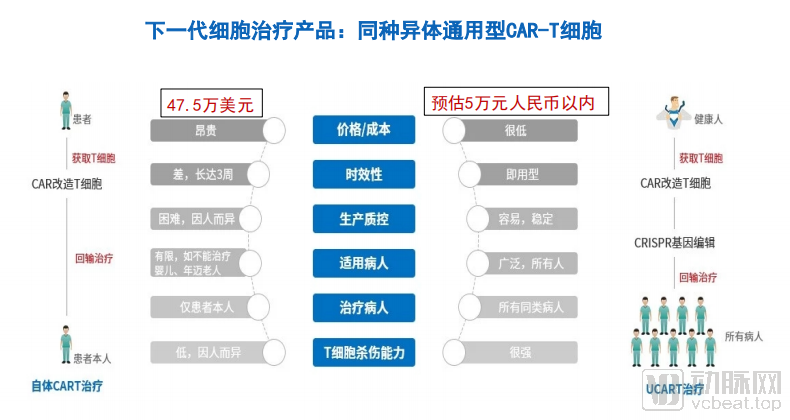
To achieve low-cost CAR-T cell therapy, addressing the clinical pain points of allogeneic CAR-T cell therapy is an insurmountable hurdle that must be overcome for its practical implementation. The primary difference between “allogeneic” and “autologous” CAR-T cell therapies lies in the fact that autologous CAR-T cells do not trigger immune rejection by the patient’s immune system, whereas exogenous allogeneic CAR-T cells provoke an immune rejection response.
For a long time, researchers have been tirelessly seeking solutions to the rejection problem of allogeneic CAR-T cells, starting with the first-generation approach of targeted knockout of the TCR gene to address the issue of allogeneic CAR-T cell rejection.
The French biopharmaceutical company Cellectis has adopted this version 1.0 rejection mitigation strategy, in which gene editing is used to knock out the TCR gene in allogeneic CAR-T cells, thereby preventing graft-versus-host disease (GVHD) in patients. Currently, this pipeline of Cellectis has entered Phase II clinical trials in the United States. However, in actual clinical practice, the efficacy of allogeneic CAR-T cells with knocked-out TCR genes under the version 1.0 approach has not been entirely satisfactory. Since HLA molecules were not knocked out, this approach failed to address the host immune rejection response against the allogeneic CAR-T cells.
As the first-generation approach became obsolete, the renowned Swiss gene-editing company CRISPR Therapeutics launched an upgraded version 2.0 solution to address rejection, building upon the 1.0 platform. In addition to knocking out the TCR gene, CRISPR Therapeutics also knocked out β2-microglobulin (B2M) in allogeneic CAR-T cells, further enhancing the efficacy of allogeneic CAR-T cell therapy.
Currently, the version 2.0 allogeneic CAR-T cell therapy has been approved in the United States to enter clinical trials. In China, however, researchers conducting investigator-initiated clinical trials of version 2.0 have found that allogeneic CAR-T cells exhibit limited persistence after infusion into patients. Their therapeutic efficacy diminishes over time, and immune rejection responses remain incompletely resolved.
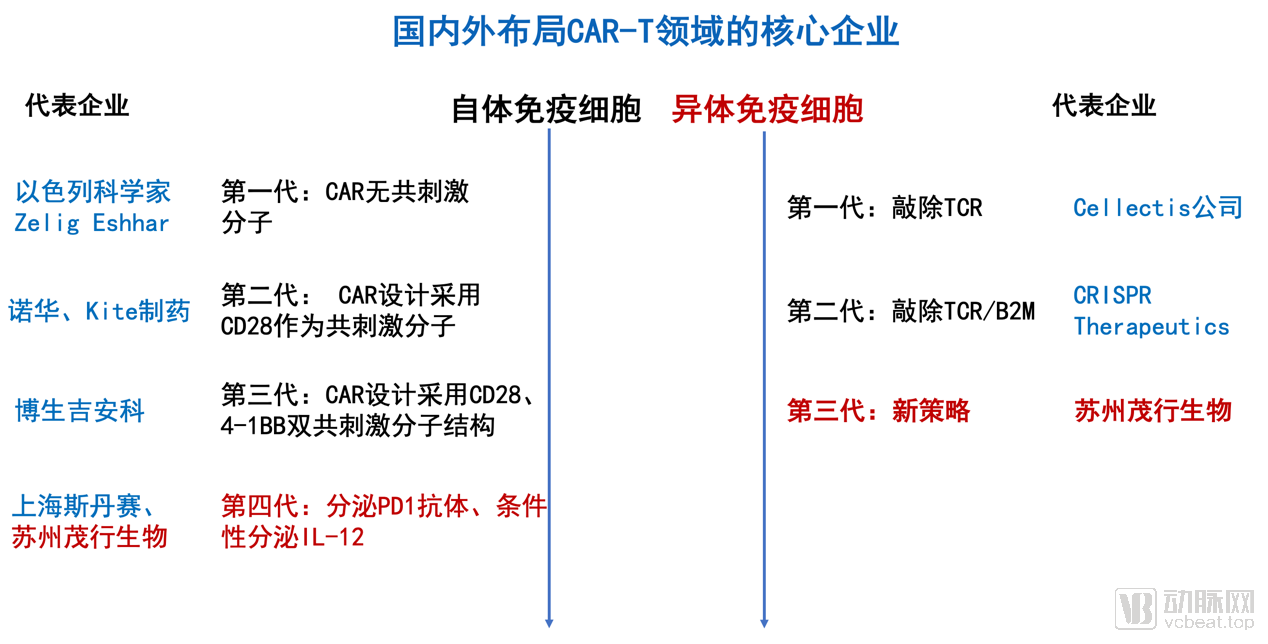
It is essential to mention the third-generation allogeneic CAR-T cell rejection solution launched by Maoxing Biotechnology. Building on versions 1.0 and 2.0, the company conducted a series of exploratory studies, identified the core issues, and developed a TCR/X double-knockout strategy that minimizes the combined immune response mediated by host T cells and NK cells.
According to Shang Xiaoyun, the founder of the company, this innovative 3.0 regimen can extend the product’s half-life in vivo, enabling allogeneic CAR-T cells to survive for more than twice as long as those in the 2.0 version, thereby enhancing the efficacy of cell therapy.
It is reported that Suzhou Maoxing Biotechnology Co., Ltd. has completed the preliminary preclinical studies (in vitro and animal experiments) for its 3.0 protocol and plans to initiate preparations for submitting an Investigational New Drug (IND) application this year.
Suzhou Maoxing Biotechnology Co., Ltd. (hereinafter referred to as “Maoxing Biotech”) was established in December 2017. Its founder, Dr. Shang Xiaoyun, graduated from the Third Military Medical University and subsequently remained at the university for 16 years of immunology research. Dr. Shang serves as a Principal Investigator (PI) at a National Engineering Laboratory and a Key Laboratory of the Ministry of Education. He has led the development of Class I new drugs and received funding from the Major Special Project on “Major New Drug Creation.”
Dr. Shang Xiaoyun often cites the phrase “reaching for the sky while staying grounded,” frequently mentioned by his graduate supervisor, the renowned immunologist Professor Wu Yuzhang, to describe his aspirations. He aims to “reach for the sky” by conducting cutting-edge basic scientific research and striving to break through core key technologies, while also “staying grounded” by translating technological achievements into commercialized products and real-world productivity. With over a decade of experience in frontier scientific research, Dr. Shang has long expressed his desire to see advanced technologies translated into practical applications. Driven by this aspiration, from July 2015 to July 2017, Dr. Shang collaborated with Dr. Huang Xingxu’s research group on T-cell gene editing, conducting validation studies in models such as humanized mice and non-human primates.
Dr. Huang Xingxu is a world-renowned leading expert in the field of gene editing. He conducted postdoctoral research at the Institute of Biophysics, Chinese Academy of Sciences, from 1998 to 2000, and at Baylor College of Medicine in the United States from 2001 to 2007. Dr. Huang was appointed by Nanjing University from 2008 to 2014 and joined ShanghaiTech University in 2015.
To date, Dr. Huang Xingxu’s research group has published more than ten academic papers on gene editing in internationally renowned medical and scientific journals, including Cell and Nature.
The collaboration with Dr. Huang Xingxu laid a solid technical foundation for Dr. Shang Xiaoyun’s development of third-generation universal CAR-T cell therapy, enabling Maoxing Biotechnology to directly enter the forefront of tumor immunocell therapy at its inception.
It is worth noting that Maoxing Biotechnology already holds more than ten patents for core technologies in China, with related patent applications currently underway in the United States. Dr. Shang Xiaoyun stated that the company will pursue simultaneous product filings with the drug regulatory authorities in both China and the United States, and has already received professional guidance from relevant review experts.
In clinical applications, Maoxing Biotechnology’s version 3.0 universal CAR-T therapy is being applied to the development of products for multiple cancer types, including multiple myeloma and glioma, with the most advanced pipeline currently focused on the treatment of multiple myeloma. According to the strategic plan disclosed by Maoxing Biotechnology, the multiple myeloma product pipeline is expected to receive approval from China’s National Medical Products Administration (NMPA) to enter clinical trials by the end of 2021.
Regarding the combination therapy selected as the first-line clinical application for multiple myeloma, Dr. Shang Xiaoyun stated that, in addition to considering the practicality and market potential of multiple myeloma treatment, a key factor is that Maoxing Biotechnology’s “dual-target CAR” can effectively reduce the risk of relapse in multiple myeloma.
In research on other cancer types, Suzhou Maoxing Biotechnology Co., Ltd. has collaborated with the First Affiliated Hospital of Soochow University, the former PLA 101 Hospital, and the First Affiliated Hospital of Zhengzhou University to conduct preclinical exploratory studies on various solid tumors and hematologic malignancies. If Maoxing Biotechnology’s 3.0 protocol is successfully implemented, it is expected to reduce the market price of CAR-T cell therapy to under RMB 50,000.
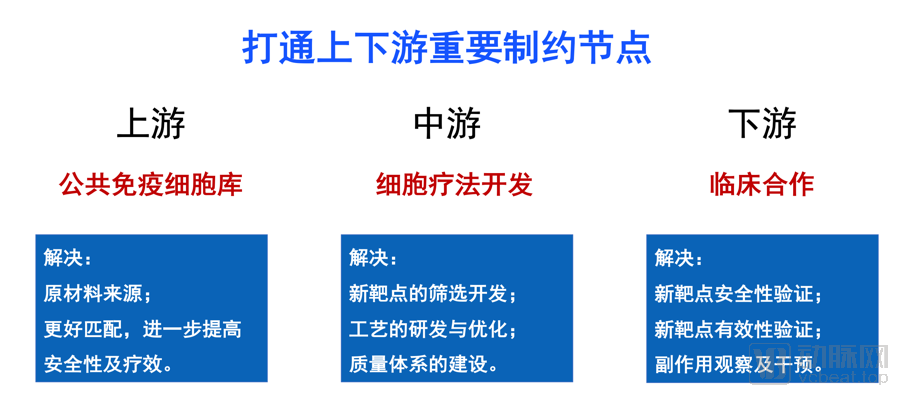
In addition to allogeneic CAR-T cell therapy, Dr. Shang Xiaoyun stated that Suzhou Maoxing Biotechnology Co., Ltd. is also actively addressing key bottlenecks across the upstream and downstream segments of the industry. On the upstream side, the company is establishing a public immune cell bank, enabling cancer patients to store healthy immune cells before disease onset. This ensures the vitality and cytotoxic potency of the immune cells, allowing for their rapid retrieval and engineering for therapeutic use upon disease diagnosis.
It is worth noting that, against the backdrop of China’s nationwide fight against the COVID-19 pandemic, Suzhou Maoxing Biotechnology Co., Ltd. has also joined the accelerated development of COVID-19 vaccines. As early as January this year, the company had already begun designing a recombinant protein-based COVID-19 vaccine, with preliminary preclinical efficacy studies in animals scheduled to commence in March.
In terms of financing, Maoxing Biotechnology has completed its angel round and recently launched its Series A financing plan. The Series A round will be conducted in two tranches, with a total target raise of approximately RMB 80 million. The proceeds will primarily be used to complete proof-of-concept clinical trials for its dual-target allogeneic CAR-T product, launch its immune cell storage business, and finalize the Investigational New Drug (IND) application for its first dual-target allogeneic CAR-T product.