

Novartis’ Zolgensma Becomes First Gene Therapy Approved in Japan for Spinal Muscular Atrophy in Children Under Two
Mar 20, 2020 15:09
CST Updated
15:09

Novartis
Drug Development and Manufacturing
March 20, 2020/BioValleyBIOON/--Novartis(Novartis) recently announced that the Japanese Ministry of Health, Labour and Welfare (MHLW) has approved the gene therapy Zolgensma (onasemnogene abeparvovec) for the treatment of pediatric patients with spinal muscular atrophy (SMA) under 2 years of age, including those withDiagnosisPatients at the pre-symptomatic stage. It should be noted that patients receiving Zolgensma treatment must test negative for anti-AAV9 antibodies. It is estimated that approximately 15–20 SMA patients in Japan are eligible for treatment each year.
Zolgensma was approved in the United States in May 2019FDAApproved for market launch, it became the world’s first gene therapy for the treatment of spinal muscular atrophy (SMA). This medication is a one-time gene therapy designed to address the genetic root cause of SMA by replacing the function of the missing or nonfunctional SMN1 gene. Following a single intravenous (IV) infusion, Zolgensma delivers a functional copy of the SMN gene into the patient’s cells, enabling sustained expression of the SMN protein to halt disease progression and thereby improve patients’ quality of life over the long term.Clinical studies have demonstrated that a single infusion of Zolgensma provides clinically meaningful therapeutic benefits in both symptomatic and presymptomatic SMA patients, including prolonged event-free survival and the achievement of motor milestones not observed in the natural history of the disease.
Spinal Muscular Atrophy (SMA) is a rare genetic neuromuscular disorder. Due to the lack of a functional SMN1 gene, SMA leads to rapid and irreversible loss of motor neurons, impairing muscle function, including breathing, swallowing, and basic movement. SMA is the leading genetic killer among infants and young children under two years of age, with Type 1 SMA being the most common form, accounting for approximately 60% of all cases. Without treatment, more than 90% of patients will die or require permanent ventilatory support by the age of two.
The approval of Zolgensma is based on data from the Phase I START trial, the long-term follow-up of the START trial, the Phase III STR1VE-US trial, the Phase III SPR1NT trial, and the Phase I/II STRONG (intrathecal administration) trial. The START and STR1VE-US trials were conducted in symptomatic patients with Type 1 spinal muscular atrophy (SMA) carrying 1–2 copies and 2 copies of the SMN2 backup gene, respectively. These patients were less than 6 months of age at the time of dosing, and the efficacy and safety of a single intravenous infusion of Zolgensma were evaluated. Zolgensma demonstrated: (1) survival rates unprecedented in the natural history of the disease; (2) rapid improvement in motor function, typically within one month after administration; and (3) achievement of milestones, including the ability to sit unsupported, a milestone never achieved in untreated patients. Patients in the START long-term follow-up trial are now 5 years old.
SPR1NT is an ongoing, open-label, single-arm Phase 3 trial evaluating the efficacy and safety of a single one-time intravenous infusion of Zolgensma in presymptomatic SMA patients defined genetically by biallelic SMN1 deletion and carrying 2–3 copies of the SMN2 backup gene, who were <6 weeks of age at the time of dosing. Interim results from the SPR1NT trial demonstrated that Zolgensma treatment provided rapid, age-appropriate major milestone benefits.
These data reinforce the importance of early intervention in patients with spinal muscular atrophy (SMA), which must be initiated as early as possible.DiagnosisSMA and initiate treatment, including active supportive care, to halt irreversible motor neuron loss and disease progression.
In clinical studies, the most common adverse reactions following Zolgensma treatment were elevated liver enzymes and vomiting. Patients may experience acute severe liver injury and elevated transaminases; those with pre-existing hepatic impairment may be at higher risk. Prior to infusion, physicians should assess hepatic function in all patients through clinical evaluation and laboratory testing. All patients should receive systemic corticosteroid therapy before and after treatment, and liver function should be monitored for at least three months post-infusion.
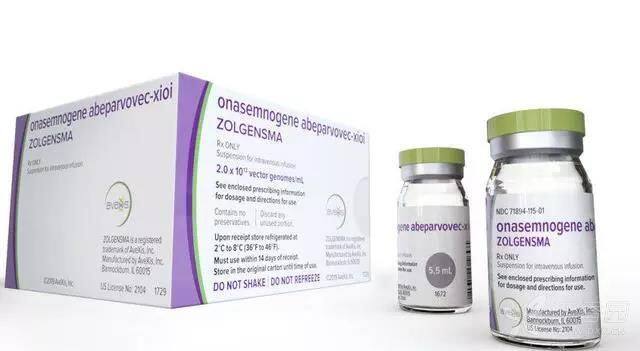
Spinal Muscular Atrophy (SMA) is a motor neuron disease that causes muscle weakness and atrophy. It is an autosomal recessive genetic disorder caused by genetic defects, affecting muscles throughout the patient's body. Patients primarily present with generalized muscle atrophy and weakness, progressively losing various motor functions, including breathing and swallowing. SMA is the leading genetic killer among infants under two years of age. It is a relatively common "rare disease," with an incidence rate of 1 in 6,000 to 1 in 10,000 live births. According to relevant reports, there are currently approximately 30,000 to 50,000 SMA patients in China.
To date, two drugs have been approved for the treatment of spinal muscular atrophy (SMA). In December 2016, Spinraza (nusinersen), developed by Biogen and its partner Ionis Pharmaceuticals, was approved, becoming the first therapy worldwide for SMA. This drug is an antisense oligonucleotide (ASO) administered via intrathecal injection, delivering the medication directly into the cerebrospinal fluid (CSF) surrounding the spinal cord. It modulates the splicing of SMN2 pre-messenger RNA (pre-mRNA), thereby increasing the production of full-length functional SMN protein. In patients with SMA, insufficient levels of SMN protein lead to the degeneration of motor neurons in the spinal cord. Clinical studies have demonstrated that treatment with Spinraza significantly improves motor function in patients with SMA.
In May 2019, Novartis’ gene therapy Zolgensma (onasemnogene abeparvovec) was approved, becoming the world’s first gene therapy for the treatment of spinal muscular atrophy (SMA). Administered as a single, one-time intravenous infusion, the drug enables sustained expression of the SMN protein to halt disease progression, addresses the root cause of SMA, and holds promise for long-term improvement in patients’ quality of life.
Currently, Roche is also developing an oral therapy, risdiplam, a splicing modifier of the survival motor neuron 2 (SMN2) gene, for the treatment of all types (Type 1, Type 2, and Type 3) of spinal muscular atrophy (SMA). The drug is undergoing priority review by the U.S. FDA, with results expected in May this year. If approved, risdiplam will become the first oral medication for the treatment of all three types of SMA.
In the Chinese market, Spinraza was approved in late February 2019 for the treatment of patients with 5q spinal muscular atrophy (5q-SMA). This approval made Spinraza the first drug available in China for the treatment of SMA. 5q-SMA is the most common form of SMA, accounting for approximately 95% of all SMA cases. This type of SMA is caused by mutations in the SMN1 (survival motor neuron 1) gene on chromosome 5, hence the name 5q-SMA. (Bioon.com)