

The Lancet Publishes Two Studies on Takeda’s Tetravalent Dengue Vaccine TAK-003 Demonstrating 73.3% Efficacy at 18 Months in Children Aged 4–16
Mar 23, 2020 10:12
CST Updated
10:12

Takeda
Biopharmaceutical Manufacturer

March 23, 2020/BioValleyBIOON/-- Takeda recently announced that two papers on its dengue vaccine TAK-003 were published in The Lancet, a top international medical journal. The papers reported the 18-month analysis results from the ongoing pivotal Phase III TIDES trial and the final 48-month analysis results from the Phase II DEN-204 trial. The findings were consistent with previously reported data on the safety, immunogenicity, and efficacy of TAK-003.
TAK-003 is a live-attenuated tetravalent dengue vaccine developed based on the attenuated dengue virus serotype 2 (DENV-2), which provides protection against all four vaccine viruses.GeneticsStudy Framework. Data from Phase I and II studies demonstrated that TAK-003 induced neutralizing antibodies against all four dengue virus serotypes across age groups and in both seropositive and seronegative individuals, with a favorable safety and tolerability profile.
The 18-month data analysis of the pivotal Phase III TIDES trial includes an update on overall vaccine efficacy (VE) and a formal assessment of secondary efficacy endpoints by serotype, baseline serostatus, and disease severity (18 months after immunization with the second dose [three months after the first dose]).The results confirmed the protective efficacy of TAK-003 against virologically confirmed dengue (VCD) in children aged 4–16 years (overall VE: 73.3% [95% CI: 66.5%–78.8%]).
For secondary endpoints with a sufficient number of cases, the trial met all secondary endpoints:Compared with placebo, TAK-003 not only reduced the incidence and severity of the disease but also lowered the hospitalization rate.TAK-003 was well tolerated, and no significant safety risks were identified in this analysis. The 18-month data were previously presented at the 68th Annual Meeting of the American Society of Tropical Medicine and Hygiene (ASTMH) held in November 2019. The vaccine efficacy (VE) and safety results from the 18-month analysis were generally consistent with those from the previously reported 12-month analysis.
Currently, the TIDES trial is ongoing, with safety and efficacy to be evaluated over a total period of 4.5 years. Takeda plans to announce the results of the 24-month analysis later this year.
The DEN-204 study enrolled a total of 1,800 participants. In the 48-month data analysis, TAK-003 elicited antibody responses against all four dengue serotypes in children and adolescents aged 2–17 years, and these antibody responses persisted for four years post-vaccination regardless of baseline serostatus. The study evaluated placebo and three different TAK-003 immunization regimens: a single-dose primary vaccination (Day 1), a single-dose primary vaccination plus a booster dose (Day 1, Day 365), and a two-dose primary vaccination series (Day 1, Day 91).
Among subjects who were seropositive at baseline, no significant differences were observed in the geometric mean titers (GMTs, an indicator of immune response) across various immunization regimens through Month 48. Among subjects who were seronegative at baseline, GMTs against all four serotypes were generally lower in those receiving a single-dose regimen compared with two-dose regimens (one priming dose plus one booster dose, or two priming doses), further supporting the use of the two-dose primary immunization regimen employed in the Phase III TIDES trial.
No significant safety risks were identified during the 4-year study period, providing insights into the long-term safety profile of TAK-003. Although this study did not assess vaccine efficacy (VE),During the 4-year study period, the vaccine group showed a significantly reduced risk of VCD compared with the placebo group (relative risk: 0.35; 95% CI: 0.19–0.65).Previous interim analysis results of the DEN-204 study demonstrated sustained immunogenicity, safety, and tolerability at the 6-month and 18-month assessments.
Dengvaxia: The World’s First Dengue Vaccine, Produced by Sanofi
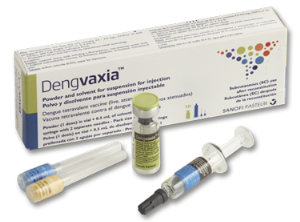
Currently, there is only one dengue vaccine product available on the global market: Dengvaxia, developed over a period of 20 years by the French pharmaceutical giant Sanofi. This vaccine was approved in Mexico in December 2015, becoming the first dengue vaccine to receive regulatory approval worldwide. Subsequently, it gained approval in multiple dengue-endemic countries across Latin America and Asia, and was approved by the European Union in December 2018. In the United States, Dengvaxia received approval in May 2019.FDAApproved as the first and only medical prevention tool for dengue fever in the U.S. market.
Dengue Fever (Dengue) is an acute arboviral infectious disease caused by the dengue virus and transmitted via mosquito vectors. Clinical manifestations include high fever, headache, severe myalgia and arthralgia, rash, hemorrhagic tendency, lymphadenopathy, leukopenia, and thrombocytopenia. Dengue fever is one of the leading causes of death among children in Southeast Asia.
Dengue fever is a mosquito-borne disease, commonly known as "breakbone fever," that threatens nearly 3 billion people worldwide and is endemic in Asia and Latin America. According to estimates by the World Health Organization (WHO), more than 100 million people are infected with dengue annually. Dengue is often misdiagnosed due to its broad spectrum of clinical manifestations, ranging from mild, non-specific symptoms to life-threatening complications. Furthermore, limitations in surveillance systems contribute to the underreporting of dengue cases. Globally, 500,000 individuals, including children, develop dengue hemorrhagic fever (DHF) each year. Timely access to appropriate medical care is critical to reducing the risk of death from severe dengue.
The WHO has set targets to reduce dengue mortality by 50% and incidence by 25% by 2020. Currently, there are no specific therapeutic agents available for dengue hemorrhagic fever. Dengue fever is caused by four distinct serotypes of the dengue virus; since infection with one serotype does not confer immunity against the others, individuals can be repeatedly infected by different dengue virus serotypes.
It is estimated that approximately 67 million people in Asia are infected with dengue fever annually, accounting for about 70% of the global dengue burden. In endemic countries across Asia, the direct and indirect medical expenditures caused by dengue outbreaks reach as high as $6.5 billion per year. (Bioon.com)