

Gilead's Hepatitis C Drug Epclusa (Sofosbuvir/Velpatasvir) Approved by FDA for Pediatric Patients Aged 6 and Older

Gilead Sciences
Antiviral Drug Developer

FDA
U.S. Food and Drug Administration
The U.S. FDA approved the supplemental application for Gilead’s third-generation hepatitis C drug sofosbuvir/velpatasvir (Epclusa) for the treatment of pediatric patients aged ≥6 years or weighing ≥17 kg with chronic hepatitis C virus (HCV) genotypes 1–6, without cirrhosis (liver disease) or with only mild cirrhosis. Concurrently, the FDA approved Epclusa in combination with ribavirin for the treatment of pediatric patients aged ≥6 years or weighing ≥17 kg with decompensated cirrhosis.
Dr. Debra Birnkrant, Director of the Division of Antiviral Products in the FDA’s Center for Drug Evaluation and Research, stated, “This approval will provide new treatment options for pediatric and adolescent patients with hepatitis C.”
Hepatitis C is caused by infection with the hepatitis C virus (HCV), leading to impaired or failed liver function. According to statistics, approximately 130–150 million people worldwide suffer from chronic hepatitis C. Among the infected population, about 11 million are children under the age of 15, of whom 5 million are in the phase of viremia (referring to the presence of the virus in the blood).
Dr. Kathleen B. Schwarz, Professor of Pediatrics at Johns Hopkins University School of Medicine, stated, “Although treatments for hepatitis C have improved significantly in recent years, pediatricians must still consider multiple factors when selecting a treatment regimen, including genotype and the severity of liver disease. The expanded approval of Epclusa can help eligible pediatric patients with hepatitis C combat this life-threatening liver disease.”
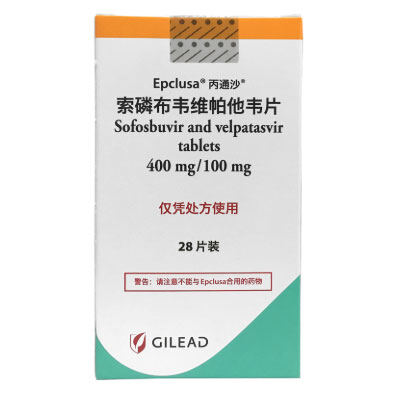
Epclusa is the world’s first all-oral, pangenotypic, single-tablet regimen for hepatitis C. It was approved in the United States in June 2016 for the treatment of adult patients with chronic hepatitis C infection of all genotypes (1–6), with or without cirrhosis; and in combination with ribavirin for patients with moderate to severe (decompensated) cirrhosis. The drug is now also available in China.
This approval is based on data from a Phase II, open-label, multicenter clinical trial (Study 1143). The trial enrolled 175 pediatric patients who received 12 weeks of treatment with Epclusa, of whom 173 were included in the efficacy analysis. The pharmacokinetics, safety, and efficacy of Epclusa were confirmed in this study.

Results showed:
·No significant differences in pharmacokinetics were observed between pediatric and adult patients.
·The safety and efficacy of Epclusa treatment in children aged 6 years and older are generally consistent with those observed in adults.
· Among 102 patients aged 7–12 years, 93% of those with genotype 1 and 100% of those with genotypes 2, 3, 4, and 6 had no detectable virus in their blood 12 weeks after completing treatment, indicating that the hepatitis C infection was cured.
·Among 71 patients aged 6–11 years with genotype 1–4 hepatitis C virus (HCV) infection, 93% of those with genotype 1, 91% with genotype 3, and 100% with genotypes 2 and 4 had undetectable viral loads in blood 12 weeks after completion of therapy.
· The most common adverse reactions are fatigue and headache. Adverse reactions observed in pediatric patients are consistent with those in adult patients.
Epclusa carries a boxed warning: it may pose a risk of hepatitis B virus reactivation in patients co-infected with hepatitis C and hepatitis B (HCV/HBV). The safety and efficacy of Epclusa have not been established in pediatric patients under 6 years of age.