

Founder Hu Shanyun of JieSiBaiEr Medical: 20 Years Dedicated to Endoscopy Technology, Delivering Comprehensive Full-Endoscopic Solutions for Spinal Surgery

Jiesbyer Medical
Developer of Percutaneous Spinal and Orthopedic Endoscopic Technologies and Products
Driven by its minimally invasive nature, rapid recovery, and favorable prognosis, the volume of endoscopic spinal surgeries is experiencing rapid growth, gradually transitioning from a “supporting role” to a “leading role” in spinal surgery.
In their 2017 review article on the development of spinal endoscopy in China, Zhang Xifeng, a pioneer and renowned expert in spinal endoscopy in China, and Anthony T. Yeung, a global pioneer and master of spinal endoscopy, pointed out that in 2010, fewer than 30 doctors in China were performing more than 100 percutaneous spinal endoscopic procedures annually. By 2016, the number of surgeons meeting this criterion had risen to 200–300. Approximately 50,000–60,000 spinal endoscopic procedures were performed each year, with the latest statistical data indicating that around 100,000 such procedures were carried out nationwide in 2018.
“Spinal surgery has entered a brand-new era of endoscopy,” said Hu Shanyun, founder of Suzhou Jiesbyer Medical Technology Co., Ltd. (hereinafter referred to as “Jiesbyer”).
After graduating from medical school, Hu Shanyun entered the medical device industry, starting out in sales, management, and distribution before ultimately focusing on endoscopy—a multidisciplinary field. Over the course of 20 years, he achieved full independent research and development of all endoscopy-related products. Having mastered a series of core technologies, Hu founded Jiesbyer Medical in 2019, specializing in innovative total endoscopic solutions for spinal surgery. Shortly after its establishment, Jiesbyer Medical secured RMB 20 million in Pre-A financing from Yuansheng Venture Capital.
How Great Is the Development Potential in the Field of Endoscopic Spine Surgery? What Leading Technologies Enable Jiesbyer Medical to Stay Ahead? Recently, VCBeat conducted an exclusive interview with Hu Shanyun, founder of Jiesbyer Medical, to provide insights on these questions.
Spine-related disorders have long been one of the major risk factors threatening national health. These include common conditions such as lumbar disc herniation, lumbar spinal stenosis, and spondylolisthesis. As of 2019, the number of patients with spinal diseases in China alone had exceeded 400 million.
Percutaneous Endoscopic Spinal Surgery is a novel minimally invasive therapeutic approach for the treatment of lumbar disc herniation and spinal stenosis that are refractory to conservative management, and it is currently recognized as the most effective minimally invasive technique in spinal surgery.
Compared with traditional open surgery, the advantages of endoscopic spine surgery for lumbar disc herniation include minimal invasiveness, rapid postoperative recovery, fewer complications, favorable prognosis, and relatively lower costs. Typically, patients can resume normal activities on the day of surgery, and the procedure does not impair their ability to perform daily living activities.
Despite their clear advantages, the clinical adoption of spinal endoscopy has been slow in China due to the sluggish development of domestic spinal endoscopic technologies and products, the high cost of imported alternatives, and the scarcity of high-quality training opportunities. Furthermore, given the high barriers to research and development in spinal endoscopic devices, most domestic innovative enterprises have had to focus on only one or a few specific products as their strategic direction. The lack of a supportive ecosystem in China has made it difficult to establish a comprehensive product and technological system. Consequently, the majority of clinicians continue to rely on traditional open surgical procedures for treatment.
With the growing demand for minimally invasive and endoscopic treatments, percutaneous spinal endoscopy has advanced significantly in recent years. Surgical techniques have become increasingly refined, and indications have expanded accordingly. The procedure has evolved from being limited to treating simple contained lumbar disc herniations to enabling the removal of various types of lumbar disc herniations and sequestrations, as well as performing percutaneous transforaminal foraminoplasty for foraminal stenosis.
Professor Li Zhenzhou, a renowned expert in spinal endoscopy at the Fourth Medical Center of the Chinese PLA General Hospital, pointed out that over the past decade, Chinese spine surgeons have continuously learned advanced foreign techniques while exploring and developing their own improved methods tailored to the Chinese population. These innovations include a series of new products such as foraminal plasty, safety trephines, visualized trephines, and endoscopic ultrasonic bone scalpels, with many new technologies originating in China. Furthermore, in the last two to three years, Chinese experts have conducted extensive creative research and trials in endoscopic spinal fusion, establishing China as the country with the highest volume of procedures and the most advanced technology in this field. Achieving these milestones requires close collaboration between medicine and engineering. As a clinician, I am delighted to see the emergence of outstanding domestic manufacturers like Jiesbyer Medical, which enables Chinese physicians’ innovations to reach the global market backed by Chinese manufacturing. As a promising new technology, the popularization and widespread application of spinal endoscopy in China is just around the corner!
Jiang Xiaobing, a renowned young expert in spinal endoscopy in China, pointed out that over the past decade, spinal endoscopic techniques and instruments have advanced rapidly and continuously innovated. This progress has expanded the application of endoscopic surgery from traditional discectomy to the treatment of lumbar spinal stenosis, and it is now well-established for interbody fusion, as well as for surgeries involving infection and tumors. These techniques enable precise decompression on both the ventral and dorsal aspects of the entire spine, achieving superior decompressive outcomes with minimal trauma and risk compared to conventional open surgery.
Hu Shanyun stated that, based on market research, endoscopic spine surgery is expected to account for 50–60% of the spinal surgery market in the next 5–10 years.
Entrepreneurs always possess a keen eye to spot potential blue oceans.
In 1999, during the early stages of endoscopic technology development, Hu Shanyun had already begun strategic planning and founded Zhuhai Kanghong, focusing on the research and development of endoscopes.
Leveraging his background in clinical medicine and years of experience marketing advanced foreign medical devices, Hu Shanyan recognized from the outset of his entrepreneurial journey that grasping “core needs and future development directions” and mastering “independent innovation and R&D capabilities” were the “anchor” ensuring the company’s long-term success.
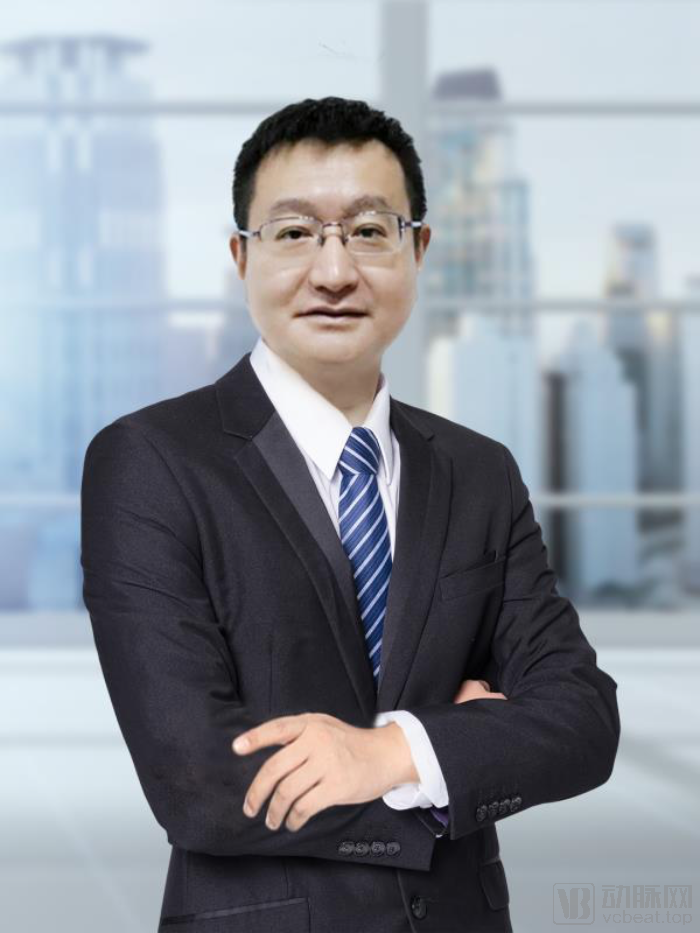
(Figure caption:Hu Shanyun, Founder of Suzhou Jiesbyer Medical Co., Ltd.)
By identifying the right direction and striving forward, Hu Shanyun led his team to achieve a breakthrough in overall endoscopic technology in China for the first time after 20 years of relentless exploration. For instance, in 2004, they successfully developed China’s first intelligent electrosurgical device, as well as high-precision argon plasma coagulation (APC) knives and water-jet knives for digestive endoscopic therapy. Since 2016, they have independently developed high-definition endoscopic cameras and LED light sources, high-definition medical monitors, high-speed power systems, and infusion pumps. By 2019, they had successively developed fully autonomous, domestically produced spinal orthopedic endoscopes, along with Full Endoscopic Lumbar Interbody Fusion (FELIF) and Full Endoscopic Oblique Lumbar Interbody Fusion (FEOLIF) systems for future fusion technologies, and the patent-designed third-generation ultrasonic bone power system, among other innovations.
Leveraging in-depth research into the endoscopy industry and recognizing the development potential in the field of spinal endoscopy, Hu Shanyun decided to focus on the development of a series of spinal endoscopy products. In May 2019, Jiesbyer Medical was established in Suzhou, positioning itself to provide comprehensive endoscopic solutions for clinical spine orthopedics.
He introduced that Jiesbyer Medical’s core team not only comprises product development professionals with multidisciplinary expertise spanning electronics, engineering, optics, software, mechanics, ergonomics, and energetics, but also includes a group of seasoned sales specialists with an average of over five years of experience in the medical industry, many of whom previously held positions in the renowned orthopedic spine divisions of companies such as Medtronic and Johnson & Johnson. Furthermore, Jiesbyer Medical maintains strong collaborations with a cohort of distinguished domestic and international experts in the field of spinal endoscopy, closely integrating clinical practice to lay a solid foundation for the integrated development of production, education, and research.
“In the current domestic market, a Grade 3A hospital performs approximately 200–300 percutaneous endoscopic surgeries annually, while district- and county-level hospitals also conduct around 40–50 such procedures each year. The third-generation spinal endoscopy technique we are promoting is not difficult for physicians to master. We believe that with improved training methods, it will be rapidly adopted in the future,” said Hu Shanyun.
Currently, Jiesbyer Medical has achieved comprehensive coverage of its product line in the field of spinal endoscopy, including radiofrequency, powered systems, ultrasound, HD 4K camera systems, spinal endoscopes, instruments and tools, and endoscopic fusion.
Percutaneous spinal endoscopy is key to performing spinal endoscopic surgeries. Hu Shanyun introduced that Jiesbyer Medical is the only company, apart from the well-known German endoscope brand RIWOspine, that has mastered the complete core technology of spinal endoscopy.
He introduced that Jiesbyer Medical’s independently developed series of percutaneous spinal endoscopes basically covers all types and specifications of endoscopes available on the market. “Our endoscopes feature a fully self-designed optical system, are capable of withstanding high-temperature and high-pressure sterilization, and incorporate patented structural designs to mitigate the risks of spinal canal and intracranial hypertension caused by irrigation during surgery. Furthermore, we can design and customize spinal endoscopes according to clinical requirements,” said Hu Shanyun.
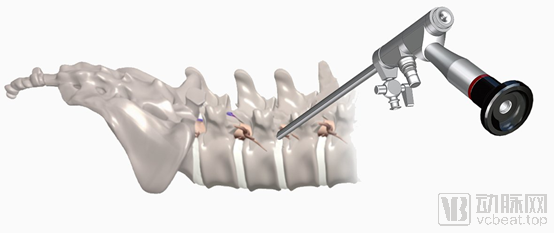
(Figure caption:Fully Domestically Produced Safe Irrigation HD Spinal Endoscope)
Currently, Jiesbyer Medical’s self-developed endoscope has completed registration testing with the SFDA and CE, and is about to begin the registration process for Class III medical devices. It is expected to enter the market for sales in the first half of 2021.
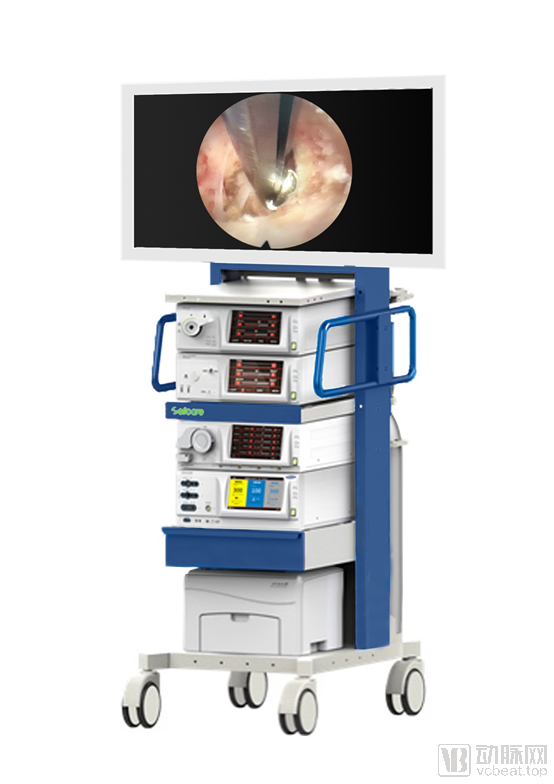
(Figure caption:Universal System for High-Definition Fluorescence-Stained Endoscopy in Orthopedics)
In addition to the percutaneous endoscopic spine surgery product series, the ultrasonic bone power system, independently developed over a period of one and a half years, is also highly impressive. Hu Shanyun introduced that the device is entirely self-developed and features world-leading patented technologies. It can be used for both open and endoscopic spinal surgeries, with a single unit providing five functions: ultrasonic, power, shaving, irrigation pump, and negative pressure.
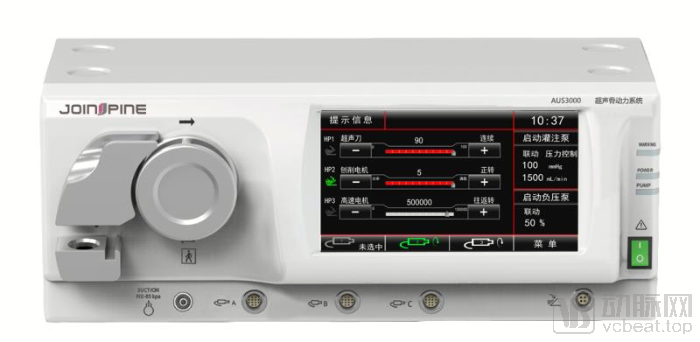
(Figure caption:Ultrasonic Bone Power System)
“Most ultrasonic bone scalpels on the market offer only a single function. To address clinical needs, we have integrated multiple capabilities into our device, enabling five major functions that save time and improve efficiency for surgeons during operations,” said Hu Shanyun.
Furthermore, the device’s联动 mode resolves the issue of blurred vision during the resection of bony tissue; the single foot pedal combined with handle switching function alleviates the burden on surgeons of selecting among multiple foot pedals during procedures.
In addition to the aforementioned products, Jiesbyer Medical has launched a leading fully endoscopic 360° minimally invasive spinal fusion system. This includes the FELIF system for dorsal 180° fusion, which utilizes an innovative, highly efficient distractible interbody cage. For selected patients, this system enables non-instrumented fusion, eliminating the need for pedicle screw-rod fixation. It offers minimal tissue trauma, lower costs, and favorable prognosis, thereby truly embodying the concept of endoscopic minimally invasive surgery.
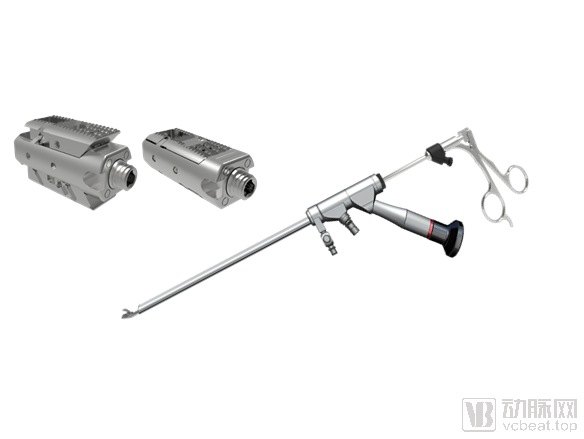
(Figure caption:FELIF Full-Endoscopic Fusion System)
The FEOLIF system with 180° ventral fusion is a product of the further development of endoscopic spinal fusion technology. This system can utilize various traditional types of interbody cages, as well as specially designed bidirectionally expandable cages. The entire procedure is performed under endoscopic visualization, and it is anticipated that full endoscopic implementation of existing ALIF, XLIF, DLIF, and OLIF techniques will be achieved in the near future.
“Leveraging its product advantages that cover the entire industrial chain of spinal endoscopy, Jiesbyer Medical has currently established collaborative partnerships with an increasing number of renowned hospitals and experts in China. ‘By integrating a comprehensive range of full-endoscopic products, advanced surgical concepts, and standardized operative techniques using supporting instruments, we have also established a complete tiered training system. Through 5G networks, we deliver remote theoretical and foundational instruction as well as on-site level-II operational training. In the future, we will launch large-scale training programs to accelerate the rapid development of clinical applications for spinal endoscopy technology,’ said Hu Shanyun.”
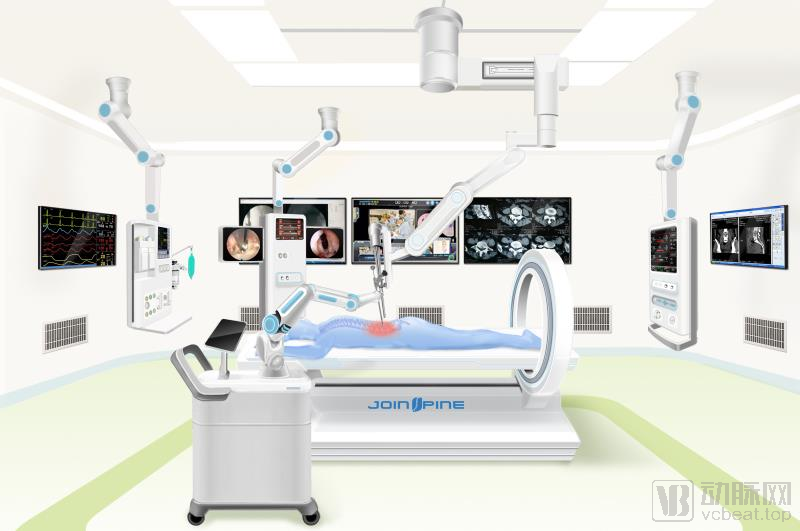
(Figure Caption: Future Intelligent Operating Room)
Jiesbyer Medical holds a substantial portfolio of core technology patents. Currently, the company has successfully exported its spinal endoscopy products and technologies to established European and American markets traditionally dominant in endoscopic techniques. In the future, Jiesbyer Medical plans to develop spinal endoscopy robots and intelligent operating rooms, leveraging complementary strengths through strategic partnerships with international collaborators. Together, they aim to establish global standards for spinal endoscopy technology, promote worldwide sales and clinical adoption of their products, and position Jiesbyer Medical as a leading Chinese manufacturer of high-end medical devices in the endoscopy sector.