

Janssen's Stelara (Ustekinumab) Approved in Japan for Treatment of Moderate-to-Severe Ulcerative Colitis
Mar 26, 2020 10:12
CST Updated
10:12

Tanabe Pharma
Developer of Therapeutics for Neurological, Immunological, and Rare Diseases

Janssen Pharmaceuticals
Pharmaceutical R&D Developer

Johnson & Johnson
Healthcare Product Manufacturers, Health Service Providers
March 26, 2020/Bio ValleyBIOON/--Mitsubishi Tanabe Pharma recently announced that Janssen Pharmaceutical K.K., a subsidiary of Johnson & Johnson in Japan, has received partial approval from the Japanese Ministry of Health, Labour and Welfare (MHLW) for changes to the manufacturing and marketing authorization application for the anti-inflammatory drug Stelara (Chinese brand name: Xidano®; generic name: ustekinumab).
Stelara is a monoclonal antibody that binds to the p40 subunit of IL-12 and IL-23. The approved indications include the intravenous infusion formulation (for induction therapy in adult patients with moderately to severely active ulcerative colitis [UC] who have had an inadequate response or intolerance to conventional or biologic therapies) and the subcutaneous injection formulation (for maintenance therapy in adult patients with moderately to severely active ulcerative colitis [UC] who have had an inadequate response or intolerance to conventional or biologic therapies).
Mitsubishi Tanabe Pharma and Janssen have entered into a co-promotion agreement for Stelara in Japan. Under the terms of the agreement, Janssen holds the marketing authorization for Stelara and grants distribution rights to Mitsubishi Tanabe Pharma. Pursuant to the agreement, the two companies will jointly promote Stelara to healthcare professionals in Japan.
Stelara controls gastrointestinal inflammation by selectively targeting the cytokines IL-12 and IL-23, which play a key role in inflammatory and immune responses. In Japan, the intravenous infusion formulation of Stelara has been approved for induction therapy in patients with moderate to severe Crohn’s disease (CD) who have had an inadequate response to conventional therapy; the subcutaneous injection formulation of Stelara has been approved for the treatment of plaque psoriasis and psoriatic arthritis in patients who have had an inadequate response to conventional therapy, as well as for maintenance therapy in patients with moderate to severe Crohn’s disease (CD) who have had an inadequate response to conventional therapy.
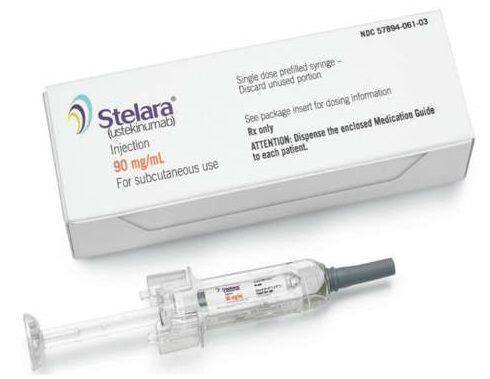
Stelara® (Ustekinumab): A fully human monoclonal antibody that specifically binds with high affinity to the p40 protein subunit shared by interleukin-12 (IL-12) and interleukin-23 (IL-23). IL-12 and IL-23 are naturally occurring cytokines that play important roles in both acute and chronic inflammation in the human body, while Crohn’s disease is a chronic, relapsing inflammatory condition. Stelara® has been approved in 89 countries and has received the Galen Innovation Award in Canada (2010), the Galen Award for Best Biotech Product in the United States (2011), and the International Galen Award (2012).
In mid-June, Johnson & Johnson’s pharmaceutical subsidiary in China, Xian Janssen Ltd., announced that two formulations of Stelara—namely, ustekinumab injection for subcutaneous administration and ustekinumab injection for intravenous infusion (intravenous infusion)—had been approved by the National Medical Products Administration (NMPA) of China for use in patients who have had an inadequate response to conventional therapy orTumorAdult patients with moderately to severely active Crohn’s disease (CD) who have had an inadequate response, lost response, or were intolerant to tumor necrosis factor-alpha (TNF-α) antagonists. STELARA® (ustekinumab injection) was first approved in China in November 2017 for the treatment of moderate-to-severe plaque psoriasis. The adult Crohn’s disease indication is its second approved indication in China.
Stelara® is the first fully human “dual-target” inhibitor of interleukin-12 (IL-12) and interleukin-23 (IL-23) approved in China. This accelerated approval was facilitated by the inclusion of Stelara® in the second batch of the List of Overseas New Drugs in Urgent Clinical Need, jointly issued by the National Medical Products Administration and the National Health Commission on May 29, 2019.

The dosing regimen for Stelara® involves an initial single intravenous (IV) infusion based on body weight to rapidly help improve the condition; subcutaneous injections of 90 mg are initiated 8 weeks later, followed by recommended subcutaneous injections of 90 mg every 12 weeks thereafter to help maintain disease control.
The 2019 European Crohn’s and Colitis Organisation (ECCO) guidelines recommend Stelara® as a first-line biologic agent for the treatment of moderate-to-severe Crohn’s disease. Leveraging a novel interleukin mechanism of action, Stelara® is characterized by rapid onset of action and sustained maintenance of remission. The approval of this new indication for Stelara® marks a significant advancement in the treatment of Crohn’s disease in China, providing a novel therapeutic option for Chinese patients with Crohn’s disease, particularly those with moderate-to-severe disease.
Stelara is Johnson & Johnson's entry intoAutoimmunitya core product in the field of sexual diseases, which achieved sales of $6.361 billion in 2019, representing a 23.4% increase compared to 2018. In January this year, an article published in the top international journal *Nature* (Top product forecasts for 2020) pointed out that with the continuous expansion of indications, market growth, and penetration, Stelara’s sales were projected to reach $7.241 billion in 2020, ranking seventh among the “Top 10 Best-Selling Drugs Worldwide in 2020.” (Bioon.com)
Original Source: STELARA (ustekinumab) Nowapproved for the Treatment of Adults with Moderate-to-Severe Ulcerative Colitis in Japan